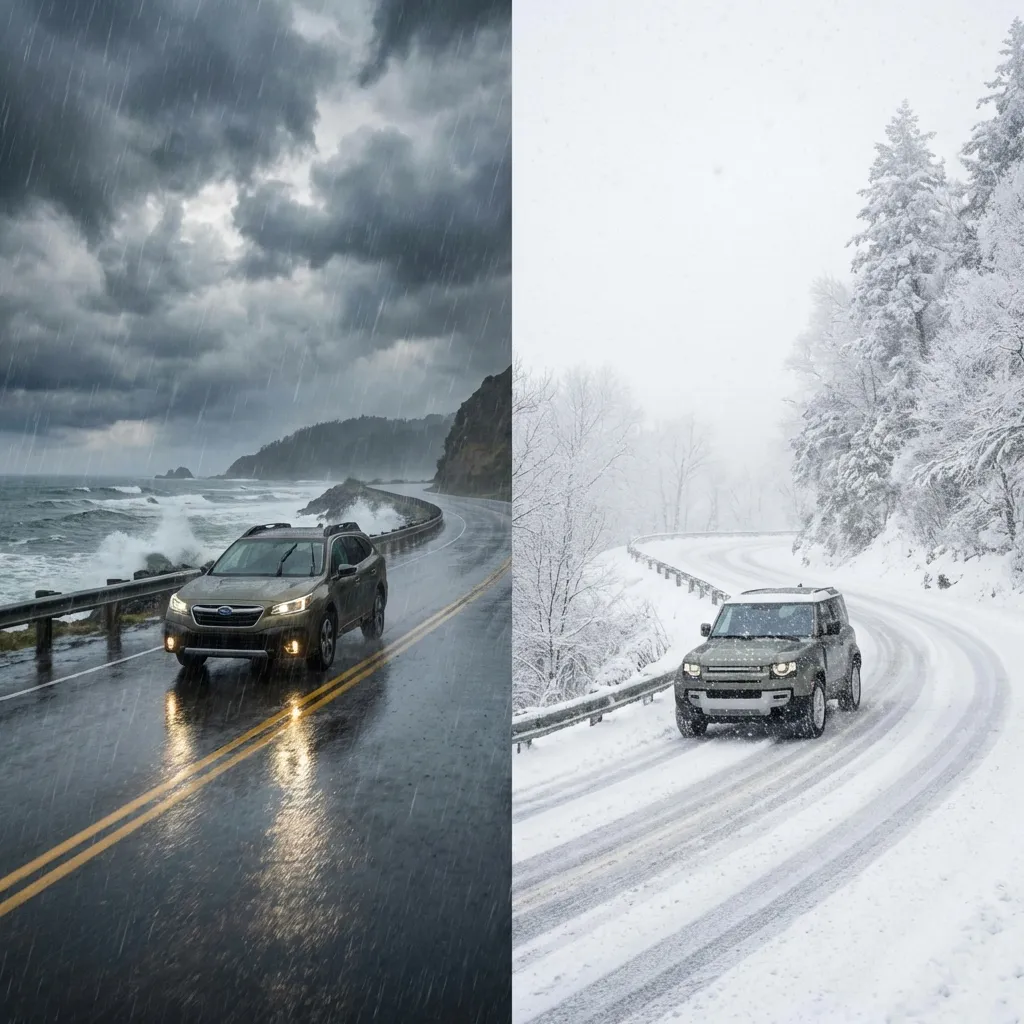
Master Adverse Weather Driving: Rain, Snow, Fog & Ice
Mastering statutory driver licensing regulations and highway laws ensures first-time test success.
Quick Answer & Key Takeaways
Adverse weather conditions cause over 21% of all vehicle crashes in the US. 1) RAIN: Reduce speed by 5–10 MPH and increase following distance to 5 seconds to prevent hydroplaning. 2) SNOW & ICE: Accelerate gently, brake progressively using ABS (Stomp & Stay), and never lock steering wheels during a skid. 3) FOG: Never use high beams (which create backscatter glare); track the white fog line on the right road edge. 4) CRUISE CONTROL: Never activate cruise control in wet, snowy, or icy conditions.
- First 10 Minutes of Rain: Oil and grease float to the surface, cutting road friction by 60%.
- Fog Lighting Mandate: Always use low beams and fog lights; high beams reflect off water droplets.
- Black Ice Risk: Bridges, overpasses, and shaded roadway segments freeze first.
- Disable Cruise Control: Avoid sudden wheel spinouts and hydroplaning surges on wet pavement.
Driving conditions can change in an instant. Learn the specific techniques to stay safe when the weather turns against you.
The Golden Rule: Slow Down
of crashes are weather-related
- Statutory Compliance: Obeying exact vehicle code thresholds rather than informal habits ensures zero penalty points on exam day.
- Defensive Safety Standard: Maintaining safe following distances and active visual scanning eliminates collision risks under Basic Speed Law principles.
- Hazard Recognition: Anticipating changing traffic patterns and road conditions allows proactive rather than reactive braking.
fatalities annually due to weather
Impact on Stopping Distance
speed reduction needed on ice
- Statutory Compliance: Obeying exact vehicle code thresholds rather than informal habits ensures zero penalty points on exam day.
- Defensive Safety Standard: Maintaining safe following distances and active visual scanning eliminates collision risks under Basic Speed Law principles.
- Hazard Recognition: Anticipating changing traffic patterns and road conditions allows proactive rather than reactive braking.
Adverse weather conditions are a leading cause of traffic accidents in the United States. According to the Federal Highway Administration, over 1.2 million crashes annually are weather-related. The single most effective way to prevent accidents in these conditions is to reduce your speed.
Driving in Rain
When the road surface is compromised by rain, snow, or ice, your vehicle's traction is significantly reduced. This means your tires have less grip to accelerate, steer, and most importantly, stop. Additionally, visibility is often compromised by precipitation and spray from other vehicles, meaning you have less time to react to hazards. Increasing your following distance is not just a suggestion; it's a critical safety buffer that can save your life.
- Statutory Compliance: Obeying exact vehicle code thresholds rather than informal habits ensures zero penalty points on exam day.
- Defensive Safety Standard: Maintaining safe following distances and active visual scanning eliminates collision risks under Basic Speed Law principles.
- Hazard Recognition: Anticipating changing traffic patterns and road conditions allows proactive rather than reactive braking.
Comparative stopping distance at 60mph (relative units). Notice how ice increases the distance by 10x!
Want to see exactly how far you'll slide? Try our interactive Braking Distance Calculator to simulate different speeds and road conditions.
Snow & Ice Survival Guide
Rain is the most common adverse condition drivers face, and it's deceptively dangerous. The most critical risk is hydroplaning, which occurs when your tires lose contact with the road and ride on a layer of water. This can happen at speeds as low as 35 mph, especially if your tires are worn.
- Statutory Compliance: Obeying exact vehicle code thresholds rather than informal habits ensures zero penalty points on exam day.
- Defensive Safety Standard: Maintaining safe following distances and active visual scanning eliminates collision risks under Basic Speed Law principles.
- Hazard Recognition: Anticipating changing traffic patterns and road conditions allows proactive rather than reactive braking.
The first few minutes of rainfall are often the most dangerous. Rain mixes with oil and grease residue on the road surface, creating a slick, slippery mixture that can catch drivers off guard before heavier rain washes it away.
Advanced Techniques
If your steering feels light or the car starts to drift:
- Statutory Compliance: Obeying exact vehicle code thresholds rather than informal habits ensures zero penalty points on exam day.
- Defensive Safety Standard: Maintaining safe following distances and active visual scanning eliminates collision risks under Basic Speed Law principles.
- Hazard Recognition: Anticipating changing traffic patterns and road conditions allows proactive rather than reactive braking.
Winter driving presents the most challenging conditions for any driver. Snow and ice dramatically reduce the friction coefficient of the road, increasing stopping distances by up to 10 times. Preparation is key: if snow is forecasted, ensure your vehicle is equipped with winter tires or chains if required, and clear all snow from your vehicle—roof, hood, and trunk included. Flying snow from your car can blind drivers behind you and is illegal in many states.
Interactive Knowledge Check
Question: Why should cruise control never be used when driving in heavy rain or icy winter conditions?
Authoritative Sources & Regulatory References
Content and statutory guidelines in this guide are verified against official state vehicle codes, federal transportation standards, and authoritative regulatory documentation:
- AAMVAOfficial State Driver Handbooks & Licensing Examination Criteria (2026)(American Association of Motor Vehicle Administrators)
- NHTSANational Highway Traffic Safety Administration (NHTSA) Uniform Guidelines for State Highway Safety(National Highway Traffic Safety Administration)
- FHWAFederal Highway Administration (FHWA) Manual on Uniform Traffic Control Devices (MUTCD)(Federal Highway Administration)
93% of people found this article helpful.
Click a star to add your vote
263 votes • average 4.71 out of 5
Official 2026 DMV Practice Tests by State
Select your state to practice real exam questions based on the latest 2026 driver handbook.
Ready to Pass the DMV Test on Your First Try?
Practice real 2026 DMV questions with instant answer explanations, simulated timers, and pass-guarantee study guides.
Start Free Practice Test