Emergency Roadside Kit Checklist: 15 Essentials for Your Car
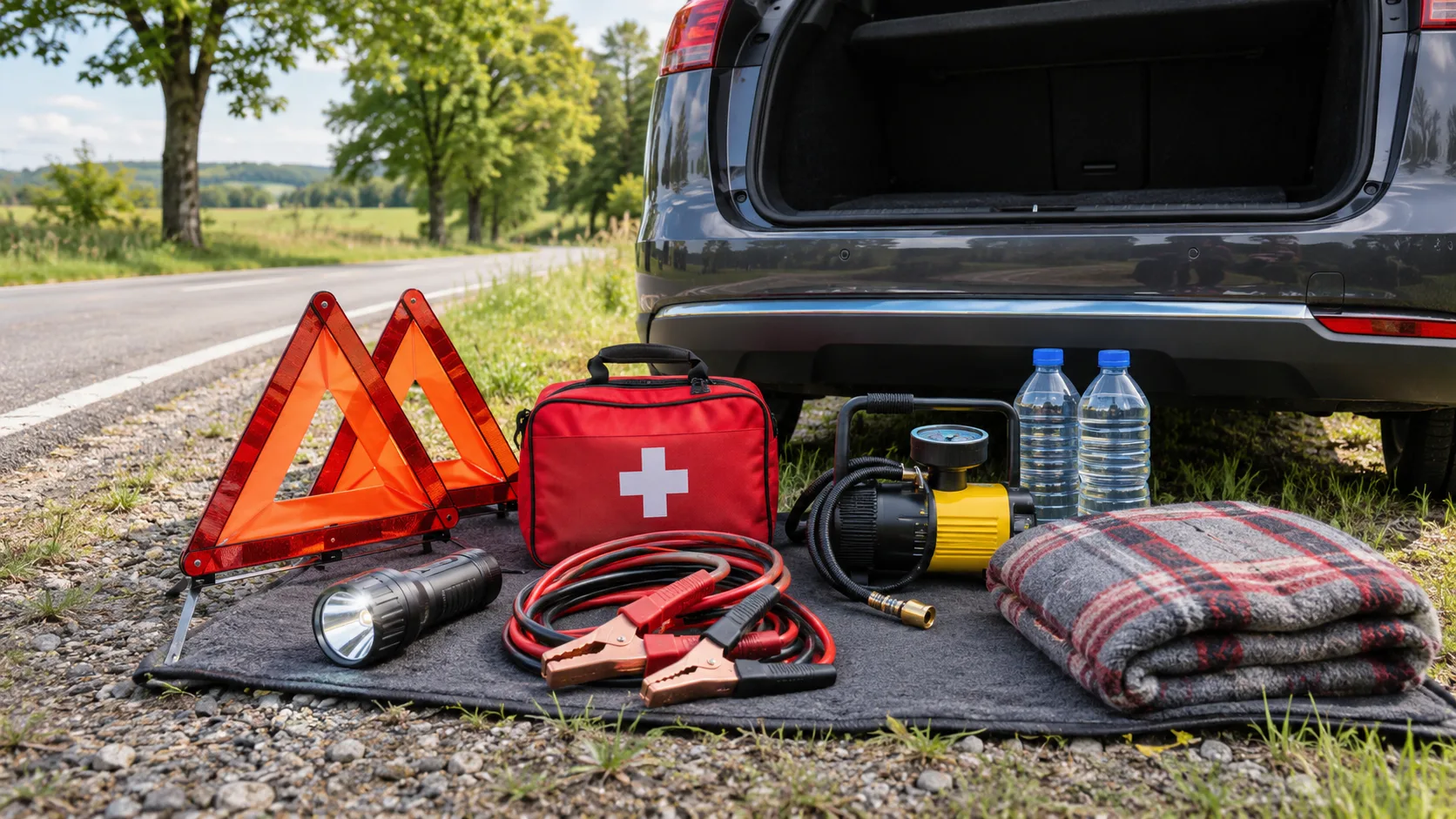
Emergency roadside supplies including a first-aid kit, warning triangle, flashlight and blanket beside a safely parked car.
Quick Answer & Key Takeaways
Keep a compact kit that helps you call for help, stay visible, address simple problems, and remain comfortable while waiting. Store it where you can reach it safely and check it before long trips.
- Phone and charging options come first.
- Use reflective warning devices only where you can place them without entering traffic.
- Replace expired supplies and adapt the kit to your weather and passengers.
The 15-item checklist
1. Charged phone and car charger
A phone lets you call emergency services or roadside assistance. Save important numbers and carry a cable that fits your phone; a small charged power bank is useful if the vehicle battery fails.
2. First-aid kit
Include dressings, gloves, and items your household knows how to use. Keep personal medicines separately and check expiration dates.
3. Flashlight and spare batteries
A flashlight helps you see a flat tire, find supplies, or signal your location after dark. Test it periodically.
4. Reflective triangles or approved warning devices
These can make a stopped vehicle more visible. Place them only if you can do so without walking into a live lane; your safety comes first.
5. High-visibility vest
Put it on before leaving the car if the area is safe enough to exit. Bright or reflective material improves your visibility to approaching drivers.
6. Jumper cables or a jump starter
Know your vehicle’s jump-start instructions before using either. Some hybrids and EVs have special procedures; consult the owner’s manual.
7. Tire pressure gauge
Check cold tire pressure against the driver-door label, not the maximum number on the tire sidewall. A gauge also helps you confirm a slow leak.
8. Portable tire inflator
An inflator can help with a low tire if the tire is otherwise sound. It cannot fix a major puncture, sidewall damage, or a tire that will not hold air.
9. Spare tire or approved repair kit
Know whether your car has a spare, sealant, or neither. Check that the spare is inflated and that the jack and lug wrench are present if your vehicle uses them.
10. Work gloves
Gloves protect your hands while handling equipment. They do not make a shoulder repair safe in fast-moving traffic.
11. Blanket or warm layers
A compact blanket and weather-appropriate clothing help if you must wait for assistance in cold weather.
12. Drinking water
Pack enough for your passengers and climate. Rotate bottles as recommended by the manufacturer, especially after hot storage.
13. Shelf-stable snacks
Simple sealed food helps during long delays. Replace it before its use-by date and consider allergies.
14. Paper map or offline route
Download an offline map before remote travel. A paper map can help when cell coverage or navigation fails.
15. Basic supplies and vehicle information
Keep a small tool set, paper towels, and the owner’s manual or digital copy. Include roadside assistance details, but keep sensitive documents secured.
What to do when your car breaks down
Choose the safest stopping place
Signal, move out of traffic if the vehicle can still be driven, turn on hazard lights, and call for help. On a high-speed road, never attempt a repair beside a live lane. Follow the dispatcher’s advice about whether to remain belted in the car or move to a protected area.
A night-time scenario
Your tire goes flat on a narrow interstate shoulder after dark. The kit has a jack, but traffic is passing close by. You stay clear of traffic and call roadside assistance instead of changing the tire there. The safest use of the kit is sometimes staying visible and waiting for help.
Check the kit twice a year
Make a quick inventory
Test the flashlight and power bank, inspect the spare and inflator, replace used first-aid items, and rotate food, water, and medicines. Add sun protection for hot regions or extra warmth for winter travel.
Putting this into practice
The kit is a bridge to professional help
A roadside kit is useful because it keeps a small problem from becoming a larger one while you wait. It cannot make a dangerous shoulder safe or replace a trained responder. Decide before a trip which tasks you can perform confidently in a secure place, such as checking tire pressure in a parking lot. For a breakdown next to fast traffic, use the phone, visibility gear, and instructions from roadside assistance. The safest repair may be the one a professional does after the car has been moved.
Pack for the people in the car
A kit for one adult commuting near home may be smaller than a kit for a family crossing a remote region. Think about children, older passengers, pets, and anyone who needs regular medicine. Add enough water and weather protection for them, then store items where they will not be damaged or turn into loose cargo. Write down critical contact details if you may travel through areas without reliable service. A short packing review takes less time than discovering a missing item on the shoulder.
Know the difference between low pressure and a damaged tire
A portable inflator can restore pressure when a tire is slightly low and still in good condition. It is not a safe answer to a bulge, cut sidewall, or repeated rapid pressure loss. If the tire looks damaged, arrange assistance. If a temporary spare is installed, follow the speed and distance limits in the vehicle manual and on the spare. Schedule proper tire repair or replacement before continuing a long journey.
Practice finding the equipment
During daylight, open the trunk and locate the kit, jack, spare or sealant, and tow-point information in the manual. Check that the charger cable fits the current phone and that the flashlight works. If you have a jump starter, read its instructions before an emergency and recharge it on the recommended schedule. The purpose is familiarity, not to encourage roadside repairs in unsafe locations. A few minutes of preparation makes a stressful breakdown easier to manage.
Frequently asked questions
Should I use road flares?
Flares carry fire risks and may be restricted in some settings. Reflective triangles are a practical alternative; follow local rules and use any device only when placement is safe.
Can a tire repair kit replace a spare?
It may temporarily help with some tread punctures, but it cannot repair every tire. Check your car’s instructions and arrange professional inspection afterward.
Where should the kit live?
A secured trunk bin works for most supplies, but keep your phone, charger, vest, and flashlight easy to reach. Do not pile heavy loose tools in the passenger cabin; they can move during a sudden stop. If you use an SUV or hatchback, restrain the kit so it cannot slide into passengers or block access to a spare tire.
What changes for winter travel?
Add warm layers for every passenger, gloves, an ice scraper, and a suitable blanket. Before leaving, check weather, road closures, fuel or charge, and whether your route crosses remote areas. If stranded in snow, call for help and follow local emergency guidance. Do not run the engine in a snowbound vehicle unless the exhaust pipe is clear and ventilation is safe.
What changes for heat or remote roads?
Carry extra drinking water and sun protection, and tell someone your route and expected arrival time. A power bank and offline map matter more where service is weak. Do not assume an inflator or sealant can solve every tire problem. If the engine overheats, pull over safely and let it cool; opening a hot cooling-system cap can cause serious burns.
How do you use warning triangles safely?
Read the product directions and local rules before you need them. If traffic is close, visibility is poor, or the shoulder is narrow, do not walk behind the car simply to place a triangle. Move to a safer protected spot if possible and call for help. Your safety matters more than setting out equipment.
How often should you replace supplies?
Put a recurring reminder on your calendar for spring and fall. Check battery charge, flashlight function, first-aid contents, expiration dates, and the condition of cables and gloves. Check that every new driver in the household knows where the kit is and how to contact assistance.
Build your road knowledge with a free DMV practice test, and review the guidance in your state driver handbook.
Authoritative Sources & Regulatory References
Content and statutory guidelines in this guide are verified against official state vehicle codes, federal transportation standards, and authoritative regulatory documentation: