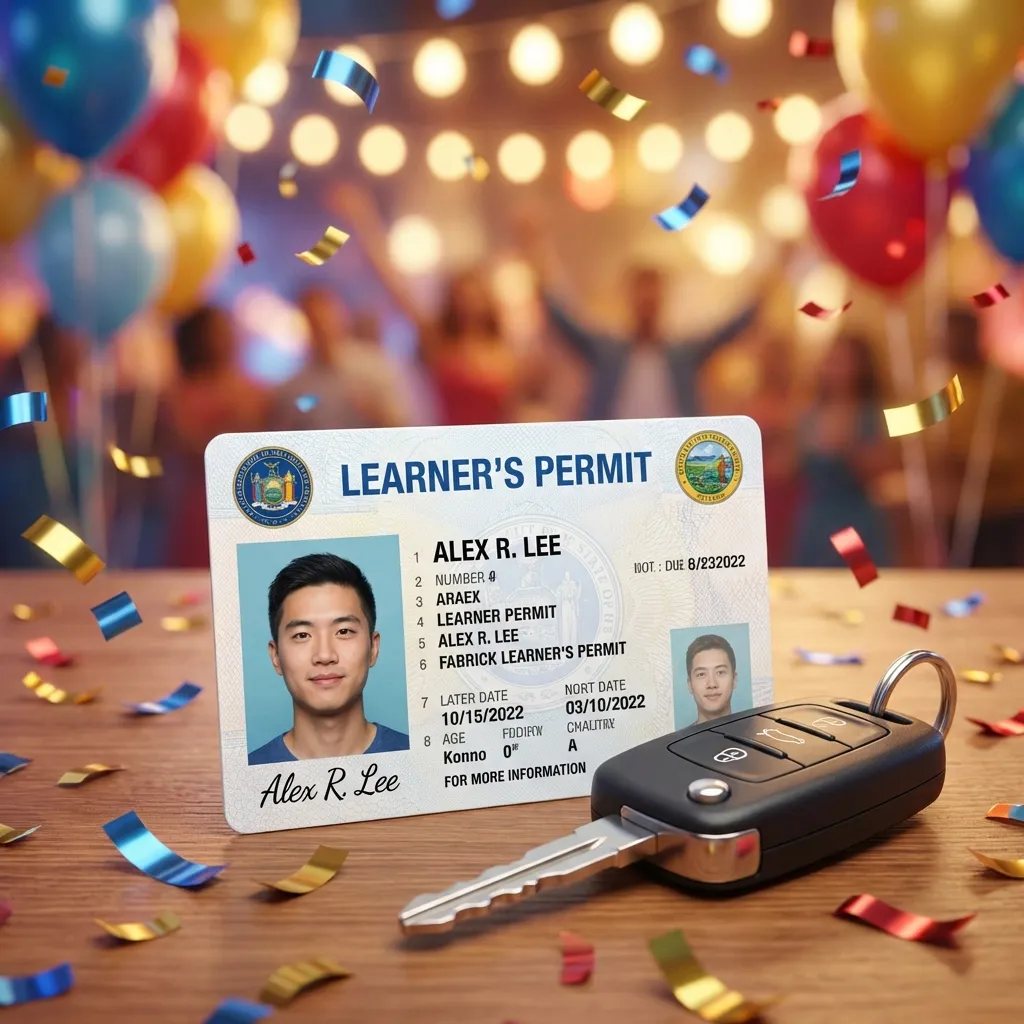
First-Time DMV Visit Guide: Documents, Fees & What to Expect
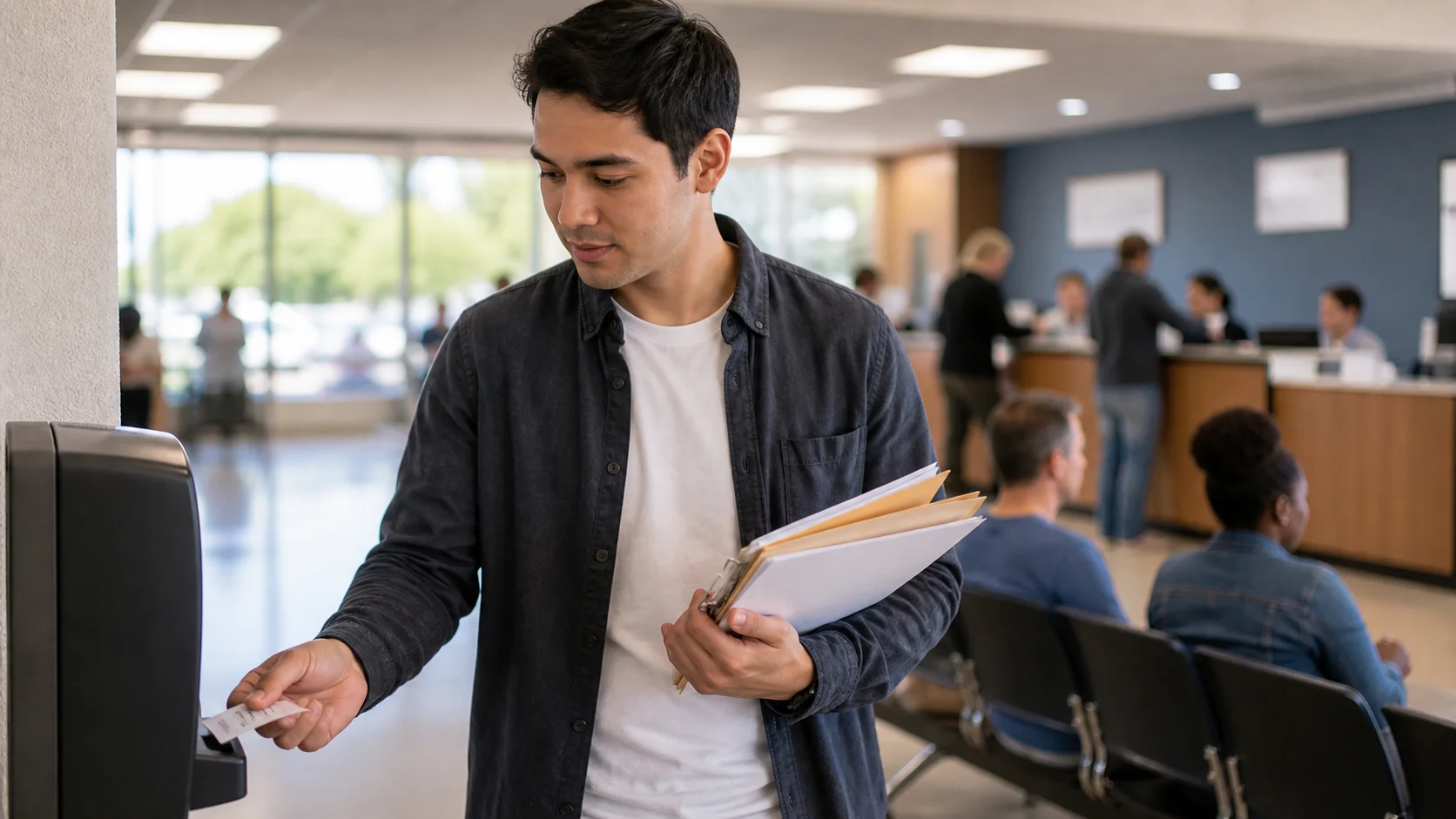
Knowing the flow from check-in and documents through the test makes a first DMV visit much less stressful.
Quick Answer & Key Takeaways
First-time DMV visit checklist: 1) DOCUMENTS: Original certified US Birth Certificate or Passport (Identity); Social Security Card or W-2; Two proofs of physical residency (utility bills or lease). 2) APPOINTMENT: Book online 3–4 weeks in advance; Tuesday–Thursday mornings have the shortest wait times. 3) WORKFLOW: Document verification -> Vision exam (20/40 acuity) -> Photo capture -> Fee payment -> Touchscreen knowledge test.
- Original Documents Required: Photocopies, scans, and laminated Social Security cards are rejected.
- Two Proofs of Physical Residency: Must display matching legal name and residential street address.
- 20/40 Vision Screening: Wear glasses or contacts if you require them for driving.
- Pre-Pay Application Fee: Covers 3 knowledge test attempts within a 12-month window.
The Essential DMV Document Checklist (6-Point Real ID)
Over 30% of first-time DMV applicants are turned away at the document intake counter due to missing or invalid paperwork. Under federal REAL ID enforcement, you must present original certified documents:
- Proof of Identity & Legal Presence: Original US birth certificate with raised registrar seal, valid US passport, or permanent resident card. (Photocopies are strictly rejected).
- Proof of Social Security Number: Official Social Security card, W-2 tax form, or 1099 form displaying your full 9-digit SSN. (Laminated SSN cards are invalid).
- Two Proofs of State Residency: Two separate documents showing your physical street address dated within 60 days (electric bill, lease agreement, bank statement, or official school transcript).
Step-by-Step Counter Workflow: Vision, Photo & Testing
When your queue number is called, you will proceed through four distinct stations:
- Intake & Document Verification: The clerk reviews your original paperwork and enters your application into the state database.
- Snellen Vision Screening: You will look into an optical viewer to read letters at a simulated 20-foot distance. You must achieve at least 20/40 visual acuity. If you wear glasses, your permit will receive a corrective lens restriction.
- Facial Photo & Biometric Thumbprint: You must face the camera directly with a neutral facial expression and remove hats or sunglasses.
- Knowledge Test Kiosk: You are directed to a touchscreen computer kiosk to complete the timed multiple-choice exam.
Insider Tips to Avoid Multi-Hour DMV Wait Times
Strategic scheduling can reduce your DMV visit from 3 hours down to 25 minutes:
- Book Tuesday Through Thursday Mornings: Mondays and Fridays experience the heaviest walk-in congestion. Mid-week morning appointments (8:30 AM – 10:30 AM) have the lowest wait times.
- Avoid Month-End and Day-After Holidays: DMV offices experience severe registration rushes on the 1st, 15th, and final days of every month.
- Upload Documents Ahead on State Portals: Many states (like California, Texas, and New York) allow you to pre-upload paperwork online for pre-clearance before your appointment.
DMV Visit Preparation & Document Matrix Table
The following matrix summarizes the core documentation categories and operational rules for first-time licensing visits:
| Requirement | Acceptable Document | Common Failure Cause |
|---|---|---|
| Proof of Identity | Certified Birth Certificate or Passport | Bringing a photocopy or hospital certificate |
| Social Security | Original SSN Card, W-2, or 1099 | Bringing a laminated card or memorized number |
| Residency Proof (x2) | Utility bills, bank statements, lease | Using PO Box address or junk mail |
| Vision Acuity | 20/40 in both eyes combined | Forgetting prescription glasses at home |
Interactive Knowledge Check
Question: Which of the following is an acceptable proof of identity when applying for a REAL ID compliant driver's permit at the DMV?
Authoritative Sources & Regulatory References
Content and statutory guidelines in this guide are verified against official state vehicle codes, federal transportation standards, and authoritative regulatory documentation:
- DHSUS Department of Homeland Security REAL ID Document Verification Standards(Department of Homeland Security)
- AAMVAAAMVA Driver Licensing Counter Operations & Quality Assurance Guide(American Association of Motor Vehicle Administrators)
93% of people found this article helpful.
Click a star to add your vote
295 votes • average 4.67 out of 5
Official 2026 DMV Practice Tests by State
Select your state to practice real exam questions based on the latest 2026 driver handbook.
Ready to Pass the DMV Test on Your First Try?
Practice real 2026 DMV questions with instant answer explanations, simulated timers, and pass-guarantee study guides.
Start Free Practice TestRecommended Driver Guides

How to Pass the DMV Permit Test on Your First Try: 7 Habits

The Ultimate Night-Before DMV Road Test Checklist: Vehicle & Document Audit