Ohio BMV Maneuverability Test Guide: Point Cone Setup & Steps
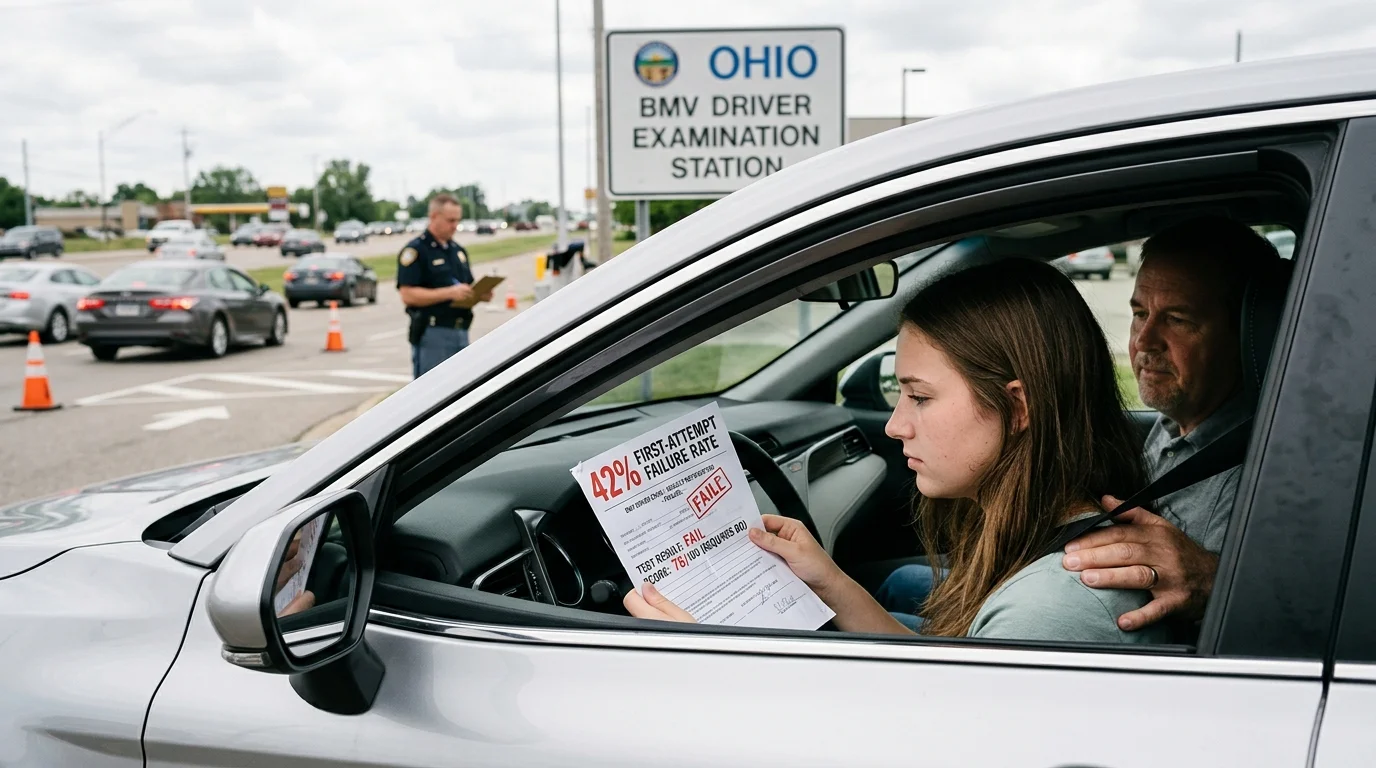
Mastering statutory driver licensing regulations and highway laws ensures first-time test success.
Quick Answer & Key Takeaways
The Ohio BMV Maneuverability Test is a unique two-part skills exam using 5 cones/markers: 1) THE SETUP: A 9-foot-wide by 20-foot-long box with a 5th point cone centered 20 feet ahead. 2) STEP 1 (FORWARD): Drive straight into the box, steer smoothly to the left or right of the point cone as directed, straighten out parallel, and stop with bumper even with the point marker. 3) STEP 2 (REVERSE): Back through the course in the exact reverse path without hitting cones. 4) DEDUCTIONS: Knocking down a cone = auto fail; stopping to adjust = 5-point deduction; passing requires 25 or fewer deduction points.
- 5-Cone Marker Setup: 9 ft x 20 ft rectangular box with 20 ft point marker.
- Forward & Reverse Execution: Must complete both forward steer and reverse retracing.
- Knocking Over a Cone = Test Failure: Touching/knocking cones is an immediate fail.
- Stopping to Readjust: Allowed with a 5-point penalty (max 25 deduction points to pass).
For many Ohio teen drivers, the road skills exam is dominated by one major source of anxiety: the **Ohio BMV Maneuverability Test**. Unlike other states that test standard parallel parking, the Ohio BMV uses a strict steering and reverse test using 5 cones.
Ohio Maneuverability Test Dimensions & Setup
In this guide, we cover the exact dimensions, rules, scoring, and step-by-step strategies you need to pass this test with zero deductions.
- Statutory Compliance: Obeying exact vehicle code thresholds rather than informal habits ensures zero penalty points on exam day.
- Defensive Safety Standard: Maintaining safe following distances and active visual scanning eliminates collision risks under Basic Speed Law principles.
- Hazard Recognition: Anticipating changing traffic patterns and road conditions allows proactive rather than reactive braking.
To practice effectively at home, you must set up your cones to the exact official BMV specifications. Here are the measurements:
Step-by-Step Instructions: How to Perform the Maneuver
The test is divided into two phases: driving forward and backing up.
- Statutory Compliance: Obeying exact vehicle code thresholds rather than informal habits ensures zero penalty points on exam day.
- Defensive Safety Standard: Maintaining safe following distances and active visual scanning eliminates collision risks under Basic Speed Law principles.
- Hazard Recognition: Anticipating changing traffic patterns and road conditions allows proactive rather than reactive braking.
Drive straight forward through the 9-foot-wide rectangle. As you reach the front, steer to the left or right of the point cone (as directed by the examiner). Straighten the vehicle so it is parallel to the lines. Drive forward until your rear bumper is even with the point cone, then stop.
Scoring and Point Deductions
Put the vehicle in reverse. Look over your shoulders and check all mirrors. Back straight up, steer around the point cone, and maneuver your vehicle back into the rectangle. Continue reversing until the front bumper is completely clear of the start line/first pair of cones, then stop and park.
- Statutory Compliance: Obeying exact vehicle code thresholds rather than informal habits ensures zero penalty points on exam day.
- Defensive Safety Standard: Maintaining safe following distances and active visual scanning eliminates collision risks under Basic Speed Law principles.
- Hazard Recognition: Anticipating changing traffic patterns and road conditions allows proactive rather than reactive braking.
You start the test with 100 points. You must score at least 75 points to pass. Points are deducted for the following mistakes:
Pro-Tips for Passing on Your First Try
Knocking down or running over any of the 5 marker cones on the Ohio maneuverability test results in immediate test failure.
- Statutory Compliance: Obeying exact vehicle code thresholds rather than informal habits ensures zero penalty points on exam day.
- Defensive Safety Standard: Maintaining safe following distances and active visual scanning eliminates collision risks under Basic Speed Law principles.
- Hazard Recognition: Anticipating changing traffic patterns and road conditions allows proactive rather than reactive braking.
Vehicle code statutes require drivers to demonstrate strict compliance with right-of-way rules, speed adjustments, and proper signaling.
Interactive Knowledge Check
Question: During the Ohio BMV Maneuverability Test, what is the consequence of knocking over one of the 5 marker cones with your vehicle?
Authoritative Sources & Regulatory References
Content and statutory guidelines in this guide are verified against official state vehicle codes, federal transportation standards, and authoritative regulatory documentation:
- AAMVAOfficial State Driver Handbooks & Licensing Examination Criteria (2026)(American Association of Motor Vehicle Administrators)
- NHTSANational Highway Traffic Safety Administration (NHTSA) Uniform Guidelines for State Highway Safety(National Highway Traffic Safety Administration)
- FHWAFederal Highway Administration (FHWA) Manual on Uniform Traffic Control Devices (MUTCD)(Federal Highway Administration)
85% of people found this article helpful.
Click a star to add your vote
33 votes • average 4.19 out of 5
Official 2026 DMV Practice Tests by State
Select your state to practice real exam questions based on the latest 2026 driver handbook.
Ready to Pass the DMV Test on Your First Try?
Practice real 2026 DMV questions with instant answer explanations, simulated timers, and pass-guarantee study guides.
Start Free Practice Test