Pre-Road-Trip Car Inspection: 10 Checks Before You Leave
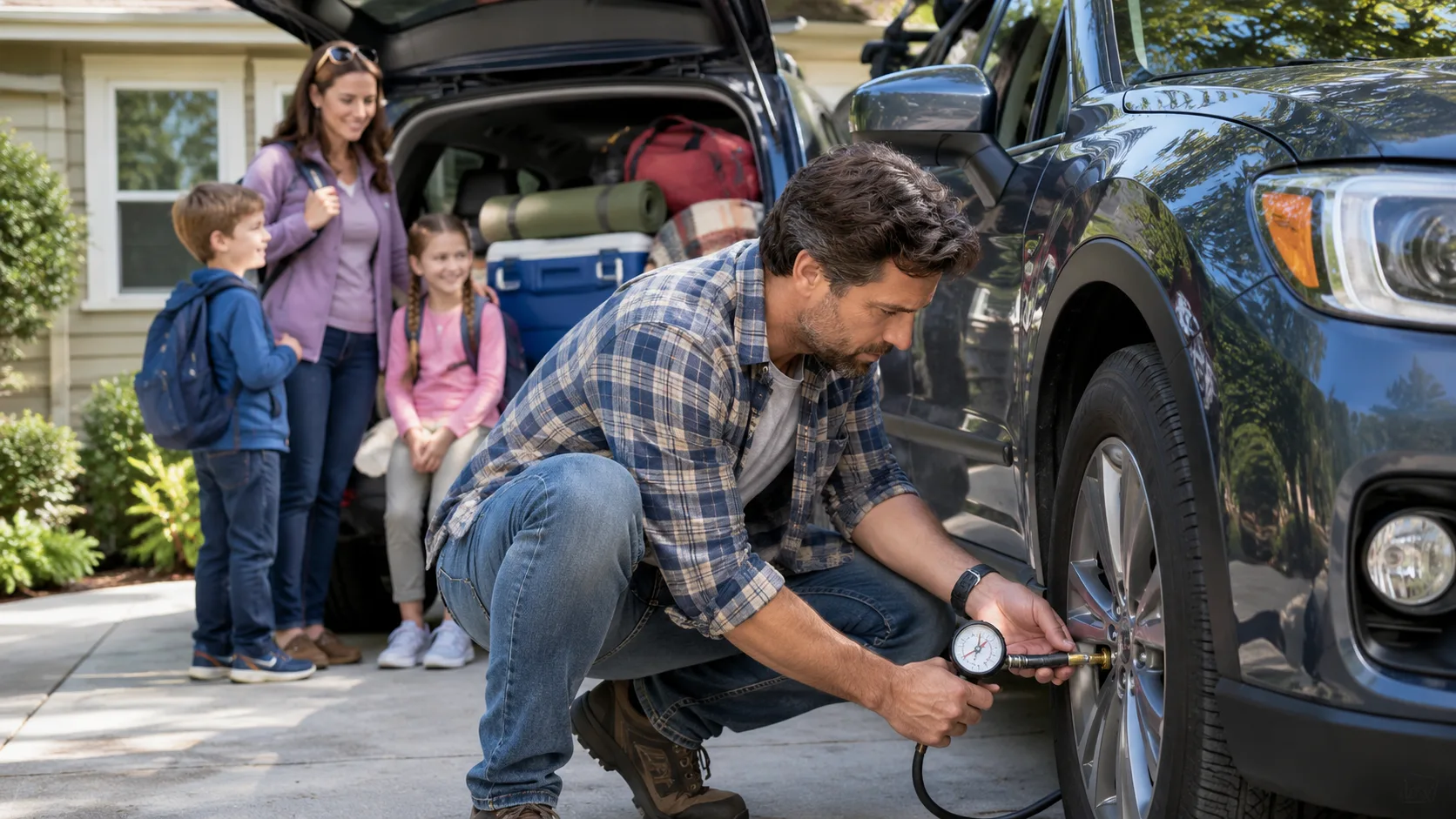
Driver checking tire pressure of a packed car in a driveway before a road trip.
Quick Answer & Key Takeaways
Before a long drive, inspect tires, lights, fluids, visibility, and the vehicle’s basic systems. Fix problems before departure and use your owner’s manual for model-specific procedures and service intervals.
- Check tire pressure when tires are cold using the driver-door label.
- Look for leaks, warning lights, and worn tires before loading the car.
- If a safety-critical problem appears, have it repaired before the trip.
The 10 checks
1. Tires and spare
Look for cuts, bulges, uneven wear, and embedded objects. Measure cold pressure using the vehicle label and inspect the spare or repair kit. Do not use the tire sidewall maximum as your target pressure.
2. Engine oil
On vehicles with an oil dipstick, check the level as the owner’s manual directs. If service is due soon, arrange it before a long trip. An oil-pressure warning while driving calls for stopping safely and shutting off the engine.
3. Coolant and cooling system
Check the coolant level only when the engine is cool, using the marked reservoir. Look for leaks. Never remove a hot pressurized cap.
4. Other fluids
Check windshield washer fluid and any user-serviceable brake, transmission, or steering fluid reservoirs according to the manual. A low level or leak can signal a problem that needs a mechanic, not just a top-off.
5. Battery and charging
Look for corrosion, loose connections, slow cranking, or a battery warning light. Ask a shop to test a weak battery or charging system before leaving.
6. Exterior lights
With a helper or reflected surface, check headlights, brake lights, turn signals, hazards, and taillights. Clean the lenses so other drivers can see you.
7. Wipers and windshield
Replace streaking or torn wiper blades. Fill washer fluid, clean the glass inside and out, and repair any damage that blocks your view.
8. Brakes
Listen for grinding, feel for pulling or a soft pedal, and note any brake warning light. Have a professional inspect concerns before travel; braking problems are not a wait-and-see item.
9. Belts, hoses, and visible leaks
With the engine off and cool, look for cracked accessible hoses, wet spots, or fresh fluid under the car. Do not reach near moving or hot components.
10. Safety gear and load
Confirm seat belts and child restraints, emergency kit, phone charger, and roadside assistance details. Secure luggage so it cannot become a projectile during a hard stop.
When to schedule the inspection
A week before departure
Give yourself time to book service and replace tires or wipers. If your trip is tomorrow, do the checks you can perform safely and avoid leaving with unresolved warning lights or known faults.
A practical example
You find one tire repeatedly loses pressure and its sidewall has a bulge. Adding air is not a lasting fix. Have the tire inspected or replaced before driving hundreds of miles; a bulge can indicate structural damage.
Before you pull out
Final two-minute check
Walk around the car for obvious leaks and obstacles, confirm doors and cargo are secure, set navigation while parked, and check weather and road conditions. Leave enough time for rest stops.
Putting this into practice
Use the inspection to make a decision
A checklist is useful only when you act on what it reveals. A dirty windshield can be cleaned at home; a brake pedal that feels unusually soft needs professional inspection. Make a short list of findings and divide them into simple maintenance, service to arrange, and reasons to delay departure. Do not cover a warning light and continue with a long drive because the car still moves. Fixing a known issue near home is usually easier than finding help far from your route.
Do the checks in a sensible order
Start with a walk around the vehicle while it is parked on level ground. Look for fresh leaks, tire damage, and broken lights. Then check cold tire pressure and the fluids your manual says an owner can inspect. Finish by testing wipers, lights, and the charging setup. Keep hands, clothing, and tools away from hot or moving engine parts. If a check requires lifting the car or opening a pressurized system, leave it to a trained professional.
Plan for the trip you are actually taking
A short drive to a nearby town and a week of mountain highways put different demands on a car. For a long or remote route, check service history, weather, road closures, and the distance between fuel or charging stops. If you plan to tow or carry a heavy load, review the vehicle’s load limits and tire guidance before packing. Even a well-maintained vehicle can have a problem, so carry contact details and a modest roadside kit.
Recheck after the first stop
A final walk around at your first fuel or rest stop can catch a loose item, a new leak, or a tire that looks different from the others. You do not need to repeat every garage check, but pay attention to new sounds, vibration, warning lights, and how the car brakes. If something changes, pull into a safe place and investigate before continuing. Treat fatigue the same way: a sound car is only one part of a safe road trip.
Frequently asked questions
Do EVs need a pre-trip check?
Yes. Tires, lights, wipers, brakes, cargo, and applicable fluids still matter. Check charge, route, and charger availability as well.
What pressure should I use after loading the car?
Follow the vehicle label and owner’s manual. Some vehicles specify different pressures for heavy loads; the tire sidewall is not the normal inflation target.
How should you check tires?
Measure pressure before driving or after the tires have cooled, using a reliable gauge. Inspect the tread and sidewalls of every tire, including the spare if fitted. A tire with a bulge, exposed cords, or repeated pressure loss needs professional attention. After loading the vehicle, consult the owner’s manual for any load-specific inflation instructions.
Which warning lights change the plan?
A red oil-pressure, overheating, or brake warning deserves immediate attention. Stop safely and consult the manual or a mechanic rather than hoping a long drive will clear the warning. A check-engine light also deserves diagnosis, especially if it flashes or the vehicle runs poorly. The exact meaning of symbols varies by model.
When should a mechanic inspect the car?
Book an inspection if you notice unusual noises, vibration, leaks, weak starting, or reduced braking. It is also sensible before a long trip if scheduled service is due or the car has been sitting unused. Tell the shop about the trip distance, expected weather, and any heavy load or towing plans so they can check relevant systems.
What should you check after loading?
Confirm that luggage does not block your rear view and that loose objects are secured. Recheck the tire guidance for a loaded vehicle, make sure doors and the cargo area latch, and verify that every passenger has an appropriate restraint. If towing, follow the vehicle and trailer manuals for load and hitch checks.
How do you adapt the list for an EV?
Use the same tire, light, wiper, brake, and cargo checks. Add a charge check, confirm charging stops, and consider weather and terrain when planning range. Consult the owner’s manual for cooling-fluid and 12-volt battery guidance. A pre-trip inspection is still useful even when there is no engine oil to check.
Build your road knowledge with a free DMV practice test, and review the guidance in your state driver handbook.
Authoritative Sources & Regulatory References
Content and statutory guidelines in this guide are verified against official state vehicle codes, federal transportation standards, and authoritative regulatory documentation: