Why Smart People Fail the DMV Written Test (And How to Pass)

Mastering statutory driver licensing regulations and highway laws ensures first-time test success.
Quick Answer & Key Takeaways
Why over 35% of intelligent adults and top students fail their DMV written test: 1) OVERTHINKING QUESTIONS: DMV questions are literal, not philosophical. Do not create complex hypothetical exceptions. 2) PRACTICAL HABITS VS STATUTORY LAW: Experienced adult drivers drive by informal custom (e.g. rolling stops, 5 MPH over speed limit) rather than strict statutory handbook law. 3) ARBITRARY NUMBERS: Intelligence cannot deduce statutory distance limits (15 ft from hydrant, 7.5 ft from track); they must be memorized verbatim. 4) OVERCONFIDENCE: Skimming the handbook for 10 minutes without practice testing.
- Literal Test Questions: Avoid second-guessing and overanalyzing straightforward scenarios.
- Handbook Law Over Custom: The DMV tests vehicle code statutes, not real-world road shortcuts.
- Memorize Fixed Distance Numbers: Exact numerical measurements cannot be reasoned out logically.
- Practice Testing Over Handbook Skimming: Active recall is the only reliable preparation method.
Overthinking: DMV Questions Are Literal, Not Philosophical
One of the primary reasons high-achieving students, engineers, and professionals fail the DMV written knowledge test is over-intellectualization.
Intelligent test-takers often look at a straightforward question and construct elaborate hypothetical scenarios: "What if the road is wet? What if there's a cyclist behind me? What if the light turned yellow 0.2 seconds ago?"
- Literal Interpretation: DMV exam questions are written to test basic statutory rules, not multi-variable edge cases. Take the question stem at face value without adding unstated conditions.
- Defensive Driving Default: When two answer options seem plausible, choose the option that maximizes pedestrian safety, reduces speed, and minimizes collision liability under Basic Speed Law principles.
Real-World Driving Custom vs. Statutory Handbook Law
Experienced adult drivers who move to a new state frequently fail the written renewal test because they answer based on informal roadway customs rather than codified vehicle statutes:
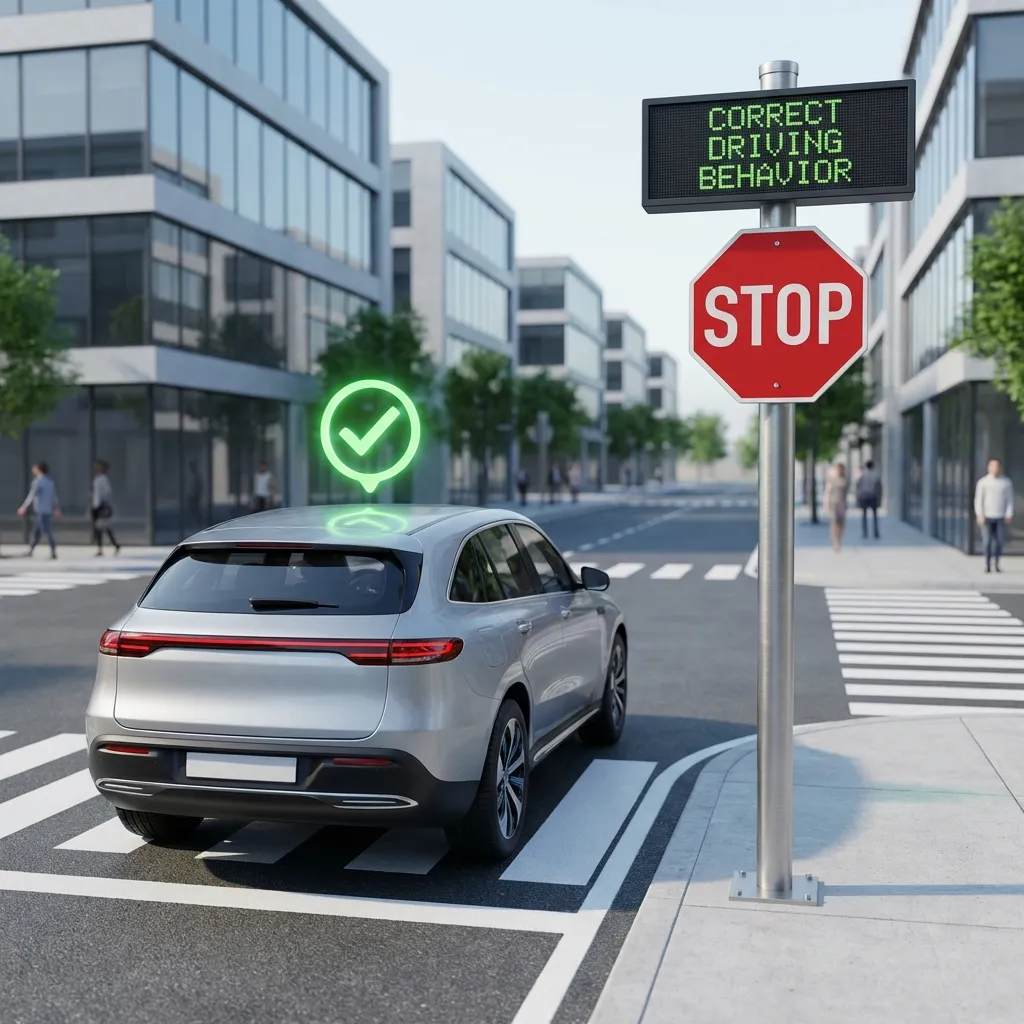
- The "Rolling Stop" Trap: In everyday driving, many motorists perform rolling stops at empty intersections. On the DMV exam, a stop legally requires 0.0 MPH behind the crosswalk limit line.
- Speed of Traffic vs. Absolute Speed Limits: Real-world drivers often travel 5–10 MPH above the posted speed limit to match highway traffic. On the DMV exam, driving even 1 MPH above the posted limit is a violation under absolute speed limit laws.
- Center Turn Lane Distance: Driving more than 200 feet inside a center two-way left-turn lane is illegal in states like California, regardless of traffic congestion.
Arbitrary Numbers: Intelligence Cannot Deduce Fixed Distances
General cognitive intelligence and problem-solving ability cannot help you deduce arbitrary statutory numbers. You cannot "figure out" these numbers with logic—they must be memorized verbatim:
- Fire Hydrants: You must park at least 15 feet away from a fire hydrant.
- Railroad Tracks: You must park at least 50 feet away (or stop between 15 and 50 feet) from railroad tracks.
- Turn Signal Lead Time: You must activate your turn signal continuously for at least 100 feet before turning at an intersection.
- Accident Reporting: Under state financial responsibility laws, accidents causing over $1,000 in property damage or any bodily injury must be reported within 10 days.
The Overconfidence Trap: Skimming Without Active Testing
Because driving is a daily activity, smart applicants frequently assume the test will be purely intuitive and skim the driver manual in 15 minutes before the exam:
- Passive Reading vs. Active Recall: Simply reading a handbook creates the illusion of mastery (recognition memory). Real test success requires active retrieval through spaced repetition mock tests.
- Touchscreen Skip Function: Many test-takers do not realize modern DMV computer kiosks offer a "Skip" button. Passing hard questions to the end lets you bank easy points first.
DMV Failure Traps & Strategic Solutions Table
The following table breaks down the most common failure modes and the concrete preparation adjustments needed to pass on your first attempt:
| Failure Mode | Psychological Cause | Proven Corrective Strategy |
|---|---|---|
| Overanalyzing Scenarios | Inventing complex edge cases | Read literally; choose the most defensive action |
| Relying on Road Habits | Conflating informal custom with statutory law | Study exact vehicle code rules (0.0 MPH stops, 100 ft signals) |
| Missing Distance Limits | Attempting to deduce numbers logically | Create flashcards for exact feet, days, and BAC limits |
| Overconfidence | Passive handbook skimming | Take at least 5 full-length mock exams aiming for 90%+ |
Interactive Knowledge Check
Question: When taking a state DMV written knowledge test on a computer kiosk, what is the best strategy when you encounter an unfamiliar question with two tempting answers?
Authoritative Sources & Regulatory References
Content and statutory guidelines in this guide are verified against official state vehicle codes, federal transportation standards, and authoritative regulatory documentation:
- AAMVAAmerican Association of Motor Vehicle Administrators (AAMVA) Driver Licensing Benchmarks(American Association of Motor Vehicle Administrators)
- NHTSANHTSA Driver Education and Uniform Knowledge Test Curriculum Guidelines(National Highway Traffic Safety Administration)
- FHWAFederal Highway Administration (FHWA) Manual on Uniform Traffic Control Devices (MUTCD)(Federal Highway Administration)
95% of people found this article helpful.
Click a star to add your vote
44 votes • average 4.78 out of 5
Official 2026 DMV Practice Tests by State
Select your state to practice real exam questions based on the latest 2026 driver handbook.
Ready to Pass the DMV Test on Your First Try?
Practice real 2026 DMV questions with instant answer explanations, simulated timers, and pass-guarantee study guides.
Start Free Practice Test