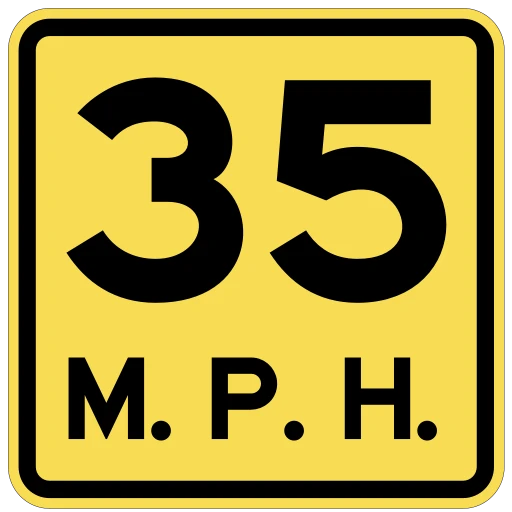
Warning Road Sign (W13-1P)
Advisory Speed Plaque Sign Meaning & Driving Rules
Recommends the maximum safe speed for negotiating an upcoming road hazard, curve, or ramp in ideal conditions.
Required Driver Action & Right-of-Way Protocol
Decelerate to the posted advisory speed before entering the curve or hazard. In bad weather, travel below this speed.
Detailed Overview & Purpose
The Advisory Speed plaque (W13-1P) is mounted beneath primary warning signs (such as Curve or Hill signs). Unlike regulatory speed limits (white rectangles), advisory speeds are engineering recommendations.
However, in wet, icy, or dark conditions, driving at the advisory speed may still be too fast, and exceeding it in an accident can result in citations for driving too fast for conditions.
Key Standard & Origin: Advisory speed plaques have a YELLOW background (recommendation), while legal speed limits have a WHITE background (mandatory law).
Where You'll Find This Sign
Mounted below curve, turn, exit ramp, and hill warning signs.
Common Driver Mistakes to Avoid
Assuming the advisory speed is safe in heavy rain, ice, or snow.
How This Sign Appears on the DMV Knowledge & Road Test
Top test question: difference between regulatory speed limits (white) and advisory speed plaques (yellow).
Legal Penalties and Moving Violations
Crashing while exceeding an advisory speed is cited under state basic speed law violations.
When you encounter the official Advisory Speed Plaque (W13-1P) on a roadway, what is your legal duty?
Prepare for Your State Permit Exam
Take full 2026 practice tests covering mandatory road signs, traffic laws, and state-specific driving rules.