Core Concepts Every California Permit Test Taker Must Master

Mastering statutory driver licensing regulations and highway laws ensures first-time test success.
Quick Answer & Key Takeaways
The California DMV written test evaluates five core concept clusters: 1) RIGHT-OF-WAY: Yield to pedestrians in marked and unmarked crosswalks; yield to traffic already in intersections; vehicle on right goes first at ties. 2) SPEED LAWS: The Basic Speed Law (never faster than is safe for conditions) overrides posted maximum limits. 3) CURB COLORS: Red = No stopping/parking; White = Passenger loading/unloading (5 min); Green = Timed parking; Yellow = Commercial loading; Blue = Disabled parking with placard. 4) EMERGENCY VEHICLES: Pull to the far-right edge and stop.
- Basic Speed Law: You may be cited for driving 45 MPH in a 65 MPH zone if rain, fog, or heavy traffic makes 45 unsafe.
- Unmarked Crosswalks: Every four-way intersection has legal crosswalks connecting sidewalks, whether painted or unpainted.
- Red Curb Prohibition: Stopping, standing, or parking at a red curb is illegal at all times (except buses in designated zones).
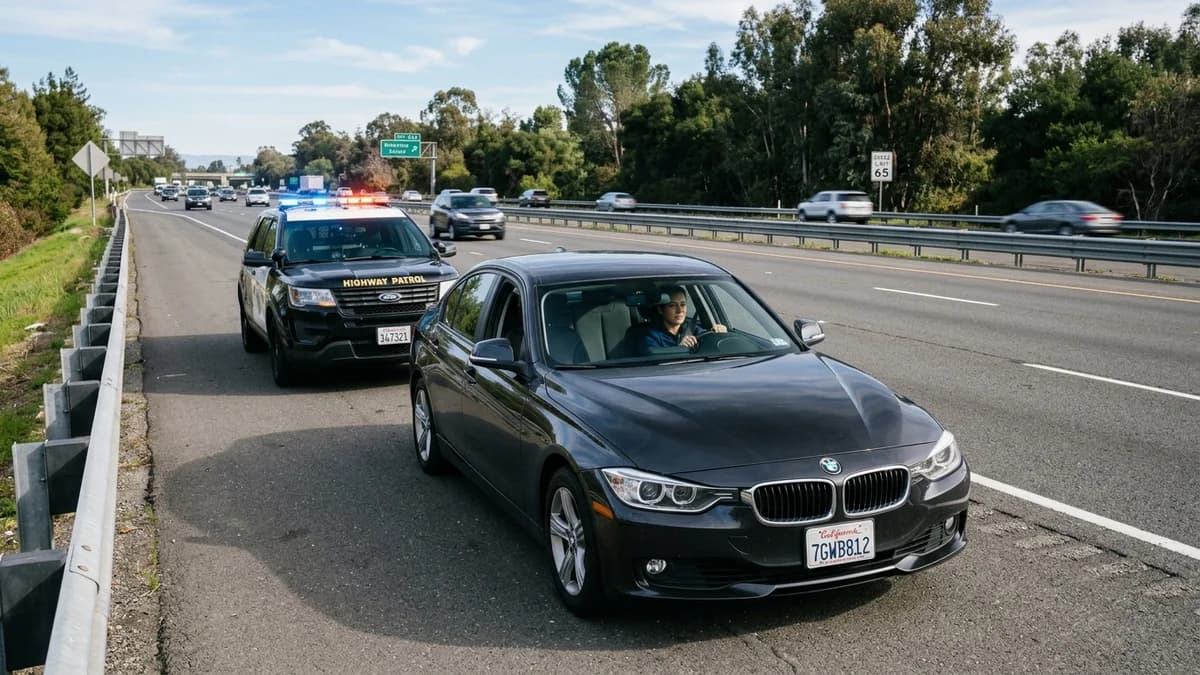
- Move Over Law: Move into an adjacent lane or slow significantly when passing stopped Caltrans or emergency vehicles.
The California DMV permit test focuses on exact laws, numbers, and scenarios — not assumptions. Knowing these 21 concepts can dramatically improve your chances of passing on the first attempt.
Don't Rely on Common Sense
Practice questions that mirror the real test are the fastest way to lock these rules into memory. Focus on California-specific requirements rather than general driving knowledge.
- Statutory Compliance: Obeying exact vehicle code thresholds rather than informal habits ensures zero penalty points on exam day.
- Defensive Safety Standard: Maintaining safe following distances and active visual scanning eliminates collision risks under Basic Speed Law principles.
- Hazard Recognition: Anticipating changing traffic patterns and road conditions allows proactive rather than reactive braking.
Practice with our 500+ California-specific questions that test these exact concepts and more.
Ready to Master These Concepts?
Under California Vehicle Code § 22350 (The Basic Speed Law), you must never drive faster than is safe for current weather and visibility conditions, regardless of the posted limit.
- Statutory Compliance: Obeying exact vehicle code thresholds rather than informal habits ensures zero penalty points on exam day.
- Defensive Safety Standard: Maintaining safe following distances and active visual scanning eliminates collision risks under Basic Speed Law principles.
- Hazard Recognition: Anticipating changing traffic patterns and road conditions allows proactive rather than reactive braking.
Vehicle code statutes require drivers to demonstrate strict compliance with right-of-way rules, speed adjustments, and proper signaling.
Interactive Knowledge Check
Question: You are driving 55 MPH on a California freeway with a posted speed limit of 65 MPH. Heavy rain is falling and road visibility is poor. Can a CHP officer legally cite you for speeding?
Authoritative Sources & Regulatory References
Content and statutory guidelines in this guide are verified against official state vehicle codes, federal transportation standards, and authoritative regulatory documentation:
- AAMVAOfficial State Driver Handbooks & Licensing Examination Criteria (2026)(American Association of Motor Vehicle Administrators)
- NHTSANational Highway Traffic Safety Administration (NHTSA) Uniform Guidelines for State Highway Safety(National Highway Traffic Safety Administration)
- FHWAFederal Highway Administration (FHWA) Manual on Uniform Traffic Control Devices (MUTCD)(Federal Highway Administration)
94% of people found this article helpful.
Click a star to add your vote
105 votes • average 4.78 out of 5
Official 2026 DMV Practice Tests by State
Select your state to practice real exam questions based on the latest 2026 driver handbook.
Ready to Pass the DMV Test on Your First Try?
Practice real 2026 DMV questions with instant answer explanations, simulated timers, and pass-guarantee study guides.
Start Free Practice Test