North Carolina Road Sign Test: What to Study
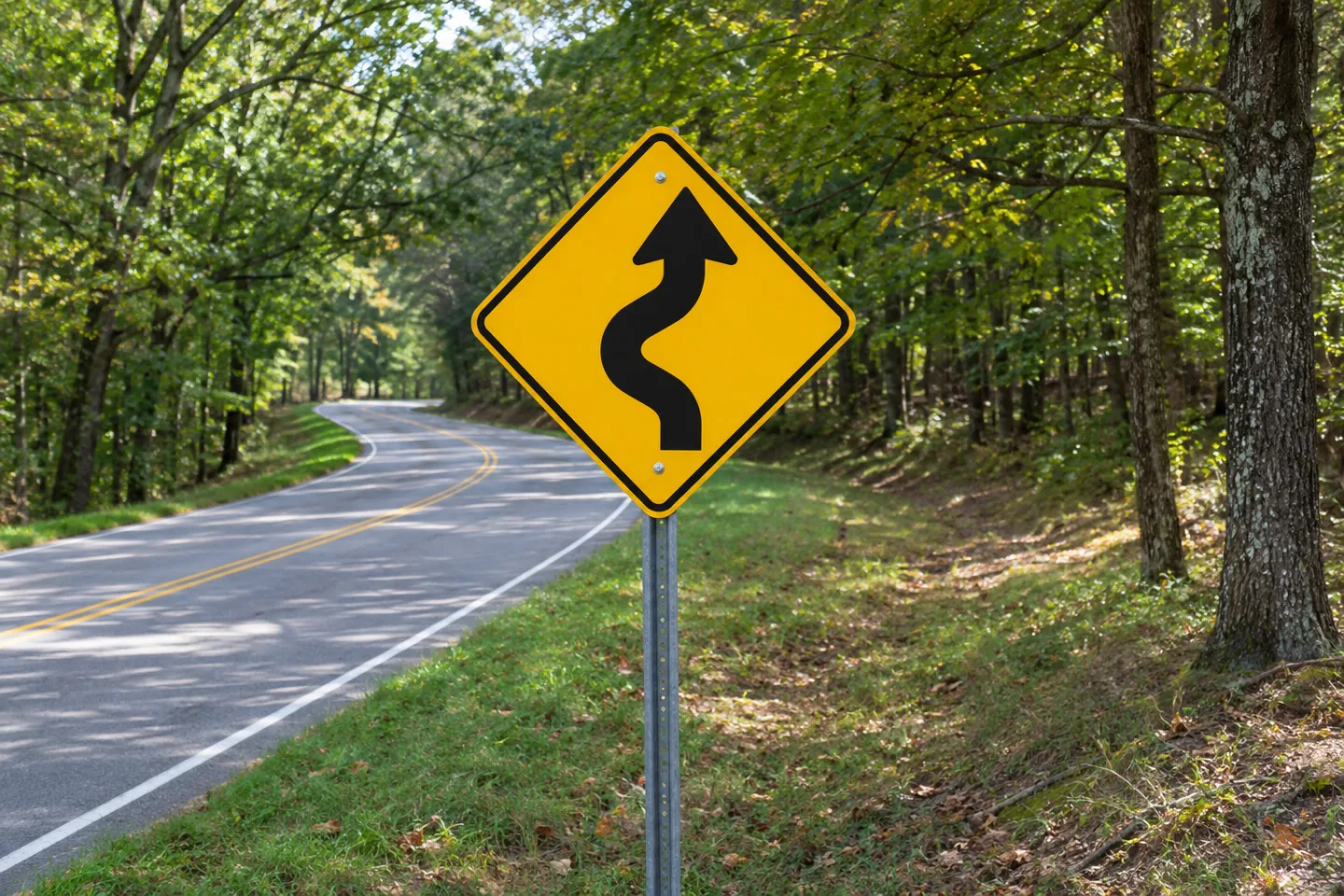
A yellow diamond warns of a condition ahead. The bends on this sign tell you that several curves are coming.
Quick Answer & Key Takeaways
The North Carolina DMV road sign test asks you to recognize regulatory and warning signs by shape and color and explain what they mean. It’s a separate part of testing from the written knowledge exam. Start with the two sign sheets linked by NCDMV, then practice saying what you would do at each sign.
What NCDMV asks you to recognize
If you're applying for a North Carolina permit or your first license, study for two kinds of questions. The written knowledge test covers traffic rules and safe driving. The sign test asks you to recognize signs and explain them. The Division of Motor Vehicles identifies regulatory and warning signs as the focus. Regulatory signs tell you what you must or must not do. Warning signs tell you about a condition ahead that you may need to slow down or prepare for. See NCDMV's explanation of the license tests.
For a teen applying for a Level 1 limited learner permit, NCDMV lists a written test, a sign test and a vision test. The agency also says the Driving Eligibility Certificate requirement ended October 1, 2026. The Driver's Education Certificate remains on its list, so check which document you have if your school gave you paperwork. North Carolina law requires sign and symbol testing for an initial license. See the Level 1 permit instructions and North Carolina General Statutes § 20-7(c).
How to use shape and color together
Start with the signs you can recognize by shape from far away. Eight sides point to STOP. A triangle with its point down is YIELD. A round yellow sign with an X and the letters RR warns of a railroad crossing ahead. Think about where you'd see each sign. A round advance warning sign gives you time to check the road ahead. The white crossbuck at the tracks marks the crossing itself. See the North Carolina Driver Handbook's signs chapter.
After you've identified the outline, check the color and the symbol together. A yellow diamond with a bending arrow warns about a change in the road ahead. A white, upright rectangle is a common shape for rules such as a posted speed limit, but you need the words or symbol to identify the specific rule. The octagon and downward triangle are good examples of signs you can name from the outline alone. Most shapes tell you the sign's general purpose. The details on the sign tell you how to respond. Use NCDMV's warning signs sheet and regulatory signs sheet side by side.
Try reading each sign aloud in the same order every time. For a yellow diamond with a car and wavy tire marks, you could say, “This is a slippery-when-wet warning. When the road is wet, I ease off early and leave more room.” Saying what you would do turns a picture into a driving decision. Our guide to warning sign shapes, colors and symbols has more examples to practice this way.
Signs learners often mix up
A school warning sign and a school-zone speed limit sign give you different information. The warning sign with the schoolchildren tells you to look for children and a possible crossing. A separate speed limit sign sets a speed and may show when the limit applies. Picture turning onto a street where you can see a school warning sign and a row of parked cars. Start looking for movement between vehicles early. When you reach a speed sign, read the number and any times or conditions on its plaque. That is how the warning and the rule work together on one stretch of road. Check the examples in the North Carolina Driver Handbook.
Another pair worth practicing is DO NOT ENTER and WRONG WAY. Both use red and white, and both can help stop someone from entering traffic that is moving toward them. A DO NOT ENTER sign prohibits you from using that end of the roadway or ramp. A WRONG WAY sign warns that you're traveling in the wrong direction. Picture them by a one-way street or exit ramp so you can remember why they may appear close together. If you're studying from the NCDMV regulatory signs sheet, give each sign its own explanation before you move on.
Railroad signs are a good test of whether you understand the action behind the symbol. Imagine traffic is backing up just beyond the tracks. You see the advance warning sign, then the crossbuck, and there's room for only part of your car on the far side. Wait where you're clear of the tracks until you can get all the way across. When you study, connect the warning sign to the crossing itself and the rule about keeping the tracks clear. The railroad crossing safety guide shows how crossbucks, lights and gates fit together. See the NCDMV regulatory sign sheet for the sign that tells you to keep clear of the tracks.
How to practice for the North Carolina sign test
Use the two NCDMV sign sheets to make a short practice session. Look at a few signs with their labels visible, then cover the captions and name each sign. Ask someone to point at them out of order. Try to tell them what the sign means in one sentence. If you can name the sign but can't explain what you'd do next, look up the sign in the handbook and try again that evening.
Then put similar signs next to each other. Compare a merge warning with a lane ends warning. Both tell you something about traffic ahead, but the pictures show different changes to the road. A merge warning helps you anticipate traffic joining your roadway. A lane ends sign tells you one lane is going away. Read the arrows and think about where you'll look for a safe gap. Finish the session with a mixed set so you get practice recognizing signs without knowing which category comes next.
Keep some study time for the separate written test. A North Carolina DMV practice test can help you check your knowledge of rules and safe driving. The North Carolina permit test guide explains how the other requirements fit around your visit. The North Carolina state guide has links for each step in the licensing process. When you need a quick reference, return to the North Carolina handbook summary and confirm the sign artwork on the official NCDMV test page.
Use a familiar route as a practice session
Ride as a passenger on a route you know, perhaps from home to school or the grocery store. See if you can spot a warning sign before the driver reaches it. Say which part of the road the sign draws your attention to. If you see a yellow diamond with a winding arrow, notice how the driver adjusts speed before entering the curve, while the car is still going straight. At a YIELD sign, watch the driver check for people or traffic before moving through. You'll see that some signs ask you to prepare well in advance and others apply at a specific point.
Back at home, try drawing a few signs from memory or pointing to them on the official sheets. If you can sketch the general shape but get stuck on the symbol, group similar signs together for a second look. Try several curve signs, for example. Is the arrow bent sharply, curved smoothly, or winding several times? The differences tell you whether to expect a sharp turn, a curve or a series of curves. Seeing them side by side makes it easier to remember each one. Use NCDMV's warning sign illustrations.
Get in the habit of giving a short answer that includes a driving action. “It means the right lane ends, so I'd look for a safe gap well before the lane disappears” is more useful practice than simply saying “lane ends.” Once those explanations feel easy, mix in a few signs you recognize immediately. The goal is to move between a familiar sign and a less familiar one without losing your place.
Frequently Asked Questions
Is the North Carolina sign test part of the written knowledge test?
NCDMV lists the traffic signs test and the written knowledge test separately. For a Level 1 limited learner permit, plan to take both and complete a vision test.
What do you have to say when you see a sign?
Use the shape and color to identify the sign, then explain what it means. For example, if you're shown an upside-down triangle, say it means yield and explain that you slow down and let conflicting traffic or pedestrians go first as required.
How many road sign questions are on the North Carolina test?
The public NCDMV test overview explains what the sign test covers without giving a question count. Practice explaining every sign on the official regulatory and warning sheets so your preparation works with different examples.
Authoritative Sources & Regulatory References
Content and statutory guidelines in this guide are verified against official state vehicle codes, federal transportation standards, and authoritative regulatory documentation: