California’s Phone Rules for Drivers Under 18
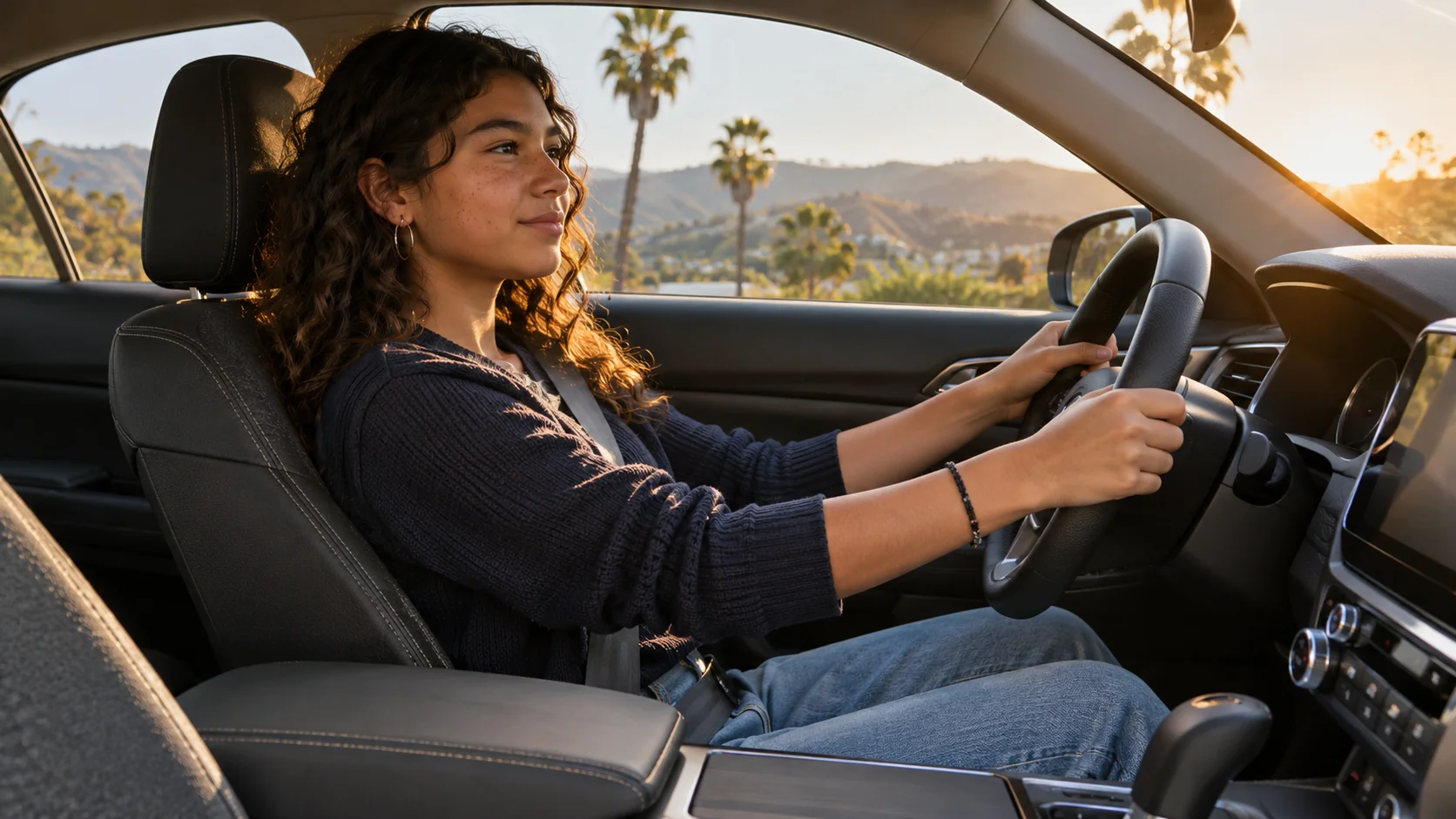
Put your phone away before you start driving.
Quick Answer & Key Takeaways
California drivers under 18 may not use a phone or electronic wireless communications device while driving, even hands-free. The law makes an exception for emergency use.
- Bluetooth calling and dictated texts are off-limits for teen drivers.
- A first violation has a $20 base fine; later violations have a $50 base fine.
- Set navigation and music before driving, and leave the phone out of reach.
Your phone buzzes while you are driving. It might be a text from a friend, a navigation alert, or a song you want to skip. For adults in California, a quick tap on a mounted phone can be legal in some cases, but for a driver under 18 the answer is different, and the state made that choice on purpose.
New drivers are not as experienced in reading traffic, estimating distance and reacting to unexpected events. This guide uses easy-to-understand language to help teens and parents understand the law before anyone starts the car.
The Basic Rule: No Phone at All
All drivers under 18 are subject to California Vehicle Code § 23124. It bans the use of a wireless phone or electronic wireless communications device while driving, even when it is hands-free.
That detail surprises many families, because adult drivers can use hands-free tools such as Bluetooth calling while teen drivers cannot. A teen who talks through the car speakers or dictates a text message is still breaking the rule.
The law includes an exception for genuine emergencies. A young driver may use a phone to call law enforcement, a health care provider, the fire department, or another emergency service.
What Counts as “Using” a Phone
Many teens assume the rule is only about texting or holding the phone to their ear. It covers much more than that. For a driver under 18, the ban applies to calls, texts, apps, music and maps on the phone, even when everything runs through the car’s speakers or a dashboard mount.
A few situations catch new drivers off guard:
- Stopped at a red light or in traffic. The car is still being driven, so the phone should stay put until the car is parked.
- Smartwatches. Reading or replying to messages on a wireless watch can distract a driver and may fall under the device restriction.
- Changing the route or the song. Tapping the phone to adjust navigation or skip a track counts as using the device.
The simplest way to stay on the right side of the law is to treat the phone as off-limits from the moment the car starts moving until it is parked.
What a Ticket Costs
A first offense carries a base fine of $20, while each subsequent offense carries a base fine of $50. Additional court assessments and fees may increase the amount paid.
Repeated cellphone violations can also affect a teen’s driving record. Under California Vehicle Code § 12810.3, a point is assigned for a cellphone-use conviction when it occurs within 36 months of a prior conviction for the same offense. Provisional drivers who accumulate two or more violation points within 12 months may face a 30-day driving restriction. Three or more points within that period can result in a six-month suspension and one year of probation.
Other Limits New Drivers Should Know
The phone ban works alongside other restrictions for new drivers. During the first 12 months of a provisional license, the California DMV driver handbook lists two main limits:
- Teens are not allowed to drive between 11 p.m. and 5 a.m.
- Teens cannot carry passengers under 20 unless a licensed parent, guardian, California-licensed driver age 25 or older, or driving instructor is in the car.
Exceptions for school, work, medical needs, and immediate family require the appropriate signed note. These limits exist because friends in the car and night driving are major distractions for new drivers. The rules also show up on the permit test, so it’s worth learning them early. Our provisional license guide explains the passenger limits in more detail.
Habits That Make the Rule Easier
It's much easier to follow a rule when the phone isn't there to tempt. There are some simple behaviors that can have a significant impact:
- Turn on Do Not Disturb While Driving before the engine starts.
- Set the route and the playlist while the car is parked.
- Store the phone in a bag or glove box where it is inaccessible.
A family driving agreement works best when the adults follow it too, and parents can lead by example. See our distracted driving guide for the rules that apply to adult drivers.
If a Crash Happens
Even careful teens can end up in a collision, and many crashes are caused by other drivers. Los Angeles freeways and city streets stay busy throughout the day, so it helps to understand the necessary steps before an accident happens.
- Check for injuries and call 911 if anyone is hurt.
- Move to a safe spot if the vehicles can be moved.
- Exchange names, insurance details, and license plate numbers.
- Take photos of the cars, the road, and any signs or signals nearby.
- Get checked by a doctor, even if you feel fine, since some injuries appear later.
When someone is hurt or fault is unclear, many families speak with a Los Angeles car accident lawyer before they give a statement to an insurance company. Phone records can matter in these claims, so do not delete texts, call logs, or photos from the day of the crash.
The Bottom Line
California takes a simple approach to teen drivers under 18 and phones. Understand the boundaries, establish healthy habits early, and know how to react in case of the unexpected.
This article offers general information and is not legal advice. Laws can change, so check the current California Vehicle Code or the DMV for updates.
Authoritative Sources & Regulatory References
Content and statutory guidelines in this guide are verified against official state vehicle codes, federal transportation standards, and authoritative regulatory documentation:
- California LegislatureCalifornia Vehicle Code § 23124
- California LegislatureCalifornia Vehicle Code § 12810.3
- California DMVGetting an Instruction Permit and Driver’s License
90% of people found this article helpful.
Click a star to add your vote
186 votes • average 4.57 out of 5
Ready to Pass the DMV Test on Your First Try?
Practice real 2026 DMV questions with instant answer explanations, simulated timers, and pass-guarantee study guides.
Start Free Practice Test