California Highway Striping: What Yellow, White & Orange Lines Mean
Mastering statutory driver licensing regulations and highway laws ensures first-time test success.
Quick Answer & Key Takeaways
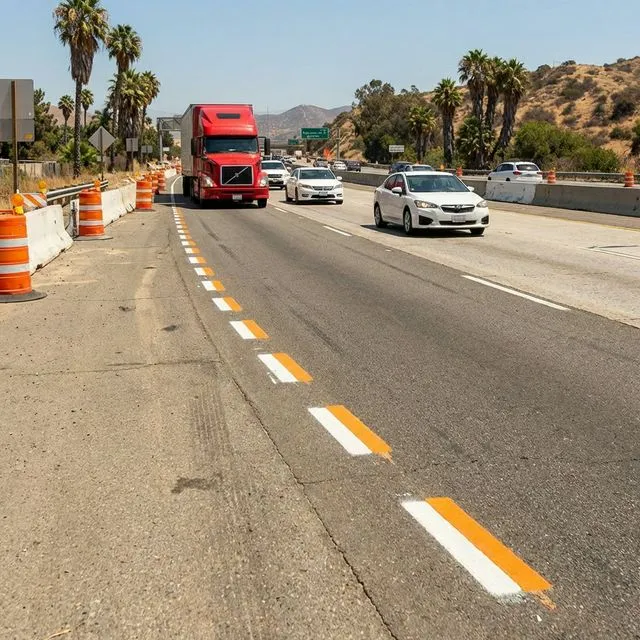
California Caltrans pavement markings provide critical statutory guidance: 1) ORANGE HIGHWAY STRIPES: High-visibility temporary striping used exclusively in active Caltrans construction and work zones to demarcate shifted lanes; traffic fines double in these zones. 2) DOUBLE SOLID WHITE LINES: Permanent barrier indicating lane changes are STRICTLY PROHIBITED (commonly separating HOV/carpool express lanes). 3) SOLID YELLOW WITH BROKEN YELLOW: Passing permitted ONLY on the side with the broken line. 4) TWO SETS OF DOUBLE SOLID YELLOW LINES (2+ feet apart): Treated as a solid barrier wall—never cross or make U-turns across them.
- Orange Striping = Active Construction: Double fines for speeding or moving violations in orange-striped work zones.
- Double Solid White Lines: Absolutely no crossing allowed (HOV carpool barrier).
- Two Sets of Double Yellow Lines: Function legally as a solid concrete wall; crossing is illegal.
- Single Solid White Line: Discourages lane changes near intersections and freeway merge points.
If you’ve driven near San Diego recently, specifically on Interstate 5, you might have noticed something that looks like mistake: orange highway lane markings instead of the standard white stripes.
What Do Orange Lane Lines Mean?
You didn't imagine it, and the paint crew didn't grab the wrong bucket.
- Statutory Compliance: Obeying exact vehicle code thresholds rather than informal habits ensures zero penalty points on exam day.
- Defensive Safety Standard: Maintaining safe following distances and active visual scanning eliminates collision risks under Basic Speed Law principles.
- Hazard Recognition: Anticipating changing traffic patterns and road conditions allows proactive rather than reactive braking.
These orange lanes are a deliberate, high-tech safety measure rapidly expanding across California. For drivers preparing for their California DMV permit test, understanding these new road markings is becoming just as important as knowing your stop signs.
Why the Change? (The Science of "Wake Up")
Here is everything you need to know about California's new orange striping—and why it might just save your life in a construction zone.
- Statutory Compliance: Obeying exact vehicle code thresholds rather than informal habits ensures zero penalty points on exam day.
- Defensive Safety Standard: Maintaining safe following distances and active visual scanning eliminates collision risks under Basic Speed Law principles.
- Hazard Recognition: Anticipating changing traffic patterns and road conditions allows proactive rather than reactive braking.
In the language of the road, orange always means construction. You see it on diamond-shaped warning signs, on construction cones, and on the vests of road workers.
Where Will You Look for Them?
Traditionally, lane markings didn't follow this color code. White lines separated lanes moving in the same direction, even through chaotic work zones. The problem? Drivers often tuned them out.
- Statutory Compliance: Obeying exact vehicle code thresholds rather than informal habits ensures zero penalty points on exam day.
- Defensive Safety Standard: Maintaining safe following distances and active visual scanning eliminates collision risks under Basic Speed Law principles.
- Hazard Recognition: Anticipating changing traffic patterns and road conditions allows proactive rather than reactive braking.
Contrast striping (the official name for these orange lines) changes that. By painting the lane dividers orange, Caltrans creates a continuous visual reminder that you are in a high-risk environment.
The Bottom Line for Your Test & Safety
Construction zones are notoriously dangerous. Lanes shift unexpectedly, shoulders disappear, and workers stand just feet away from speeding traffic.
- Statutory Compliance: Obeying exact vehicle code thresholds rather than informal habits ensures zero penalty points on exam day.
- Defensive Safety Standard: Maintaining safe following distances and active visual scanning eliminates collision risks under Basic Speed Law principles.
- Hazard Recognition: Anticipating changing traffic patterns and road conditions allows proactive rather than reactive braking.
The orange paint acts as a subconscious trigger. Even drivers who don't explicitly know the rule reported in studies that the "wrong" color made them lift their foot off the gas and scan the road.
Interactive Knowledge Check
Question: What does two sets of double solid yellow lines spaced 2 or more feet apart indicate on a California highway?
Authoritative Sources & Regulatory References
Content and statutory guidelines in this guide are verified against official state vehicle codes, federal transportation standards, and authoritative regulatory documentation:
- AAMVAOfficial State Driver Handbooks & Licensing Examination Criteria (2026)(American Association of Motor Vehicle Administrators)
- NHTSANational Highway Traffic Safety Administration (NHTSA) Uniform Guidelines for State Highway Safety(National Highway Traffic Safety Administration)
- FHWAFederal Highway Administration (FHWA) Manual on Uniform Traffic Control Devices (MUTCD)(Federal Highway Administration)
85% of people found this article helpful.
Click a star to add your vote
60 votes • average 4.33 out of 5
Official 2026 DMV Practice Tests by State
Select your state to practice real exam questions based on the latest 2026 driver handbook.
Ready to Pass the DMV Test on Your First Try?
Practice real 2026 DMV questions with instant answer explanations, simulated timers, and pass-guarantee study guides.
Start Free Practice Test