Night Driving Safety: How to Handle Fatigue, Glare, and Low Visibility
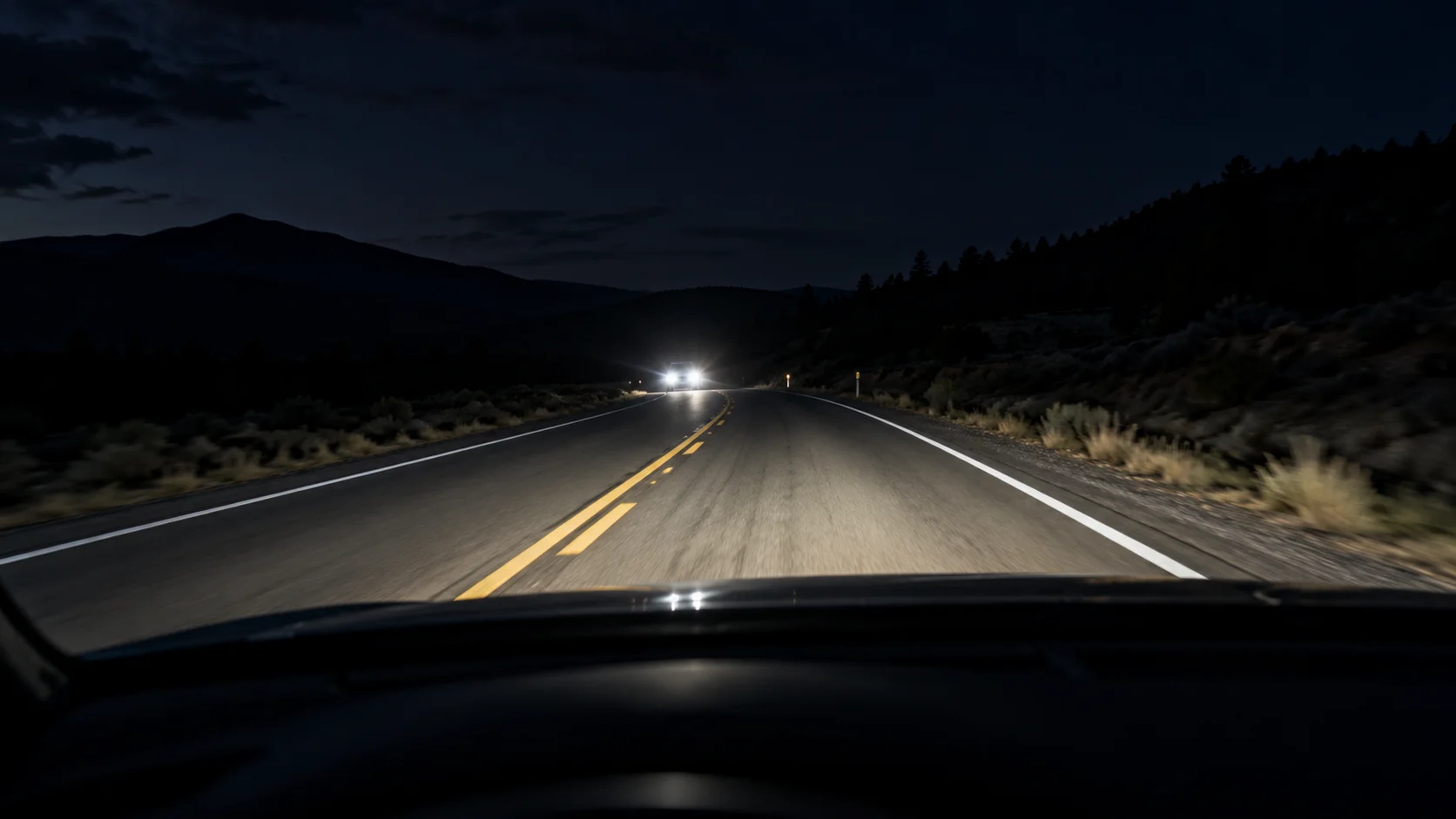
At night, your safe speed depends on how far your headlights let you see.
Quick Answer & Key Takeaways
For safer night driving, slow enough to stop within the distance you can see, leave more space, keep glass and headlights clean, and avoid staring into oncoming lights. If you are sleepy, stop somewhere safe and rest; glare tricks cannot solve fatigue. NHTSA advises a short nap at a safe rest stop if sleepiness starts while driving.
- Reduce speed when your view is limited.
- Look toward the right edge of your lane when headlights glare.
- Do not wear sunglasses or tinted lenses at night.
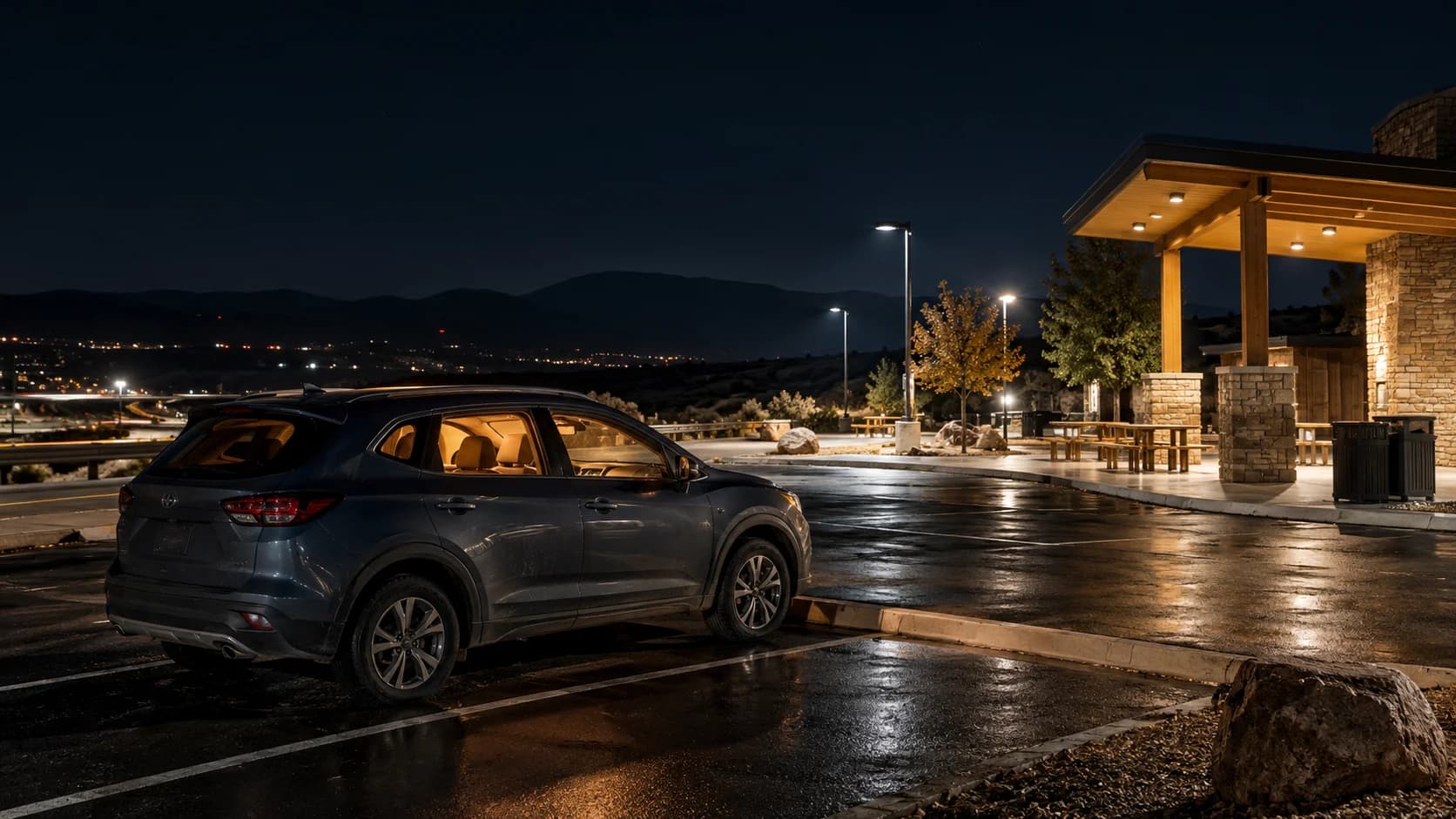
- Pull over and rest if you are sleepy.
Drive Within What You Can See
Headlights reveal less of the road than daylight. A speed that is safe by day may leave too little room to react at night. NHTSA advises slowing down and leaving extra space because headlamps illuminate only part of the road ahead.
On an unlit road, ease off the accelerator before curves, hills, and areas where animals may enter. Leave enough room behind the next vehicle to respond without sudden braking. Our stopping distance guide explains why added speed consumes your visible stopping room quickly.
Handle Glare Without Losing Your Lane
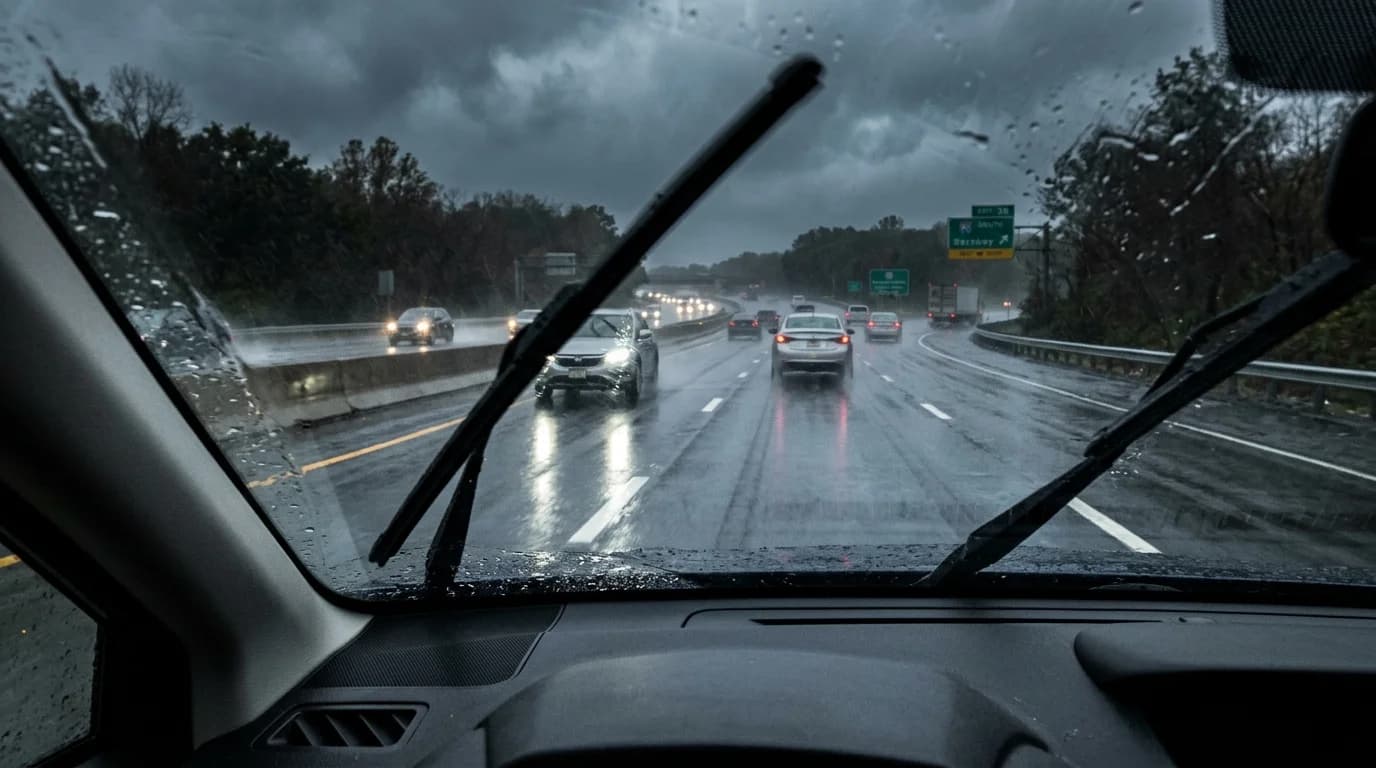
When an oncoming vehicle’s lamps are bright, avoid looking directly at them. Keep your eyes on the lane ahead and use the right edge of the road as a guide until the vehicle passes. Adjust the inside mirror to its night setting when lights behind you glare. NHTSA also recommends keeping the windshield clean inside and out; a dirty surface spreads light and makes visibility worse.
Do not use sunglasses or tinted lenses to fight night glare. NHTSA warns that they cut the light reaching your eyes. If glare remains severe, arrange an eye exam and check that your glasses prescription is current.
Check the Car Before Leaving
- Clean the windshield and mirrors: Wipe the inside as well as the outside.
- Check lamps: Confirm both headlights and rear lights work; clean cloudy lamp covers.
- Use the right beam: Switch from high beams when they would dazzle another driver, following your state’s handbook. See our headlight rules guide.
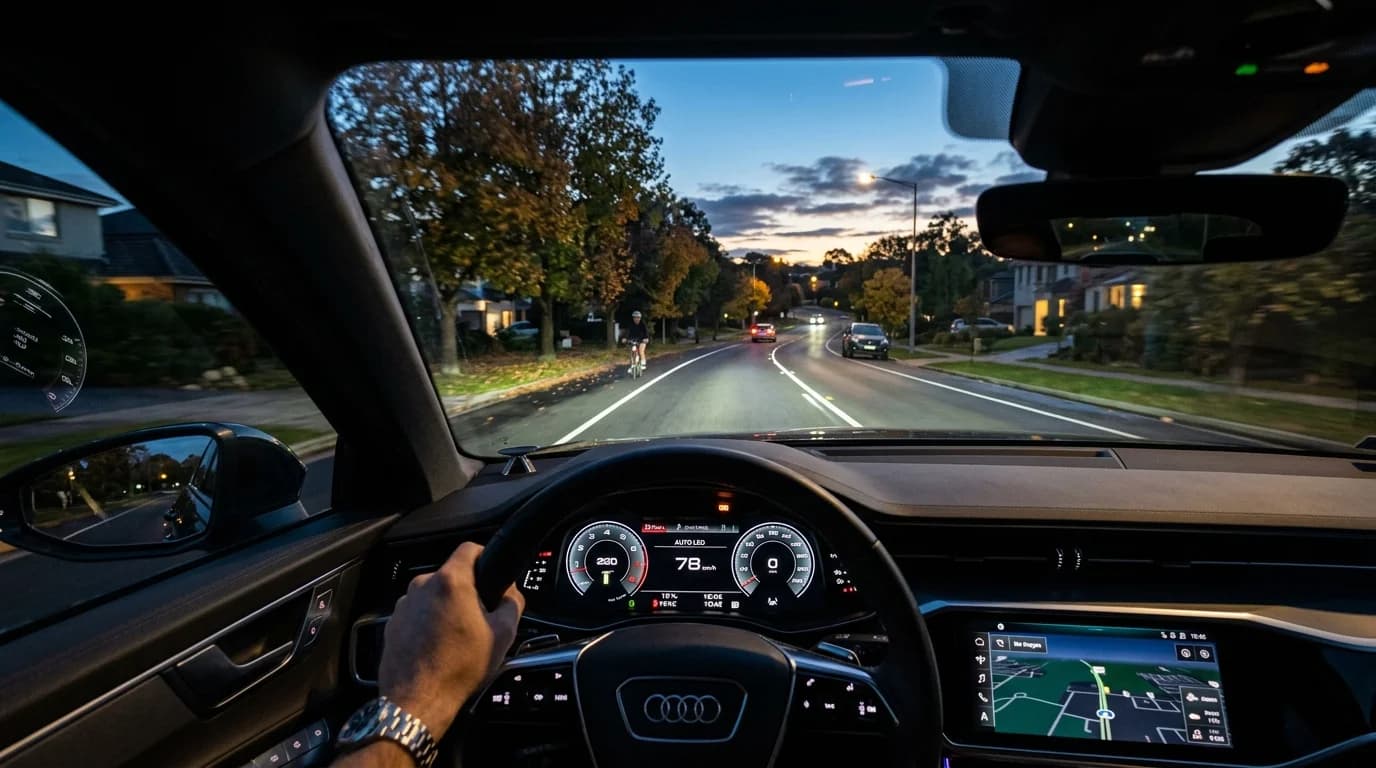
- Plan the route: Favor well-lit roads when you are learning to drive at night.
A teen building night hours can use our night driving practice plan for progressively harder trips.
Know When Visibility Is Not the Main Problem
Sleepiness reduces attention even when the road is well lit. Warning signs include drifting across a lane line, missing a turn, or struggling to remember the last few miles. NHTSA recommends a safe stop and a short nap if you become sleepy. Coffee alone is an unreliable fix.
For a late trip, share driving with a rested passenger or postpone the drive. Read our drowsy driving guide before relying on music, open windows, or caffeine.
| Problem | Safer response | Avoid |
|---|---|---|
| Short headlight reach | Slow down and leave more space | Driving beyond visible stopping distance |
| Oncoming glare | Look toward right lane edge | Staring into lamps |
| Sleepiness | Stop safely and rest | Relying on music or open windows |
Knowledge Check
On an unlit road, what should you do when oncoming headlights create glare?
Review the rules that govern when to use your lights in our headlight guide.
Authoritative Sources & Regulatory References
Content and statutory guidelines in this guide are verified against official state vehicle codes, federal transportation standards, and authoritative regulatory documentation:
- NHTSADriving at Night(NHTSA night driving guidance)
- NHTSADriving Safely While Aging Gracefully(NHTSA glare and vision guidance)
- NHTSADrowsy Driving(NHTSA fatigue guidance)
89% of people found this article helpful.
Click a star to add your vote
291 votes • average 4.49 out of 5
Ready to Pass the DMV Test on Your First Try?
Practice real 2026 DMV questions with instant answer explanations, simulated timers, and pass-guarantee study guides.
Start Free Practice Test