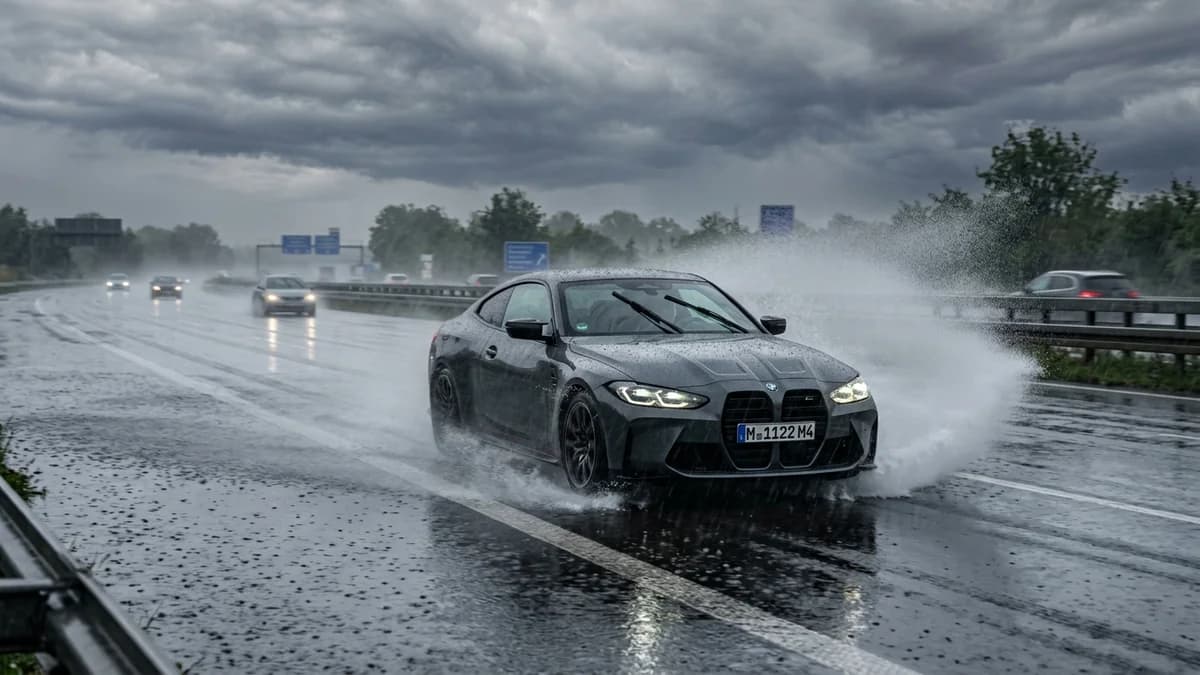
Stopping Distance Formula: Perception + Reaction + Braking Distance
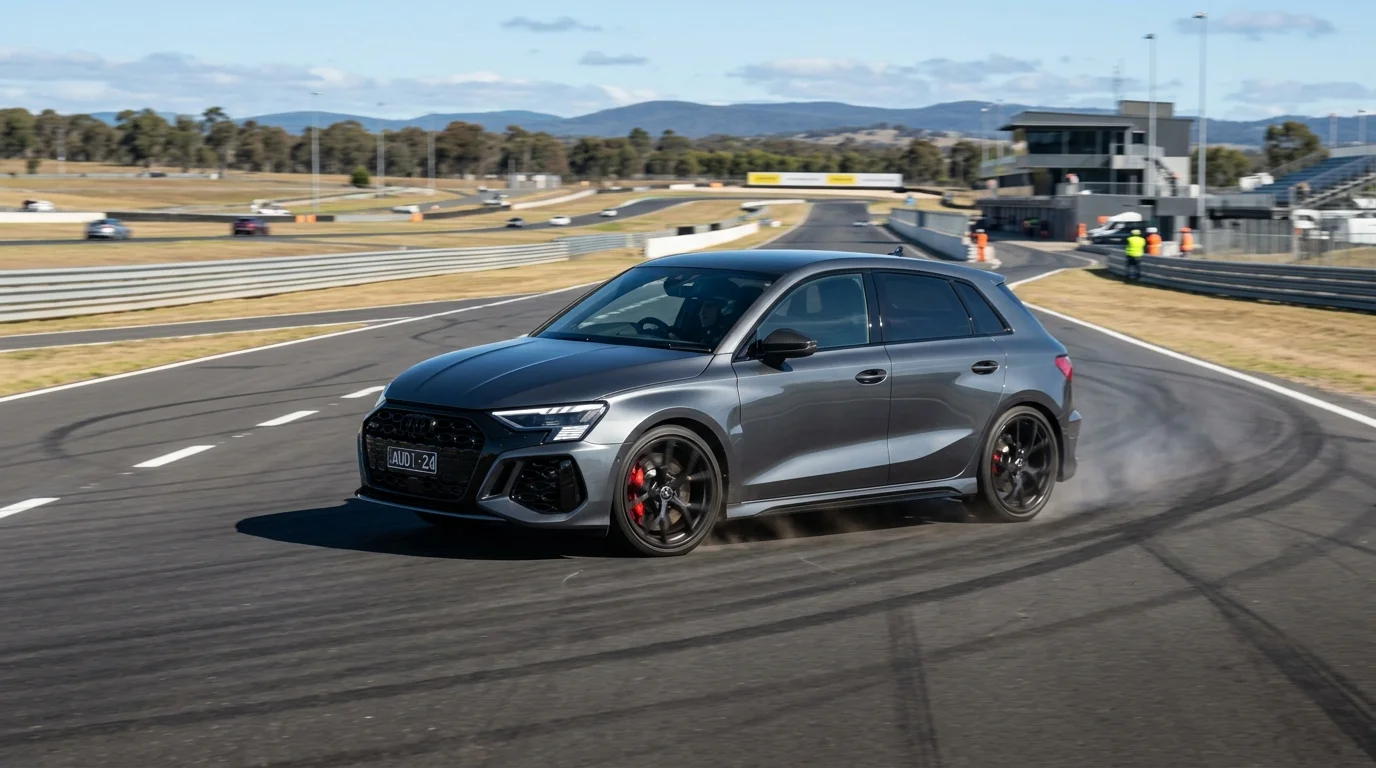
Total stopping distance equals Perception Distance + Reaction Distance + Braking Distance, governed by fundamental kinetic energy physics.
Quick Answer & Key Takeaways
Total vehicle stopping distance is the sum of three distinct phases: 1) PERCEPTION DISTANCE: The distance traveled while your eyes spot a hazard and your brain recognizes danger (~0.75 to 1.5 seconds). 2) REACTION DISTANCE: The distance traveled while moving your right foot from the accelerator to the brake pedal (~0.75 seconds). 3) BRAKING DISTANCE: The physical distance required for the brake pads and tire friction to bring the car to a full stop. Because kinetic energy scales with the square of velocity (KE = ½mv²), doubling your vehicle speed quadruples your braking distance.
- The Formula: Total Stopping Distance = Perception Distance + Reaction Distance + Braking Distance.
- The Square Law: When vehicle speed doubles (e.g. from 30 mph to 60 mph), braking distance increases by 400% (4x longer).
- Highway Distance at 65 MPH: A car traveling 65 mph travels over 95 feet per second and requires over 310 feet (the length of an entire football field) to stop on dry pavement.
- Wet Weather Impact: Wet roads double braking distance, while snow and ice increase braking distance by 6x to 10x.
The 3 Components of Total Stopping Distance Formula
A common mistake among student drivers is believing that pressing the brake pedal brings a car to an immediate halt.
In physical reality, stopping a 3,500-pound passenger vehicle traveling at highway speeds involves a multi-stage time-distance chain governed by human neurological response and mechanical friction under AASHTO Stopping Sight Distance (SSD) standards:
Perception Distance: Human Recognition Time (0.75 to 1.5 Sec)
Perception Time is the duration between the instant a hazard appears (such as brake lights illuminating ahead or a child stepping into an unmarked crosswalk) and the moment your brain comprehends the danger.
- Average Human Perception Time: An alert, well-rested driver averages 0.75 seconds to 1.5 seconds of cognitive recognition delay.
- Perception Distance at Speed: At 60 mph, your vehicle travels 88 feet per second. In 1.5 seconds of perception time, your car travels 132 feet before you even begin moving your foot.
- Distraction Impact: Glancing at a smartphone text message for 3 seconds at 65 mph means traveling 285 feet completely blind without perceiving hazards.
Reaction Distance: Moving Your Foot to the Pedal (0.75 Sec)
Reaction Time is the physical delay required for your nervous system to send motor signals to lift your right foot off the accelerator and depress the brake pedal.
- Standard Reaction Benchmark: The National Safety Council (NSC) benchmarks human reaction time at 0.75 seconds.
- Reaction Distance Formula: A quick approximation for reaction distance is multiplying your speed (mph) by 1.1 feet (e.g., at 50 mph, reaction distance is approx. 55 feet).
Braking Distance: Kinetic Energy Physics (Speed Quadruples Braking)
Braking Distance is the physical distance the vehicle travels from the moment the brake pads clamp against the rotors until the wheels come to a complete zero-mph stop.
Braking distance is dictated by Newton's laws of kinetic energy:
Because velocity is squared in the physics equation:
- Doubling Your Speed (30 mph to 60 mph): Quadruples the kinetic energy ( 4x more energy to dissipate) and quadruples your braking distance.
- Tripling Your Speed (20 mph to 60 mph): Multiplies kinetic energy and braking distance by 9x (900%).
Total Stopping Distance Chart (20 MPH to 70 MPH)
Under ideal conditions (dry asphalt, good tire tread, alert driver), stopping distances scale exponentially:
| Speed (MPH) | Perception & Reaction Distance | Mechanical Braking Distance | Total Stopping Distance |
|---|---|---|---|
| 25 MPH | 55 feet | 30 feet | 85 feet (~2 car lengths) |
| 35 MPH | 77 feet | 60 feet | 137 feet (~3.5 car lengths) |
| 45 MPH | 99 feet | 100 feet | 199 feet (~5 car lengths) |
| 55 MPH | 121 feet | 144 feet | 265 feet (~6.5 car lengths) |
| 65 MPH | 143 feet | 170 feet | 313 feet (>1 Football Field) |
Environmental Multipliers: Wet Pavement, Ice, and Heavy Trucks
Adverse environmental conditions dramatically increase mechanical stopping distances:
- Wet Roads / Rain: Roadway friction drops by 50%, doubling braking distance and increasing the risk of hydroplaning skids. Expand your following distance to 4+ seconds.
- Packed Snow & Black Ice: Friction coefficients plummet by 80% to 90%, requiring 6 to 10 times more distance to stop.
- Commercial 18-Wheel Semi-Trucks: Due to immense momentum (80,000 lbs gross weight), a loaded tractor-trailer takes almost double the distance of a passenger car to stop at 65 mph (over 525 feet).
Interactive Knowledge Check
Question: If you double your driving speed from 30 mph to 60 mph on dry pavement, how much does your mechanical braking distance increase?
Authoritative Sources & Regulatory References
Content and statutory guidelines in this guide are verified against official state vehicle codes, federal transportation standards, and authoritative regulatory documentation:
- AASHTOStopping Sight Distance (SSD) and Brake Reaction Time Formulations(American Association of State Highway and Transportation Officials)
- NHTSAKinetic Energy, Vehicle Weight, and Crash Severity Physics(National Highway Traffic Safety Administration)
- NSCHuman Factors Perception-Response Time (PRT) in Emergency Braking(National Safety Council)
90% of people found this article helpful.
Click a star to add your vote
67 votes • average 4.50 out of 5
Official 2026 DMV Practice Tests by State
Select your state to practice real exam questions based on the latest 2026 driver handbook.
Ready to Pass the DMV Test on Your First Try?
Practice real 2026 DMV questions with instant answer explanations, simulated timers, and pass-guarantee study guides.
Start Free Practice TestRecommended Driver Guides
Following Distance Rules: The 3-Second Rule vs. The 4-Second Weather Rule
The Basic Speed Law Explained: Why You Can Get a Ticket Driving Under the Speed Limit