Backup Cameras on the DMV Test: Rules, Limits & Auto-Fails
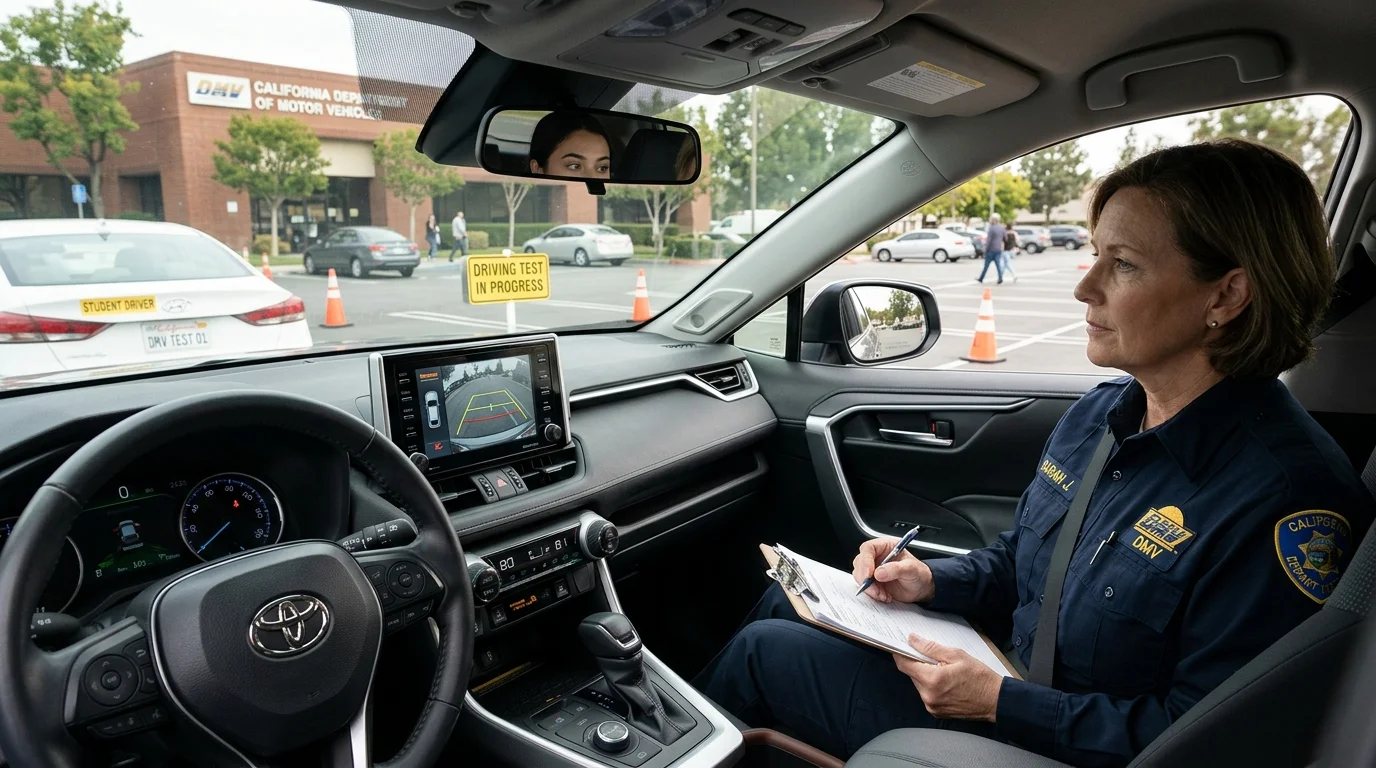
Backup cameras may be used for brief safety checks, but staring at the display screen results in test failure.
Quick Answer & Key Takeaways
Since May 2018, federal law (FMVSS 111) mandates backup cameras on all new passenger vehicles sold in the US. Consequently, state DMVs ALLOW vehicles equipped with backup cameras, but enforce STRICT OPERATIONAL RULES: 1) BACKUP CAMERAS: You may take a 1-to-2-second glance at the camera screen to verify low obstacles (e.g., toys or curbs), but you CANNOT navigate by looking at the screen. You MUST physically turn your head and look out the rear window. Staring exclusively at the screen while reversing is an AUTOMATIC FAILURE or critical error. 2) AUDIBLE BEEPING SENSORS: Permitted, but examiners ignore them. 3) AUTOMATED PARKING & TESLA AUTOPILOT: Strictly BANNED. You must disable all self-parking and steering assistance features.
- Glancing Allowed, Staring Prohibited: You may check the backup camera for 1 second, but 90% of your visual focus must be looking through the rear window.
- Examiners May Cover the Screen: In states like New York and New Jersey, examiners frequently place a clipboard or paper over the screen.
- Automated Parking Banned: Self-parking features (Tesla Autopark, Ford Active Park) must be turned off.
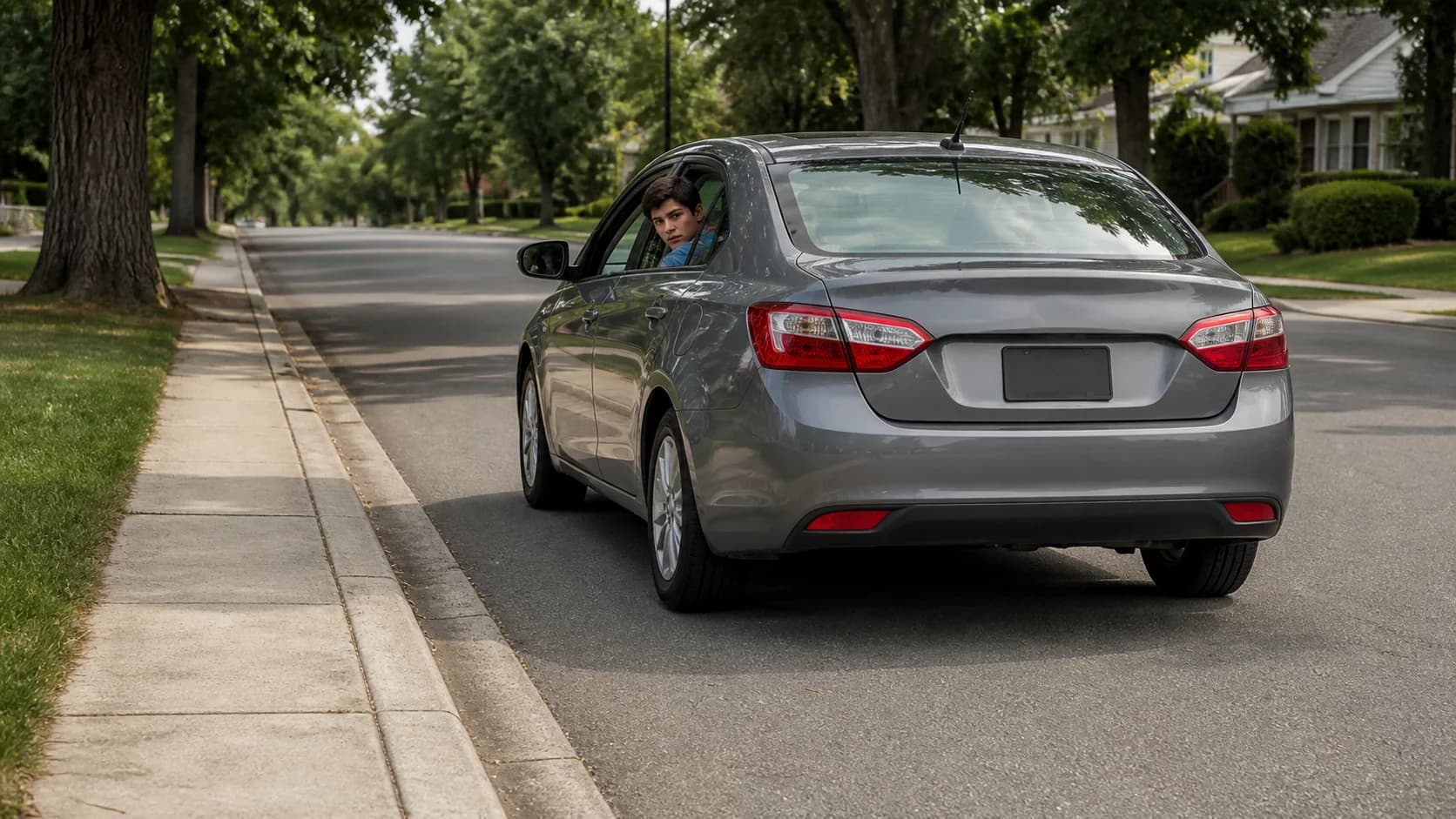
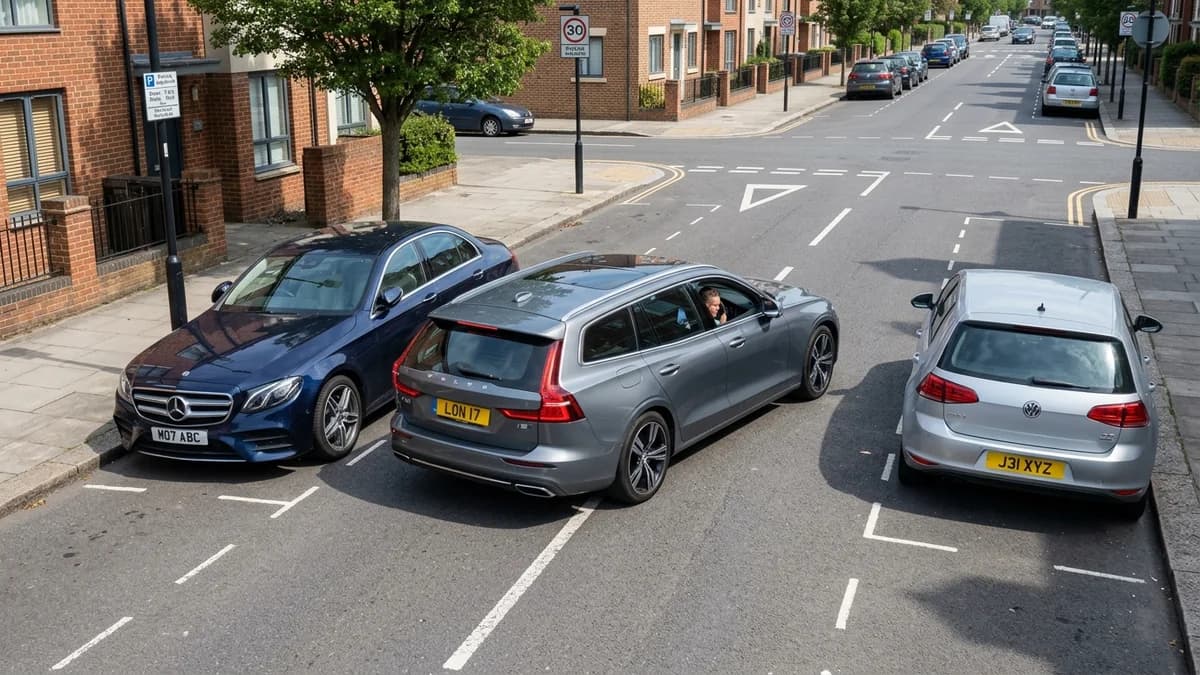
- Mandatory Physical Posture: Place your right arm over the back of the passenger seat and look directly over your right shoulder while reversing.
Modern Car Tech on the Road Test: What Is Allowed vs. Banned
Under Federal Motor Vehicle Safety Standard FMVSS No. 111, every car manufactured after May 1, 2018 must include a factory-installed backup camera.
Because virtually every modern car has a screen in the center console, state DMVs cannot ban backup cameras.
However, the purpose of a behind-the-wheel exam is to evaluate human spatial driving capability. State DMVs enforce strict behavioral criteria to ensure candidates do not rely on automation.
The Backup Camera Rule: Quick Glances vs. "Staring" Auto-Fails
DMV policy on backup cameras across California, Texas, Florida, and New York follows the "Quick Glance Rule":
- Permitted (Brief Safety Check): You may take a 1-to-2-second glance at the camera screen before putting the car in motion to ensure no small objects or animals are behind the bumper.
- Strictly Prohibited (Screen Staring): If you keep your eyes glued to the display screen while the vehicle is in reverse motion (such as during curb reversing or 3-point turns), the examiner will mark a Critical Driving Error (Failure to Look in Direction of Travel), causing you to fail the test.
- Examiner Clipboard Cover: In New York, New Jersey, and Illinois, examiners are authorized to tape a piece of paper or place their clipboard over the screen during parking maneuvers.
Ultrasonic Parking Sensors & Blind Spot Lights (BSM) Rules
Modern vehicle safety warnings are treated as follows:
- Audible Proximity Beeps: You do not need to disable ultrasonic parking beepers. However, the examiner will evaluate your mirrors and physical head turns, not the beeping sound.
- Blind Spot Indicator Lights (Side Mirror Icons): Permitted, but they do NOT substitute for looking over your shoulder. You must execute a physical 90-degree chin-to-shoulder head turn during every lane change.
Automated Parking Assist & Tesla Autopilot: Mandatory System Disabling
All active automated driving features are strictly illegal on a DMV driver test:
- Automated Self-Parking: Features that steer the vehicle automatically into a parallel or perpendicular space (e.g., Ford Active Park Assist, Tesla AutoPark) must remain turned OFF. Using them is an immediate disqualification.
- Adaptive Cruise Control & Autopilot: Adaptive cruise control, lane centering, and self-driving modes must be turned completely off.
Proper Reversing Technique: The Over-the-Shoulder Posture
To earn full points on all reversing and parking maneuvers:
- Place your left hand at the 12 o'clock position on the steering wheel.
- Drape your right arm across the back of the front passenger headrest or seatback.
- Turn your head and torso 90 degrees to look directly through the rear glass window.
- Crawl in reverse at 2 to 3 MPH, looking back continuously until the vehicle comes to a complete halt.
ADAS & In-Car Technology DMV Road Test Policy Table
| Vehicle Technology | Allowed on Road Test? | Operational Constraint | Violation Penalty |
|---|---|---|---|
| Backup Camera Screen | Yes (Equipped) | 1-second check only; must look out rear window | Auto-Fail if staring at screen |
| Ultrasonic Parking Sensors | Yes (Beeping allowed) | Must maintain manual visual scans | None |
| Blind Spot Mirror Lights (BSM) | Yes | Must still perform 90° shoulder check | Critical error if head check omitted |
| Automated Self-Parking (Autopark) | STRICTLY BANNED | Must be completely deactivated | AUTOMATIC TEST DISQUALIFICATION |
Interactive Knowledge Check
Question: When reversing your vehicle along a curb or during parallel parking on a DMV road test, how is the backup camera legally permitted to be used?
Authoritative Sources & Regulatory References
Content and statutory guidelines in this guide are verified against official state vehicle codes, federal transportation standards, and authoritative regulatory documentation:
- California DMVCalifornia DMV Driving Performance Evaluation: Backup Camera and Advanced Driver Assistance Systems Policy(California Department of Motor Vehicles)
- NHTSAFederal Motor Vehicle Safety Standard FMVSS No. 111: Rearview Visibility Mandate(National Highway Traffic Safety Administration)
- AAMVAAAMVA Non-Commercial Driver Testing Guidelines for ADAS and Autonomous Features(American Association of Motor Vehicle Administrators)
97% of people found this article helpful.
Click a star to add your vote
286 votes • average 4.91 out of 5
Official 2026 DMV Practice Tests by State
Select your state to practice real exam questions based on the latest 2026 driver handbook.
Ready to Pass the DMV Test on Your First Try?
Practice real 2026 DMV questions with instant answer explanations, simulated timers, and pass-guarantee study guides.
Start Free Practice Test