How to Parallel Park in 3 Easy Steps (With Diagrams & Reference Points)
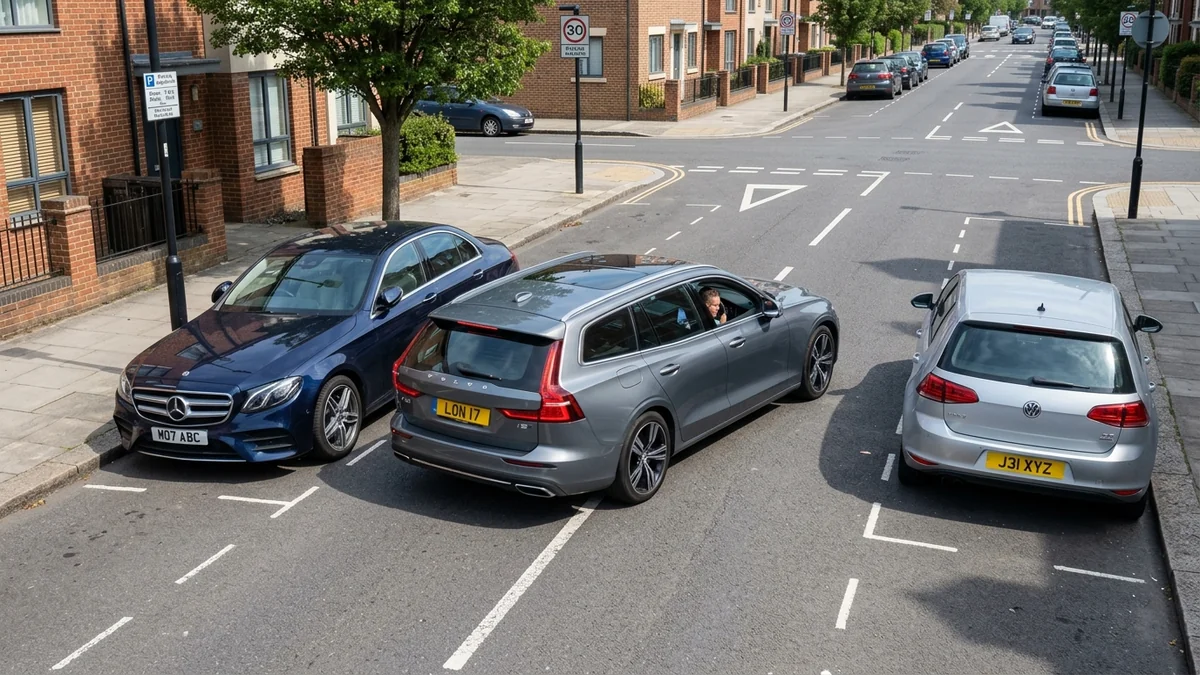
Using exact visual reference points removes the guesswork from parallel parking and ensures you stay within the legal 12-to-18-inch curb distance.
Quick Answer & Key Takeaways
Parallel park in 3 repeatable steps: 1) Alignment: Pull alongside the car parked in front of the space, 2–3 feet away, matching rear bumpers. 2) The 45° Angle Cut: Shift into Reverse, turn your steering wheel all the way toward the curb, and back up until your car sits at a 45-degree angle. 3) Counter-Steer & Tuck: Straighten your wheel and glide back until your front bumper clears their rear bumper, then turn the steering wheel all the way in the opposite direction toward the street to straighten out 6 to 18 inches from the curb.
- Bumper-to-bumper starting point: Align your rear bumper with the parked car's rear bumper, not side mirrors.
- The 45-degree reference point: In your driver's side mirror, you should see the entire front of the car parked behind you.
- Legal distance: You must park within 12 to 18 inches of the curb to pass state DMV road tests.
- Adjusting is allowed: If your angle is off, pulling forward to correct your position is permitted and not an automatic failure.
The 3-Step Parallel Parking Formula
Parallel parking is often considered the most intimidating maneuver on the DMV behind-the-wheel exam, ranking among the top reasons students accumulate automatic fail deductions in the official DMV Driver Handbook. However, parallel parking is purely applied geometry. When you rely on reliable physical reference points rather than guessing, you can place your car within 6 to 12 inches of the curb on the very first attempt every single time.
Follow this exact 3-step sequence:
- (Setup): Align parallel to the front vehicle, maintaining a 2 to 3-foot buffer with rear bumpers matched.
- (The 45° Cut): Turn the steering wheel full lock toward the curb and reverse until your vehicle forms a 45-degree angle to the street.
- (Counter-Steer): Straighten the wheel, reverse into the pocket, and lock the wheel toward the traffic lane to tuck the front end in parallel.
Starting Alignment (Bumper to Bumper)
Find a parking space that is at least 1.5 times the length of your vehicle (roughly 4 to 6 feet longer than your car).
How to Position Your Vehicle:
- Turn on your right turn signal: Signal at least 100 feet before stopping to notify following traffic that you intend to park.
- Pull up parallel to Car A (the car in front of the space): Leave approximately 2 to 3 feet of space between your passenger door and their driver door.
- Align rear bumpers: Stop when your car's rear bumper is lined up evenly with the rear bumper of the parked vehicle. (If both vehicles are roughly the same size, your side mirrors will align).
- Shift into Reverse: This illuminates your white reverse backup lights to alert drivers behind you.
The 45-Degree Angle Cut
This is where the magic happens. While keeping your foot firmly on the brake:
- Lock the steering wheel toward the curb: Turn your wheel all the way to the right (clockwise) until it stops turning.
- Check your mirrors and blind spots: Look over your left shoulder for oncoming traffic, pedestrians, or cyclists.
- Reverse slowly at idle speed: Ease off the brake pedal. Let the car pivot backward into the empty space.
- The 45° Visual Reference Point: Stop when your car is at a 45-degree angle. You know you have reached 45 degrees when the license plate and headlights of the car behind you (Car B) appear centered in your driver's side wing mirror.
Straighten, Counter-Steer & Tuck In
Once positioned at 45 degrees, complete the tuck-in maneuver:
- Straighten your wheels: Rotate your steering wheel 1.5 turns back to center so your front tires point straight ahead.
- Back straight into the pocket: Reverse straight back until your front right bumper clears the rear left corner of Car A in front of you.
- Lock the wheel completely to the left: Turn your steering wheel all the way to the left (counter-clockwise) toward the street and continue reversing slowly.
- Settle into place: Your car will swing parallel to the curb. Stop before touching the car behind you. Shift into Drive, pull forward slightly to center your car between both vehicles, and straighten your wheels.
DMV Road Test Standards: What Examiners Grade
Examiners evaluate three critical criteria during parallel parking:
- Distance from the curb: In most states, your tires must finish between 6 and 18 inches from the curb (California and New York standard is within 12 inches).
- Observation & 360° awareness: You must physically look over your right shoulder while reversing and check all mirrors. Staring exclusively at a backup camera screen will result in point deductions.
- Smooth control: Mounting the sidewalk or forcefully striking the curb is an automatic Critical Driving Error test disqualifier.
How to Fix Common Mistakes (Too Far vs. Too Close)
If your park isn't perfect, you can easily adjust before putting the car in Park:
- Too far from the curb (more than 18 inches): You started turning your wheel to the left too early during Step 3. Solution: Pull forward, reverse straight back a few inches deeper into the pocket before counter-steering.
- Too close to the curb (risk of hitting): You turned toward the curb for too long before straightening. Solution: Shift into Drive, pull forward 3 feet while turning toward the street, then reverse back to straighten.
What is the legally acceptable finished distance between your vehicle's wheels and the curb when parallel parked?
Frequently Asked Questions
Is parallel parking required on every state driving test?
No. While states like New York, New Jersey, Pennsylvania, and Washington require parallel parking, some states (like California) have replaced it on the standard road test with curbside backing maneuvers. However, the skill remains essential for everyday driving.
Can you use your side mirrors instead of turning your head?
No. Examiners specifically watch for physical head turns. You must look over your shoulder and scan all 360 degrees around your car while reversing.
How do you safely pull out of a parallel parking space?
Back up a few feet to give your front bumper clearance, activate your left turn signal, check your rear and side mirrors, turn your head to check your left blind spot over your shoulder, and accelerate smoothly into traffic when clear.
Authoritative Sources & Regulatory References
Content and statutory guidelines in this guide are verified against official state vehicle codes, federal transportation standards, and authoritative regulatory documentation:
- California DMVCalifornia Driver’s Handbook: Parking Rules & Maneuvers(State of California Department of Motor Vehicles)
- NY DMVNew York State Driver’s Manual: Chapter 8 - Parallel Parking(New York State Department of Motor Vehicles)
- AAMVADriver License Testing Standards: Maneuver Scoring(American Association of Motor Vehicle Administrators)
84% of people found this article helpful.
Click a star to add your vote
125 votes • average 4.18 out of 5
Official 2026 DMV Practice Tests by State
Select your state to practice real exam questions based on the latest 2026 driver handbook.
Ready to Pass the DMV Test on Your First Try?
Practice real 2026 DMV questions with instant answer explanations, simulated timers, and pass-guarantee study guides.
Start Free Practice TestRecommended Driver Guides

The Top 10 Automatic Fails on the DMV Driving Road Test
Avoid critical driving errors that cause immediate test disqualification on behind-the-wheel exams.
Who Has the Right-of-Way at a 4-Way Stop? The Complete Rulebook
Master the 4 golden rules of four-way stops: first-come first-served, the car-on-the-right tiebreaker, and straight vs turns.
Which Way to Turn Your Wheels When Parking on a Hill (And Why)
Understand the core physics behind hill parking so you never have to memorize confusing tables again.