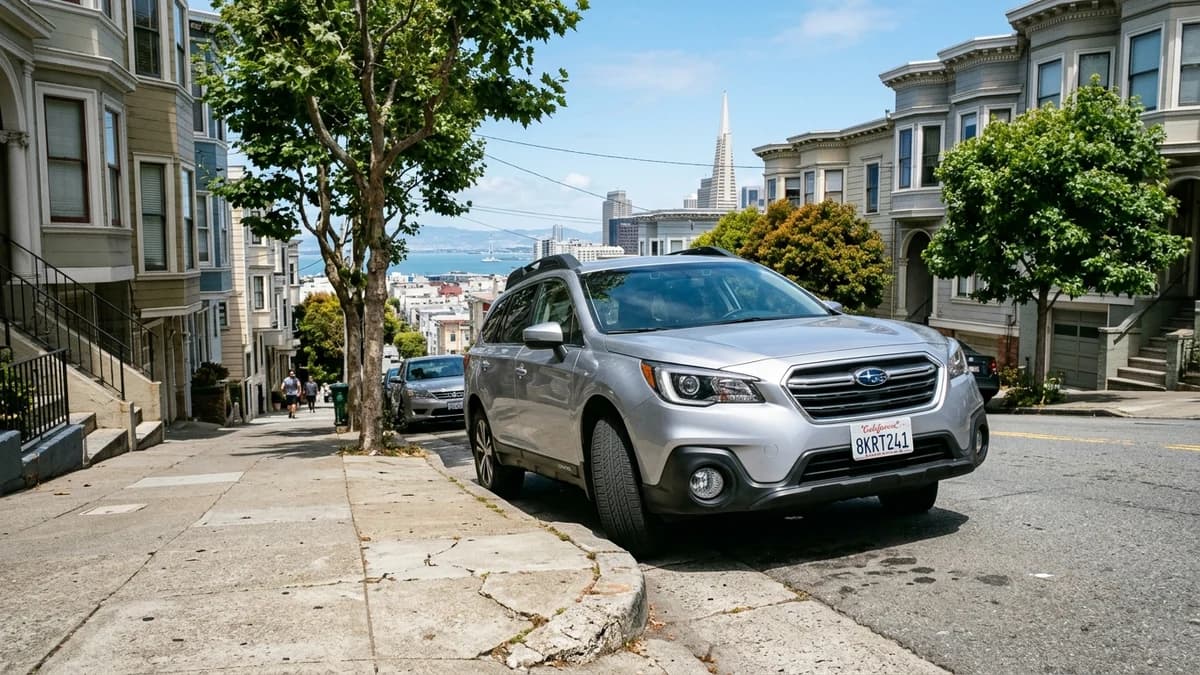
Hill Starts in a Manual Car: Handbrake Method vs. 3-Pedal Quick Step
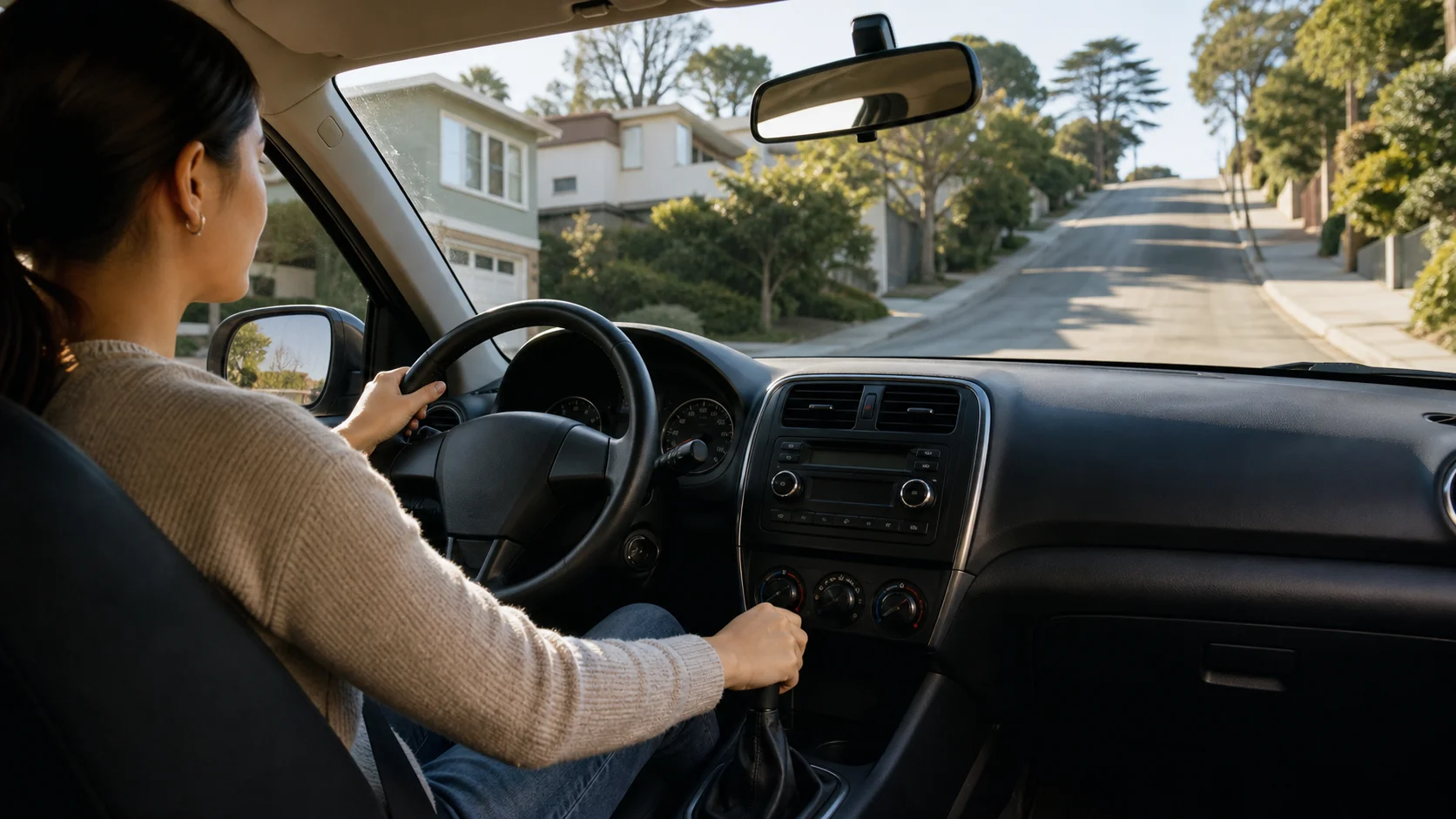
Using the mechanical handbrake eliminates rollback completely on steep uphill starts.
Quick Answer & Key Takeaways
Starting a manual transmission car on a steep uphill grade without rolling backward into trailing vehicles is the ultimate test of stick-shift mastery: 1) THE HANDBRAKE METHOD (FOOLPROOF): Pull up the mechanical handbrake lever (or press electronic parking brake). Shift into 1st gear with clutch depressed. Hold down the handbrake release button with your thumb. Apply gentle gas (1,800–2,000 RPM) and raise the clutch to the bite point until you feel the rear of the car squat and strain against the brake. Release the handbrake smoothly—the car climbs forward with ZERO inches of rollback. 2) QUICK-FOOT METHOD: On gentle grades, rapidly transition your right foot from the brake to the gas while finding the bite point instantly with your left foot.
- The Handbrake Guarantees 0-Inch Rollback: Use the handbrake on grades greater than 5% to prevent rolling backward.
- Feel the 'Squat': When the clutch engages while the handbrake is up, the car's rear suspension physically pulls downward.
- Give Extra Throttle: Uphill starts require 1,800 to 2,200 RPM (more engine torque than flat road starts).
- DMV Grade Test: Rolling backward more than 12 inches on a DMV road test hill start is an immediate point deduction or critical fail.
The Physics of Hill Starts: Gravitational Force vs. Clutch Torque
When a vehicle is stopped facing uphill, gravitational force pulls the entire curb weight of the car backward down the slope.
In an automatic car, transmission fluid pressure prevents rollback. In a manual car, the moment you lift your right foot off the brake pedal, the car rolls freely backward until the clutch plates clamp together to transmit engine torque to the drive wheels.
If a tailgating vehicle stops 18 inches behind your rear bumper, rolling backward creates an instant collision.
The Handbrake (E-Brake) Method: The Foolproof 5-Step Technique
The handbrake method is the official technique taught in European and UK driving schools where manual cars are universal:
- Set the Handbrake: While stopped on the hill with your foot on the brake, pull up firmly on the center console handbrake lever. The handbrake locks the rear wheels.
- Clutch In, 1st Gear: Depress the clutch pedal completely and shift into 1st gear.
- Thumb on the Release Button: Wrap your right hand around the handbrake lever and press the mechanical release button in with your thumb, but keep the lever held UP.
- Build RPM & Find the Bite: Move your right foot to the gas pedal and rev to 1,800–2,000 RPM. Slowly raise your left foot until you reach the clutch friction point (bite point).
- Feel the "Squat" & Release: As the clutch grips, the rear suspension of the car will pull downward ("squat") and the front nose will rise. Smoothly push the handbrake lever all the way down. The car will accelerate smoothly up the hill with zero rollback!
The "Quick-Foot" Method: Footbrake-to-Throttle Transition
On minor inclines (1% to 3% slope):
- Hold the car with the footbrake while holding the clutch down in 1st gear.
- Bring the clutch up to the exact threshold of the bite point while still pressing the footbrake.
- Quickly snap your right foot from the brake to the accelerator (giving 1,500 RPM) while releasing the clutch into the friction zone.
- The car may roll back 1 to 2 inches before grabbing, making this method unsuitable for steep grades.
The Heel-Toe Technique: Holding Brake While Feathering Gas
Advanced and performance drivers use the ball of the right foot to hold the brake pedal down while pivoting the heel (or right side of the foot) to blip the throttle, simultaneously releasing the clutch. This requires high pedal familiarity and is not recommended for novice drivers.
Modern Hill-Start Assist (HSA): How Electronic Brakes Work
Most modern manual cars (2012 and newer) feature electronic Hill Start Assist (HSA) governed by SAE J2977 standards:
- Inertial sensors detect the vehicle is parked on an incline facing uphill.
- When you release the footbrake, the anti-lock brake system (ABS) hydraulically holds brake pressure for 2 to 3 seconds, giving you time to move your right foot to the gas and engage the clutch.
- As soon as the engine generates forward driving torque, HSA releases the brakes automatically.
Manual Hill-Start Methods: Safety, Wear & Skill Level Table
| Method | Rollback Risk | Ideal Incline | Clutch Wear Impact |
|---|---|---|---|
| Handbrake (E-Brake) | 0.0 Inches (Zero rollback) | Steep Hills (5%+ Grade) | Minimal (Quick synchronization) |
| Quick-Foot Transition | 1 to 4 Inches Rollback | Gentle slopes only | Low |
| Electronic Hill Start Assist (HSA) | 0.0 Inches (2-Sec Auto Hold) | All grades (modern cars) | Minimal |
| Riding the Clutch at Stop | Zero (Slip hold) | NEVER (Destructive habit) | Burns out clutch disc in minutes |
Interactive Knowledge Check
Question: When performing an uphill hill start using the handbrake method in a manual transmission car, what physical indicator signals that you should lower the handbrake lever?
Authoritative Sources & Regulatory References
Content and statutory guidelines in this guide are verified against official state vehicle codes, federal transportation standards, and authoritative regulatory documentation:
- NHTSAHill-Start Driver Performance and Vehicle Rollback Crash Countermeasures (DOT HS 811 445)(National Highway Traffic Safety Administration)
- SAE InternationalSAE Technical Standard J2977: Hill Start Assist Control Characteristics(SAE International Automotive Engineering)
- California DMVCalifornia DMV Driving Performance Evaluation: Starting on a Grade Testing Standard(California Department of Motor Vehicles)
91% of people found this article helpful.
Click a star to add your vote
69 votes • average 4.58 out of 5
Official 2026 DMV Practice Tests by State
Select your state to practice real exam questions based on the latest 2026 driver handbook.
Ready to Pass the DMV Test on Your First Try?
Practice real 2026 DMV questions with instant answer explanations, simulated timers, and pass-guarantee study guides.
Start Free Practice Test