How to Park on a Hill: Which Way Do You Turn the Wheels (With & Without Curbs)?
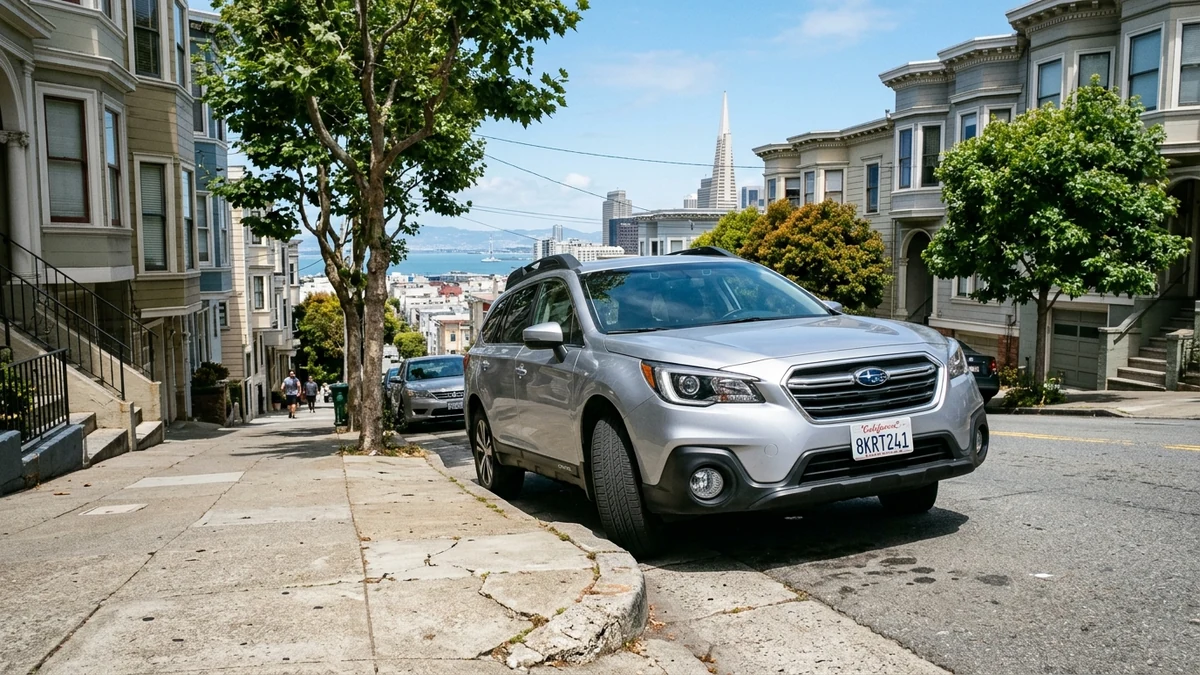
Turning your front wheels in the proper direction ensures that if your parking brake fails, gravity will roll the car into the curb or off the road rather than into active traffic.
Quick Answer & Key Takeaways
Remember the universal rule: 1) Uphill With a Curb: Turn wheels ALL THE WAY LEFT (Away from the curb). Let the car roll back gently until the back of the front tire touches the curb. 2) Downhill With a Curb: Turn wheels ALL THE WAY RIGHT (Toward the curb). 3) Uphill or Downhill WITHOUT a Curb: Turn wheels ALL THE WAY RIGHT (Toward the shoulder). Always set your emergency parking brake firmly and shift into Park (automatic) or Reverse/First gear (manual).
- U.C.L.A. Mnemonic: Uphill, Curb, Left, Always (the only scenario where wheels point left).
- Every other scenario: Turn wheels to the RIGHT (Toward the curb or shoulder).
- Curb contact stops runaways: On uphill slopes, resting the back edge of the front tire against the curb creates a physical mechanical block.
- Parking brake mandatory: Never rely solely on the transmission parking pawl on steep grades.
Why Hill Parking Rules Matter: Preventing Runaways
Every year, thousands of unattended vehicles roll down steep residential streets and highway grades because of mechanical parking brake failures or slipping transmission linkages.
When parking on an incline or decline, the goal is simple: use gravity as a safety mechanism. By positioning your steering wheels correctly, you guarantee that if your vehicle's brakes give out, the vehicle will naturally roll toward the curb or off the roadway, rather than careening across active traffic lanes.
Alongside parallel parking and three-point turns, hill parking wheel orientation is one of the most heavily tested topics on DMV written permit exams and behind-the-wheel road tests.
The Universal "UCLA" Memory Mnemonic
Drivers often get confused trying to memorize four different wheel positions. Fortunately, professional driving instructors use a simple 4-letter acronym that solves 100% of exam questions:
- U — Uphill
- C — Curb
- L — Left
- A — Always (or Away)
"UCLA" means that Uphill with a Curb is the only scenario where you turn your steering wheel to the LEFT (away from the curb). In all other hill parking configurations (Downhill with a curb, Uphill without a curb, Downhill without a curb), you turn your wheels to the RIGHT!
Scenario 1: Uphill With a Curb (Turn Left / Away)
When your vehicle is facing uphill along a street with a concrete curb:
- Wheel Direction: Turn your steering wheel all the way to the LEFT (Away from the curb).
- Mechanical Action: Shift into Neutral, release the foot brake slightly, and allow the vehicle to roll backward several inches until the back of the front right tire gently touches the curb.
- Why It Works: If your brakes fail, the back edge of the front tire presses against the vertical face of the curb, acting like a built-in wheel chock that physically blocks the car from rolling backward down the hill.
Scenario 2: Downhill With a Curb (Turn Right / Toward)
When your vehicle is facing downhill toward the bottom of the slope along a street with a curb:
- Wheel Direction: Turn your steering wheel all the way to the RIGHT (Toward the curb).
- Mechanical Action: Roll forward gently until the front edge of the front right tire rests against the curb.
- Why It Works: If the car begins rolling forward, the front tire will immediately bump into the curb and stop the car within two inches of movement.
Scenario 3: Uphill or Downhill With NO Curb (Turn Right)
On rural highways or suburban roads with soft dirt shoulders, ditches, or open grass:
- Wheel Direction: Turn your steering wheel all the way to the RIGHT (Toward the side of the road / shoulder), whether facing uphill or downhill.
- Why It Works: Because there is no raised concrete barrier to catch your tires, if the vehicle rolls, the angled front wheels will steer the car off the pavement into the dirt or brush, preventing a disastrous collision with active traffic lanes.
The 3-Step Parking Brake & Gear Sequence
Turning the wheels is only half the battle. To secure your vehicle legally under state vehicle codes, execute this exact three-step shutdown sequence:
- Set the Emergency Parking Brake FIRST: While your foot is still firmly depressing the service brake pedal, pull up the handbrake or step on the emergency foot brake. Setting the parking brake before shifting into Park places the heavy strain of vehicle weight on the brake pads rather than the delicate metal pin (parking pawl) inside your transmission.
- Shift into the Proper Gear:
- Automatic Transmission: Shift into Park (P).
- Manual Transmission Facing Uphill: Shift into First Gear (1st).
- Manual Transmission Facing Downhill: Shift into Reverse (R).
- Shut Off Engine and Release Foot Brake: Verify that the vehicle remains completely motionless before unbuckling your seatbelt.
Top 4 Mistakes on the DMV Driving Test
Examiners routinely test hill parking during the behind-the-wheel exam. Avoid these deductions under DMV road test scoring criteria:
- Forgetting to Set the Parking Brake (-4 Points): In many states, forgetting to apply the emergency brake during a hill stop or parallel park is an automatic deduction or immediate test failure.
- Dry Steering: Turning the steering wheel all the way to the lock while the car is completely stationary grinds rubber and strains steering pumps. Roll the vehicle forward or backward at 1 mph while turning the wheel smoothly.
- Banging into the Curb Too Hard: When allowing the car to roll against the curb, ease off the brake pedal gently. Slamming your tire sidewall into concrete at speed can damage alignment and fail your exam.
- Forgetting Turn Signals When Pulling Away: When leaving a hill park position, you must signal left, check your rearview and driver-side mirrors, and glance over your shoulder into your blind spot before accelerating into traffic.
Interactive Knowledge Check
Question: You are parking your vehicle facing uphill on a two-way street with a raised concrete curb. Which direction should you turn your front wheels?
Authoritative Sources & Regulatory References
Content and statutory guidelines in this guide are verified against official state vehicle codes, federal transportation standards, and authoritative regulatory documentation:
- California DMVCalifornia Driver’s Handbook: Parking on Hills and Slopes(State of California Department of Motor Vehicles)
- NY DMVNew York State Driver’s Manual: Chapter 8 - Parking on Hills(New York State Department of Motor Vehicles)
- NCUTLOUniform Vehicle Code § 11-1004: Unattended Motor Vehicles(National Committee on Uniform Traffic Laws and Ordinances)
85% of people found this article helpful.
Click a star to add your vote
149 votes • average 4.30 out of 5
Official 2026 DMV Practice Tests by State
Select your state to practice real exam questions based on the latest 2026 driver handbook.
Ready to Pass the DMV Test on Your First Try?
Practice real 2026 DMV questions with instant answer explanations, simulated timers, and pass-guarantee study guides.
Start Free Practice TestRecommended Driver Guides
How to Parallel Park in 3 Easy Steps (With Diagrams & Reference Points)

How to Do a 3-Point Turn (K-Turn) on the DMV Road Test: Step-by-Step Guide
