How to Merge onto a High-Speed Freeway Without Causing Traffic Conflicts
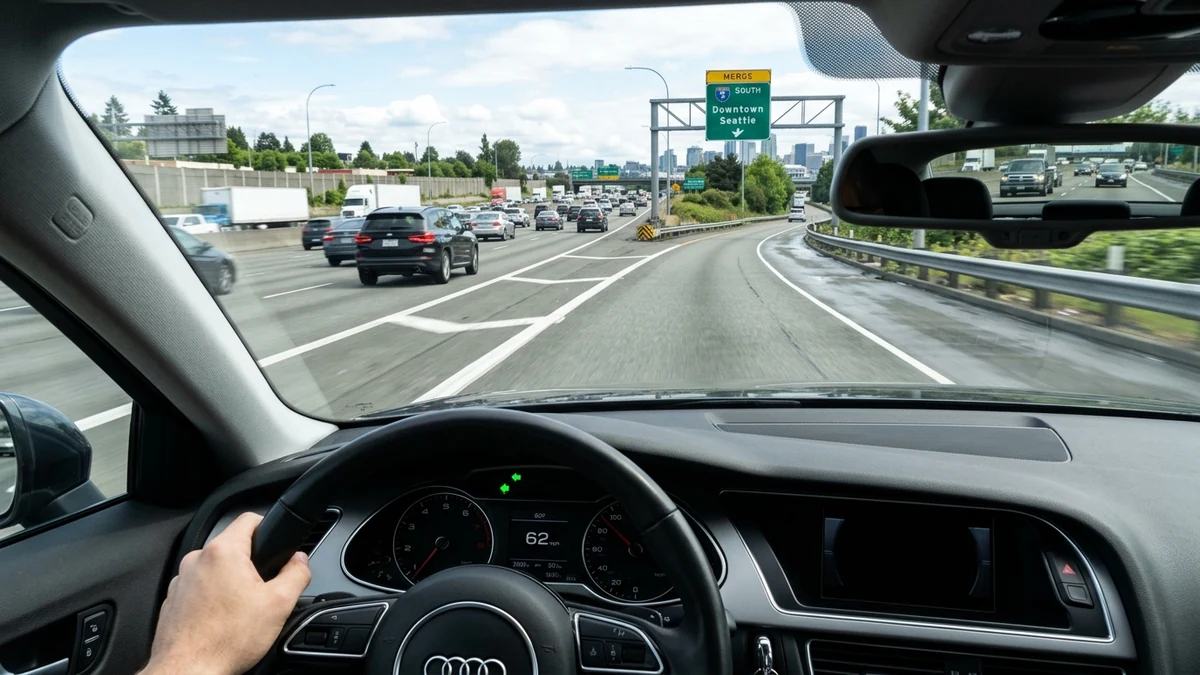
The primary objective on a freeway on-ramp is accelerating to match the exact speed of highway traffic before reaching the end of the solid painted gore point.
Quick Answer & Key Takeaways
To merge onto a freeway safely: 1) On the entrance ramp, check posted advisory speeds and scan highway flow. 2) In the acceleration lane, press the accelerator firmly to match highway speed (typically 55–65 mph). 3) Activate your left turn signal early. 4) Execute the S.M.O.G. sequence (Mirror check → over-the-shoulder blind spot glance). 5) Merge into a 4-second gap in traffic at the same speed as surrounding vehicles without stopping.
- Speed matching is safety: Merging at 40 mph into 65 mph traffic forces severe braking and causes high-speed rear-end collisions.
- Freeway traffic has right-of-way: Merging drivers must yield and adjust speed to slot into an open gap.
- Never stop on an acceleration lane: Coming to a dead stop on an on-ramp creates an extreme collision hazard.
- Respect the solid gore line: Do not cross the white painted solid triangle early; wait until dashed lines begin.
The Anatomy of a Freeway Interchange: Ramp vs. Acceleration Lane
For beginner and teen drivers, merging onto a high-speed multi-lane interstate or expressway is frequently cited as the single most intimidating driving maneuver. However, interstate interchanges are engineered with precision to make merging predictable and safe.
A standard freeway entrance consists of three distinct engineering zones:
- The Entrance Ramp: The curved or sloping roadway that connects the city street to the freeway. It often features yellow curve advisory speed signs and metered traffic signals.
- The Acceleration Lane: The long, straight parallel lane alongside the highway designed exclusively for building up vehicle speed from 30 mph to 65+ mph.
- The Merge Area: The dashed white line zone where the acceleration lane tapers into the right-hand through lane of the freeway.
The 3-Phase Freeway Merge Protocol
Executing a seamless highway merge requires dividing your mental focus into three sequential phases:
Phase 1: The Entrance Ramp (Speed & Traffic Assessment)
As you navigate the curve of the on-ramp, look ahead through your windshield and begin scanning through your driver-side window at the highway below. Assess the volume of traffic: Is the highway moving at full 65 mph speed, or is there bumper-to-bumper rush hour congestion?
If the ramp has an active ramp meter (red and green light beacon), stop completely at the limit line and accelerate briskly when your lane displays the green light.
Phase 2: The Acceleration Lane (Matching Highway Speed)
The moment your vehicle straightens out onto the acceleration lane, press the gas pedal firmly. Under FHWA freeway design standards, acceleration lanes are engineered with sufficient length (typically 800 to 1,200 feet) to allow standard passenger vehicles to reach highway velocity.
Activate your left turn signal immediately upon entering the straightaway to signal your intention to merge to approaching highway motorists.
Phase 3: The Merge Gap (Executing the S.M.O.G. Glide)
With your turn signal flashing and vehicle traveling at highway speed:
- Identify Your Target Gap: Pick a 3- to 4-second gap between two vehicles in the right lane. Decide whether to slot in front of or behind a target car.
- Execute the S.M.O.G. Check: Check your driver's side mirror, swivel your chin to your left shoulder to confirm the blind spot is clear, and smoothly guide your vehicle across the dashed line into the lane.
- Establish Following Distance: Maintain a 3- to 4-second cushion behind the vehicle ahead.
Who Has the Legal Right-of-Way on the Merge?
A common misconception among beginner drivers is that highway traffic must brake or move over to let you in. Under state vehicle codes across the US, traffic already on the freeway holds absolute legal right-of-way.
While courteous drivers in the right lane will often shift over to the middle lane to create space, the legal burden rests entirely on the entering driver to adjust speed and merge without causing oncoming vehicles to brake or swerve. Cutting off a vehicle during a merge is an automatic failure on the DMV road test under dangerous maneuver scoring rules.
Navigating Metered Ramps and HOV Merge Lanes
In metropolitan areas, on-ramps feature electronic traffic signals (ramp meters) during peak morning and evening commute hours:
- 1 Vehicle Per Green: Most ramp meters display a sign stating "ONE VEHICLE PER GREEN EACH LANE." Stop behind the white line on red, and accelerate the instant the light flashes green.
- Carpool / HOV Bypass Lanes: If you meet the minimum passenger requirement (typically 2+ or 3+ occupants, or driving an authorized clean air EV), you can bypass the metered queue in the dedicated HOV ramp lane.
Top 5 Dangerous Freeway Merge Mistakes
Avoid these dangerous driving habits that trigger severe highway crashes:
- Stopping at the End of the On-Ramp: Stopping dead at the end of the acceleration lane is catastrophic. Accelerating from 0 to 65 mph into active traffic from a standstill is nearly impossible and causes high-speed rear-end pileups.
- Merging Too Slowly (The 40 mph Merge): Entering a 65 mph highway at 40 mph forces 80,000-lb semi-trucks and passenger cars to slam on their brakes, creating dangerous shockwave traffic jams.
- Crossing the Solid Gore Point: The triangular area painted with solid white lines (the gore area) is illegal to cross. Wait until the painted line transitions into standard dashed lane lines.
- Forgetting the Blind Spot Shoulder Check: Relying exclusively on your side mirror can cause you to sideswipe a car traveling in your blind zone or a car making an simultaneous lane change from the middle lane into the right lane.
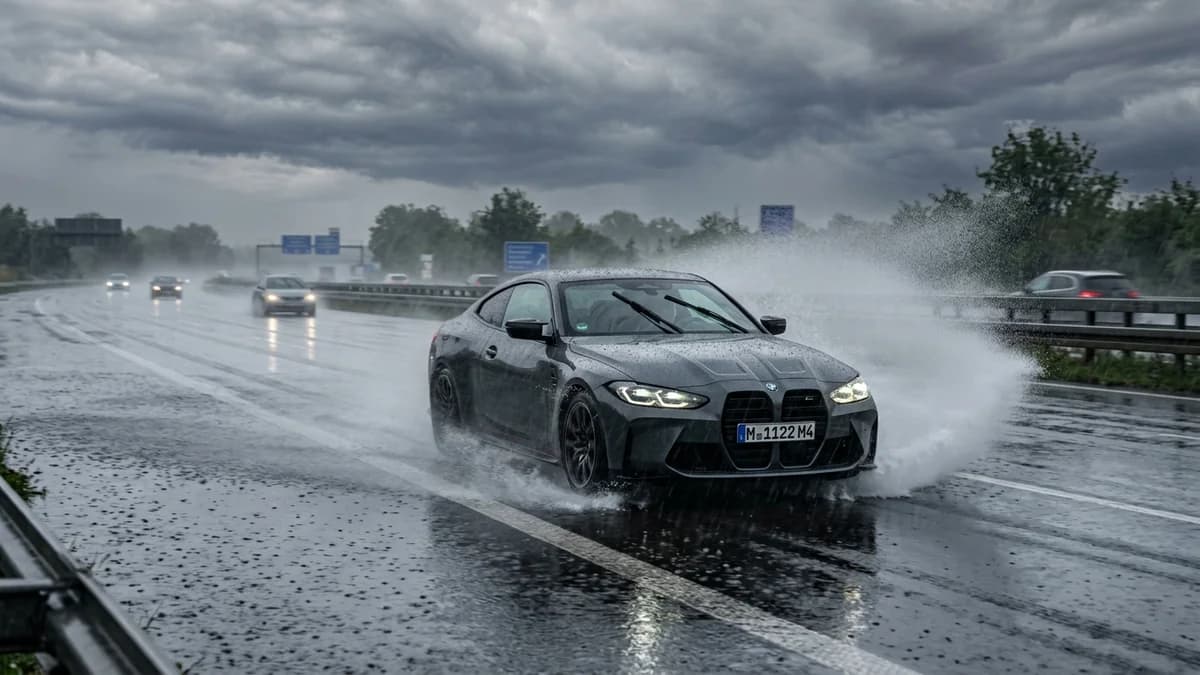
- Merging in Heavy Rain Without Traction Caution: As explained in our guide on preventing hydroplaning, standing water accumulates along freeway shoulders and gore points. Avoid aggressive acceleration through standing puddles during merges.
Interactive Knowledge Check
Question: You are driving on an entrance acceleration lane preparing to merge onto a freeway where traffic is flowing smoothly at 65 mph. What should your speed be as you reach the merge area?
Authoritative Sources & Regulatory References
Content and statutory guidelines in this guide are verified against official state vehicle codes, federal transportation standards, and authoritative regulatory documentation:
- California DMVFreeway Driving and Merging Dynamics (Handbook Section 6)(State of California Department of Motor Vehicles)
- FHWAFreeway Acceleration Lane Geometric Design and Operations(Federal Highway Administration)
- NHTSAHighway Speed Differentials and Merge Crash Mitigation(National Highway Traffic Safety Administration)
89% of people found this article helpful.
Click a star to add your vote
218 votes • average 4.49 out of 5
Official 2026 DMV Practice Tests by State
Select your state to practice real exam questions based on the latest 2026 driver handbook.
Ready to Pass the DMV Test on Your First Try?
Practice real 2026 DMV questions with instant answer explanations, simulated timers, and pass-guarantee study guides.
Start Free Practice Test