How to Prevent and Recover from Hydroplaning in Heavy Rain
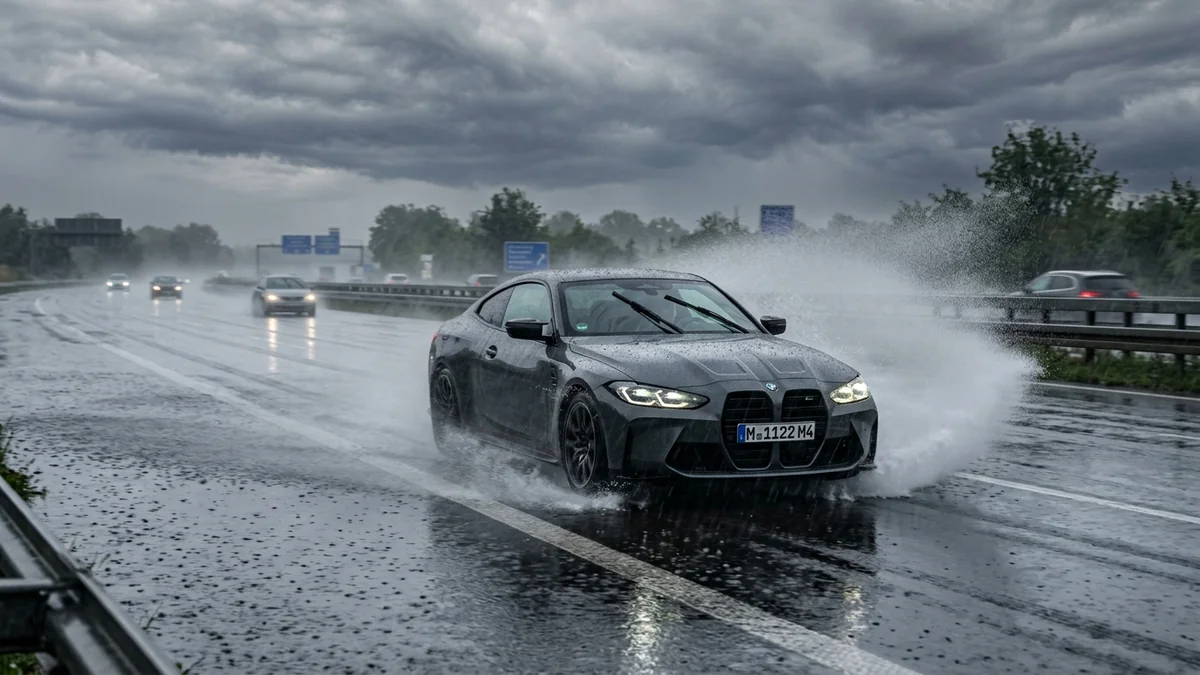
Hydroplaning occurs when water builds up faster than tire tread can evacuate it, causing tires to water-ski on the surface with zero braking or steering control.
Quick Answer & Key Takeaways
Hydroplaning occurs when your tires lose direct contact with the road and ride on a thin cushion of standing water. If your car hydroplanes: 1) Ease your foot off the accelerator immediately (do NOT slam on the brakes). 2) Keep the steering wheel straight or gently steer in the direction of the road. 3) Avoid sudden, jerky steering turns. 4) As speed drops, your tires will slice back through the water film and reconnect with the pavement.
- Starts as low as 35 mph: In severe downpours with worn tires, hydroplaning can begin at speeds as low as 35 mph, with complete water separation occurring by 55 mph.
- Never slam the brakes: Stomping on the brakes while water-skiing can lock the wheels and induce an uncontrollable spin the instant traction returns.
- First 10 minutes of rain are greasiest: Rain mixes with accumulated road oil and tar to create an ultra-slick soapy emulsion before heavy rain washes it away.
- Drive in the tracks of the front car: Following the wiped tire tracks of the vehicle ahead provides direct asphalt contact with reduced water depth.
What Is Hydroplaning? The Physics of Water Film
According to research from the National Highway Traffic Safety Administration (NHTSA), tires are engineered with deep directional grooves and sipes specifically designed to evacuate water away from the contact patch. At 60 mph, a typical passenger tire channels almost one gallon of water per second away from the tread.
When water on the road is deeper than your tire tread depth, or when your vehicle travels faster than the sipes can displace water, water pressure builds up in front of the tire. This creates a physical wedge of water that lifts the tire entirely off the asphalt. The car is effectively water-skiing, resulting in zero steering response and zero braking friction.
How to Recover: The 4-Step Action Plan
If you suddenly feel the steering wheel go completely loose, hear engine RPMs spike without acceleration, or feel the rear of the car begin to drift (similar to skidding on winter black ice):
- Ease off the accelerator: Gently lift your foot off the gas pedal. Do not yank your foot away abruptly; smooth deceleration is essential.
- Hold the steering wheel steady: Keep your hands firmly at 9-and-3 o'clock and hold the wheel pointed straight down your intended lane. If the car begins to rotate slightly, make tiny, gentle steering corrections into the skid.
- Do NOT slam on the brakes: Stomping on the brakes causes the spinning wheels to stop rotating. When the tires eventually touch asphalt again, locked wheels will immediately pitch the car into a violent spin.
- Wait for the tires to bite: As your vehicle naturally slows down by 5 to 10 mph, the weight of the car will push the tire tread back through the water film, restoring physical contact with the road.
The 35 MPH Speed Threshold & Warning Signs
According to NHTSA and state DMV research:
- Partial hydroplaning begins at 35 MPH: Water begins accumulating under the leading edge of tires.
- Total hydroplaning occurs around 50–55 MPH: With worn tire treads (less than 4/32"), tires can completely separate from the pavement at 50 mph.
- The "Loose Steering" warning: When hydroplaning begins, the steering wheel suddenly feels light, unresponsive, and disconnected from the road.
Why the First 10 Minutes of Rain Are the Most Dangerous
On hot, dry summer days, motor oil, grease, transmission fluid, and rubber particles seep into asphalt pores.
When the first rain showers begin, water is less dense than oil, causing accumulated road oils to float to the top of the water film. This creates a slick, soapy chemical emulsion that makes the pavement slicker than a sheet of ice.
Only after 30 to 45 minutes of sustained heavy rainfall does the water wash the oil film off into highway gutters.
How to Prevent Hydroplaning (Tires, Speed & Lane Choice)
You can prevent almost all hydroplaning incidents (and avoid the need to execute an emergency post-accident crash protocol) by adopting four defensive driving habits:
- Check tire tread depth regularly: Replace tires before they reach the legal minimum of 2/32". For safe wet-weather driving, maintain at least 4/32" to 5/32" of tread depth.
- Avoid the outer curb lanes: Water ponds heavily in low-lying right lanes and against highway medians. Drive in the center lane where crowned roads shed water fastest.
- Drive in the tracks of the vehicle ahead: The tires of the car ahead temporarily sweep away gallons of standing water, creating two dry tracks of exposed asphalt.
- Turn off cruise control: Never use cruise control in the rain. If one wheel loses traction, cruise control can accelerate suddenly to maintain speed.
What is the very first action you should take if your vehicle begins to hydroplane on a wet highway?
Frequently Asked Questions
Does All-Wheel Drive (AWD) prevent hydroplaning?
No. AWD only distributes engine power to all four wheels. When tires lift off the road on a water film, AWD provides zero additional traction because the rubber is not touching the asphalt.
How does tire inflation pressure affect hydroplaning?
Under-inflated tires significantly increase hydroplaning risk because the center of the tire sags inward, creating a concave pocket that traps standing water rather than funneling it outward.
How much should you reduce your speed in the rain?
On wet roads, reduce your speed by 5 to 10 mph below the posted speed limit. In heavy standing water, reduce speed by one-third (e.g. from 60 mph to 40 mph).
Authoritative Sources & Regulatory References
Content and statutory guidelines in this guide are verified against official state vehicle codes, federal transportation standards, and authoritative regulatory documentation:
- NHTSATire Safety and Maintenance Guidelines(National Highway Traffic Safety Administration)
- FHWARain and Wet Weather Driving Safety(Federal Highway Administration Road Weather Management)
- AAA FoundationTire Tread Depth and Wet Traction Research(AAA Traffic Safety Research)
88% of people found this article helpful.
Click a star to add your vote
112 votes • average 4.44 out of 5
Official 2026 DMV Practice Tests by State
Select your state to practice real exam questions based on the latest 2026 driver handbook.
Ready to Pass the DMV Test on Your First Try?
Practice real 2026 DMV questions with instant answer explanations, simulated timers, and pass-guarantee study guides.
Start Free Practice TestRecommended Driver Guides
Tips to Navigate Winter Roads Like a Pro: Snow, Slush, and Black Ice Tactics
Master the physics of winter driving: stopping distance, black ice detection, oversteer vs understeer skid recovery, and proper ABS braking on ice.

What to Do Immediately After a Car Accident: The 8-Step Emergency Protocol
Follow the 8-step crash protocol: scene safety, Steer It Clear It laws, document exchange, avoiding the fault trap, and DMV SR-1 deadlines.
What to Do When Being Pulled Over by Police: Step-by-Step Safety & Legal Protocol
Learn the exact steps to take when pulled over: where to stop safely, cabin preparation, and your legal rights.