Roundabouts vs. Traffic Circles vs. Diverging Diamond Interchanges (DDI)
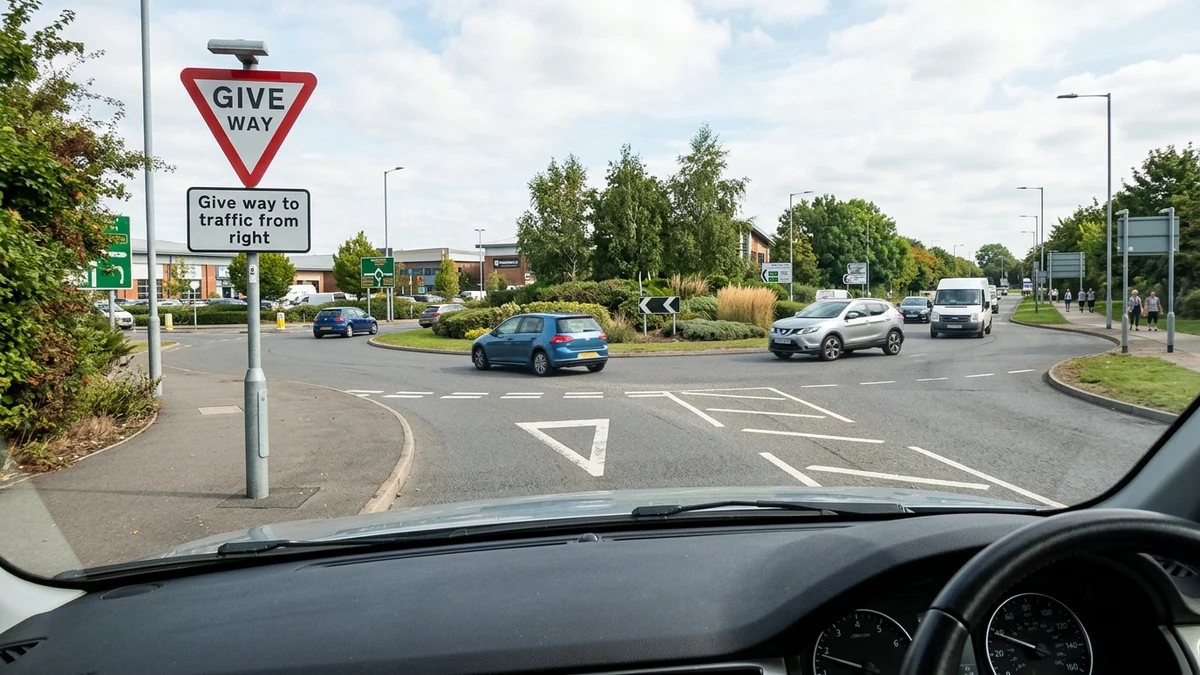
Modern roadway engineering replaces high-risk traditional 4-way intersections with geometric designs that eliminate lethal perpendicular collision points.
Quick Answer & Key Takeaways
Modern transportation engineering utilizes three distinct geometric interchange designs: 1) MODERN ROUNDABOUT: Compact circular intersection where entering traffic yields to circulating traffic moving counter-clockwise at 15–25 mph; reduces fatal crashes by 90%. 2) TRAFFIC CIRCLE / ROTARY: Large, high-speed antiquated circles (often with traffic lights or inside vehicles yielding) prone to severe congestion. 3) DIVERGING DIAMOND INTERCHANGE (DDI): A freeway overpass design where both directions of traffic briefly cross over to the LEFT side of the roadway, allowing free left turns onto highway on-ramps without crossing opposing traffic.
- Roundabout = Yield at Entry: Entering traffic always yields right-of-way to vehicles already circulating in the ring.
- DDI = Driving on the Left: In a Diverging Diamond Interchange, you temporarily cross over to drive on the left side of the bridge, guided by traffic signals.
- Eliminates Left Turn Conflict Points: DDIs eliminate the dangerous left turn across oncoming high-speed traffic.
- 60% Crash Reduction: State DOT data confirms DDIs slash injury collisions by over 60% compared to traditional diamond overpasses.
The Intersection Revolution: Eliminating Deadly T-Bone Conflicts
Traditional four-way intersections with traffic signals account for nearly 50% of all traffic injuries and 25% of roadway fatalities in the United States.
In a standard intersection, there are 32 possible collision conflict points, many involving high-speed 90-degree "T-bone" perpendicular impacts.
According to the Federal Highway Administration (FHWA), modern geometric designs replace dangerous crossing movements with smooth, low-speed merging angles.
Modern Roundabouts: Yield-at-Entry & Counter-Clockwise Flow
A Modern Roundabout is a compact circular junction with specific engineering rules:
- Yield-at-Entry: Entering vehicles must yield right-of-way to traffic already circulating inside the circle.
- Low Speeds: Curved entry deflects vehicles, naturally forcing speeds down to 15–20 MPH.
- Safety Record: Slashes fatal crashes by 90% and injury crashes by 76% under IIHS studies.
Traditional Traffic Circles (Rotaries): The Antiquated Giants
Common in older East Coast cities (e.g. New Jersey, Massachusetts, Washington D.C.), Rotaries / Traffic Circles are large-diameter systems built in the early 20th century:
- High operating speeds (30–45 MPH).
- Unpredictable right-of-way rules (some rotaries forced circulating cars to yield to entering cars).
- Weaving lane conflicts that cause frequent sideswipes. State DOTs are systematically replacing them with modern roundabouts.
Diverging Diamond Interchanges (DDI): Crossing Over to the Left Side
First introduced in the US in 2009 in Springfield, Missouri, the Diverging Diamond Interchange (DDI) is rapidly transforming freeway interchanges nationwide.
In a DDI, both directions of traffic briefly cross over to the LEFT side of the bridge or underpass via two-phase traffic lights.
The Engineering Genius of DDIs: Eliminating Left Turn Conflict Points
Why does driving on the left side make an interchange safer?
- Free Left Turns onto Freeways: Because traffic is already traveling on the left side of the bridge, vehicles entering the freeway on-ramp make a simple free-flowing left turn without crossing across oncoming opposing traffic.
- Conflict Points Halved: Total vehicular conflict points drop from 26 in a conventional diamond to just 14 in a DDI.
- No Wrong-Way Freeway Turns: The geometric channelized islands physically block drivers from turning the wrong way onto freeway off-ramps.
Roundabout vs. Traffic Circle vs. DDI Comparison Table
| Design Type | Right-of-Way Rule | Key Safety Mechanism | Typical Application |
|---|---|---|---|
| Modern Roundabout | Yield at Entry | Low-speed counter-clockwise flow (15–20 mph) | Surface street intersections |
| Old Traffic Circle (Rotary) | Variable / Inside Yields | High speed (35+ mph); high sideswipe crash rate | Legacy East Coast junctions |
| Diverging Diamond (DDI) | Signalized Crossover | Crosses to left to eliminate opposing left turns | Heavy freeway on/off-ramp interchanges |
Interactive Knowledge Check
Question: What is the primary safety benefit of a Diverging Diamond Interchange (DDI) over a conventional highway bridge overpass?
Authoritative Sources & Regulatory References
Content and statutory guidelines in this guide are verified against official state vehicle codes, federal transportation standards, and authoritative regulatory documentation:
- FHWADiverging Diamond Interchange Informational Guide (FHWA-SA-14-067)(Federal Highway Administration)
- TRBRoundabouts: An Informational Guide (NCHRP Report 672)(Transportation Research Board)
- IIHSCrash Reductions Associated with Diverging Diamond Interchanges(Insurance Institute for Highway Safety)
97% of people found this article helpful.
Click a star to add your vote
191 votes • average 4.91 out of 5
Official 2026 DMV Practice Tests by State
Select your state to practice real exam questions based on the latest 2026 driver handbook.
Ready to Pass the DMV Test on Your First Try?
Practice real 2026 DMV questions with instant answer explanations, simulated timers, and pass-guarantee study guides.
Start Free Practice TestRecommended Driver Guides

How to Navigate Roundabouts: Single-Lane vs. Multi-Lane Rules

Right-of-Way Rules Summary: The Universal Hierarchy of Who Yields to Whom