How to Navigate Single-Lane and Multi-Lane Roundabouts Correctly
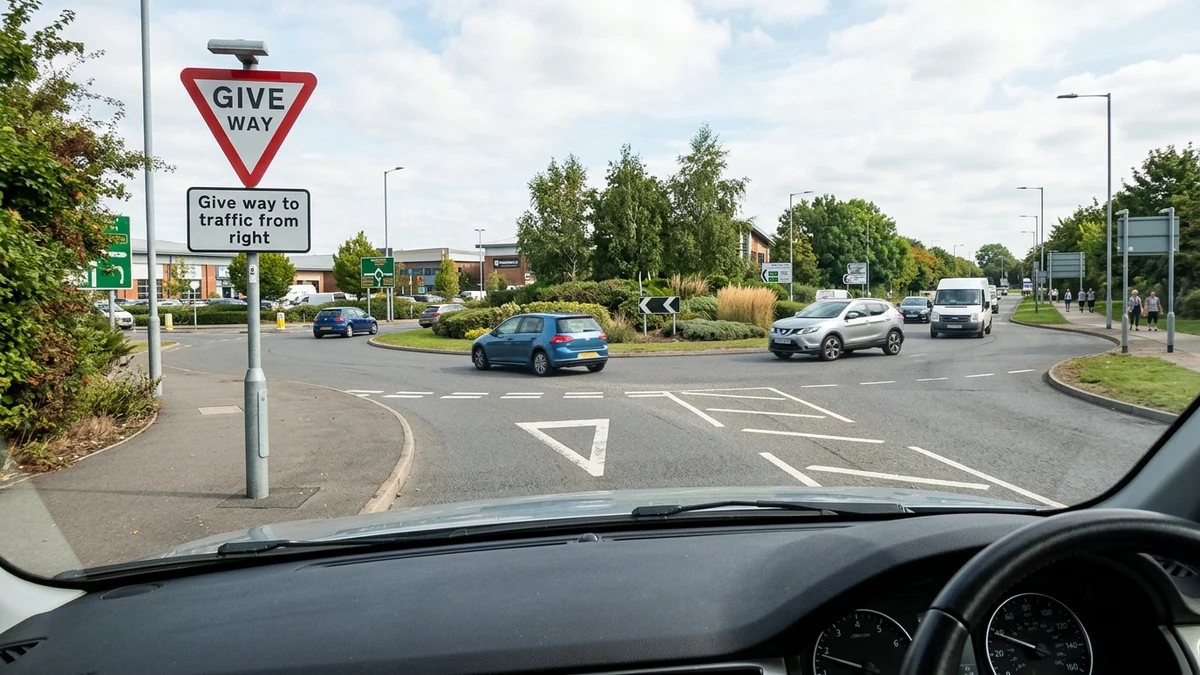
Roundabouts flow counter-clockwise in the United States; entering drivers must yield to circulating traffic already inside the circle.
Quick Answer & Key Takeaways
To navigate a roundabout safely: 1) Slow down to 15–20 mph on approach and choose your lane before entering. 2) Yield to all circulating traffic already inside the ring on your left and crossing pedestrians in crosswalks. 3) Enter to the right, traveling counter-clockwise. 4) Never stop or change lanes while inside the circulatory roadway. 5) Activate your right turn signal just past the exit prior to your intended exit to notify following motorists.
- Traffic circulates counter-clockwise: Always turn right into the circle.
- Yield before entering: Vehicles already inside the roundabout have absolute legal right-of-way.
- Choose lanes early: For right turns use the right lane; for left turns or U-turns use the left lane; for straight through use either lane (per posted signs).
- Never stop inside: If you miss your exit, simply loop around the circle a second time.
Why Roundabouts Are Replacing Traditional Stops
Modern circular intersections—commonly known as roundabouts—are rapidly replacing traditional signalized junctions and all-way stop sign intersections across North America. According to safety research published by the Federal Highway Administration (FHWA), converting a conventional four-way intersection into a modern roundabout achieves an astounding 90% reduction in fatal collisions and a 76% reduction in injury crashes.
The reason is geometric physics: roundabouts eliminate high-speed perpendicular broadside ("T-bone") collisions and head-on crashes caused by misjudged unprotected left turns. By forcing all vehicles to travel in the same counter-clockwise direction at reduced speeds (typically 15 to 25 mph), any potential impact is reduced to a low-angle sideswipe.
However, despite their proven safety records, roundabouts remain one of the most anxiety-inducing road features for learner drivers and experienced motorists alike. Mastering roundabouts comes down to understanding entry yielding rules and pre-selecting the correct lane before you ever cross the yield line.
The 4 Golden Rules of Every Roundabout
Whether you are driving through a quiet single-lane residential roundabout or a complex multi-lane highway interchange, these four universal rules apply without exception:
- Yield to Traffic on Your Left: Circulating vehicles already inside the roundabout always possess legal right-of-way. Entering vehicles must wait for a safe opening before merging.
- Travel Counter-Clockwise: In the United States, traffic always flows to the right around the central island in a counter-clockwise direction.
- Never Stop Inside the Circle: Once you have entered the circulatory roadway, you have right-of-way. Stopping abruptly inside the circle disrupts traffic flow and triggers rear-end collisions.
- Signal Right to Exit: Activate your right turn signal immediately after passing the exit before your intended exit to clearly communicate your intentions to waiting drivers.
Choosing Your Lane: Right Turn, Straight, or Left
Under FHWA MUTCD standards, overhead destination signs and black-and-white lane-use signs instruct drivers on proper lane assignment:
- Making a Right Turn (First Exit / 90° Turn): Position your vehicle in the Right Lane on approach. Maintain your position in the outside circulating ring with your right turn signal activated throughout the turn.
- Going Straight Through (Second Exit / 180°): You can generally choose Either the Left or Right Lane, unless road arrows designate otherwise. If you enter in the right lane, exit in the right lane; if you enter in the left lane, exit in the left lane.
- Making a Left Turn (Third Exit / 270°): Position your vehicle in the Left Lane on approach. Enter the inside circulating ring. As you pass the second exit, activate your right turn signal and smoothly glide toward the third exit.
- Making a Full U-Turn (Fourth Exit / 360°): Use the Left Lane. Stay in the innermost circulating ring until you loop completely around to your original roadway.
Top 5 Dangerous Mistakes Drivers Make
Avoid these frequent driving errors that can lead to collisions or test disqualifications on DMV road exams under critical error scoring guidelines:
- Stopping Inside the Roundabout to Let Someone In: Some drivers mistakenly believe they are being courteous by stopping to yield to an entering car. This violates traffic law, removes your legal right-of-way, and frequently causes rear-end pileups.
- Changing Lanes Inside the Circle: You must never switch lanes while circulating inside a multi-lane roundabout. If you find yourself in the wrong lane, simply take the exit assigned to your lane or loop around safely.
- Cutting Across Lanes to Exit: If you are in the inside (left) lane and wish to exit, you must follow the engineered spiral markings. Never abruptly swerve across the outside lane in front of another circulating vehicle.
- Failing to Yield to Both Lanes on Entry: When entering a multi-lane roundabout from the left lane, you must yield to traffic in both circulating lanes before proceeding.
- Crowding Large Semi-Trucks: Commercial semi-trucks with 53-foot trailers require both lanes to negotiate tight circular curves. Always give large trucks a wide berth and never drive alongside them inside the circle.
What to Do When an Emergency Vehicle Approaches
When an ambulance, fire truck, or police cruiser approaches with active sirens and emergency flashers, your reaction depends on where you are located:
- If You Have Not Yet Entered: Pull over to the right shoulder before the yield line and stop completely until the emergency vehicle passes.
- If You Are Already Inside the Circle: Do NOT pull over or stop inside the roundabout. Stopping inside blocks the path of the emergency vehicle. Continue driving, take your normal exit, and then immediately pull over to the right once clear of the junction.
Interactive Knowledge Check
Question: You are driving in the inside (left) lane of a two-lane roundabout and miss your intended exit. What is the safest and legally correct action?
Authoritative Sources & Regulatory References
Content and statutory guidelines in this guide are verified against official state vehicle codes, federal transportation standards, and authoritative regulatory documentation:
- FHWA / TRBRoundabouts: An Informational Guide (NCHRP Report 672)(Federal Highway Administration)
- FHWARoundabout Signing and Pavement Markings (MUTCD Chapter 3C)(Manual on Uniform Traffic Control Devices)
- IIHSRoundabout Safety and Crash Reduction Research(Insurance Institute for Highway Safety)
93% of people found this article helpful.
Click a star to add your vote
54 votes • average 4.64 out of 5
Official 2026 DMV Practice Tests by State
Select your state to practice real exam questions based on the latest 2026 driver handbook.
Ready to Pass the DMV Test on Your First Try?
Practice real 2026 DMV questions with instant answer explanations, simulated timers, and pass-guarantee study guides.
Start Free Practice TestRecommended Driver Guides
Who Has the Right-of-Way at a 4-Way Stop? The Complete Rulebook

Unprotected Left Turns vs. Flashing Yellow Arrows: Rules & Common Mistakes
