Seatbelt Laws & Child Car Seat Regulations: Rear-Facing to Booster
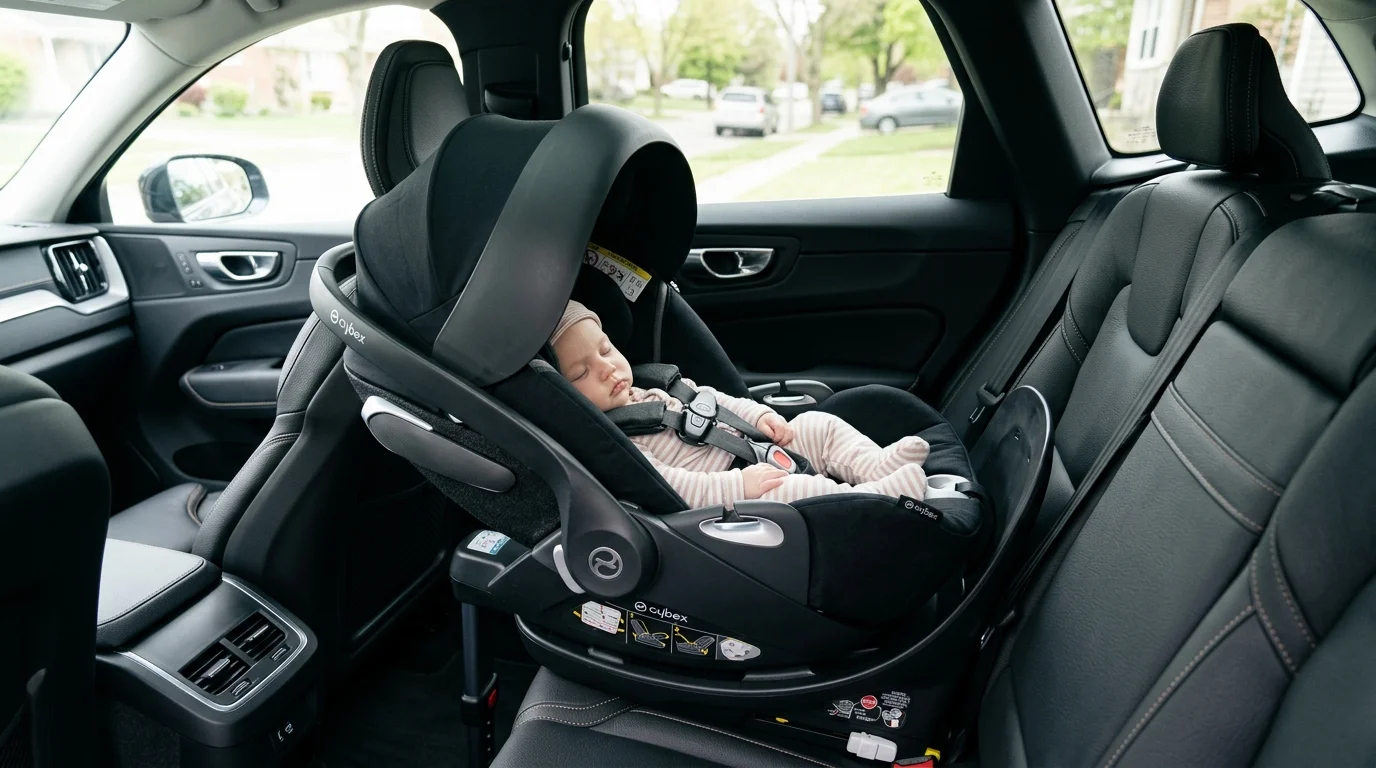
Federal and state child passenger safety statutes enforce a 4-stage restraint progression from infant rear-facing seats to adult seatbelts.
Quick Answer & Key Takeaways
Child passenger safety statutes and American Academy of Pediatrics (AAP) standards enforce a mandatory 4-stage progression: 1) STAGE 1 (REAR-FACING): Children must remain in a rear-facing car seat until AT LEAST AGE 2 (or until reaching the seat's maximum height/weight limit). 2) STAGE 2 (FORWARD-FACING HARNESS): Use a forward-facing seat with a 5-point harness until age 4–5 (minimum 40–65 lbs). 3) STAGE 3 (BOOSTER SEAT): Must use a belt-positioning booster seat until reaching 4 FEET 9 INCHES (57 INCHES) in height (typically age 8 to 12). 4) STAGE 4 (ADULT SEATBELT): Children under age 13 must ALWAYS ride in the back seat away from passenger airbags. SEATBELT LAWS: 35+ states enforce Primary Seatbelt Laws allowing police to ticket unbelted occupants on sight.
- Rear-Facing Until Age 2: Mandatory under state laws like California CVC § 27360 to support fragile infant spinal columns.
- The 4'9" (57-inch) Booster Rule: Booster seats are legally required until children reach 4 feet 9 inches in height.
- Back Seat Until Age 13: Front passenger airbags deploy at 200 MPH, posing fatal head and neck trauma to children under 13.
- Primary Enforcement: Police officers can pull you over and issue heavy fines solely for an unrestrained child or adult.
Seatbelt Enforcement: Primary vs. Secondary Traffic Laws
Wearing a lap-and-shoulder seatbelt is the single most effective crash-protection device in existence, reducing fatal collision risk by 45% for front-seat occupants according to NHTSA.
States enforce seatbelt mandates under two legal classifications:
- Primary Seatbelt Law (35+ States): A police officer can initiate a traffic stop and write a citation purely because a driver or passenger is not wearing a fastened seatbelt.
- Secondary Seatbelt Law (15 States): Officers can only write a seatbelt ticket if the driver was pulled over for another moving violation (such as speeding or running a red light).
- Child Restraint Rule: In all 50 states, unrestrained children are ALWAYS enforced as a primary violation carrying fines from $100 to $500.
Stage 1: Rear-Facing Car Seats (The Mandatory Age 2 Benchmark)
Under California Vehicle Code § 27360, New York, New Jersey, and Pennsylvania law:
Children must be secured in a rear-facing car seat until they are at least 2 years of age (unless they weigh 40+ lbs or are 40+ inches tall).
The Anatomical Reason: An infant's head makes up 25% of their total body weight, supported by underdeveloped cervical neck vertebrae. In a frontal crash, a rear-facing shell cradles and supports the entire head, neck, and spine, reducing severe injury risk by 75%.
Stage 2: Forward-Facing Car Seats with 5-Point Harnesses
Once a child outgrows their convertible seat's rear-facing height/weight limit:
- They transition to a Forward-Facing Car Seat with a 5-point harness.
- The 5-point harness secures the child at the shoulders, hips, and crotch buckle, distributing crash energy across the strong pelvic and collarbone framework.
- Always attach the top tether strap to the vehicle's metal anchor point to prevent the top of the seat from rotating forward during impact.
Stage 3: Belt-Positioning Booster Seats (The 4'9" / 57" Standard)
When children reach 4 to 8 years of age and outgrow their forward-facing harness:
Children MUST use a belt-positioning booster seat until they reach 4 feet 9 inches (57 inches) tall and are between 8 and 12 years old.
Why Booster Seats Are Critical: Adult vehicle seatbelts are designed for adult skeletons over 4'9" tall. If a small child wears a standard seatbelt without a booster:
- The shoulder belt rubs across the child's neck or face.
- The lap belt rides up over the soft abdominal organs rather than resting on the strong hip bones—causing catastrophic internal organ lacerations and spinal severance ("Seatbelt Syndrome") during a crash.
Stage 4: Adult Seatbelts & The Back Seat Rule Until Age 13
To determine if an older child can safely transition from a booster to a standard vehicle seatbelt, use the 5-Step Fit Test:
- Does the child sit all the way back against the vehicle seatback?
- Do the child's knees bend naturally over the front edge of the seat cushion?
- Does the lap belt lay low across the upper thighs and hip bones?
- Does the shoulder belt cross snugly across the center of the chest and collarbone (not cutting into the neck)?
- Can the child stay seated comfortably like this for the entire trip?
The Back Seat Rule: All children under 13 years of age must ride in the rear seats of the vehicle. Front passenger airbags deploy at over 200 MPH and can be fatal to small children.
Child Car Seat Progression Stages Summary Table
| Safety Stage | Restraint Type | Age & Size Criteria | Vehicle Seating Position |
|---|---|---|---|
| Stage 1: Infants & Toddlers | Rear-Facing Car Seat | Birth until AT LEAST Age 2 | Back Seat ONLY |
| Stage 2: Young Children | Forward-Facing 5-Point Harness | Age 2 to 5 (Up to 40–65 lbs) | Back Seat ONLY |
| Stage 3: School-Age | Booster Seat (High-Back or Backless) | Until 4 feet 9 inches tall (Age 8–12) | Back Seat ONLY |
| Stage 4: Older Kids & Adults | Lap and Shoulder Seatbelt | Over 4'9" tall (Passes 5-step test) | Back seat recommended until Age 13 |
Interactive Knowledge Check
Question: Under child passenger safety statutes and American Academy of Pediatrics (AAP) standards, what physical height must a child reach before they can legally transition from a booster seat to a standard adult seatbelt?
Authoritative Sources & Regulatory References
Content and statutory guidelines in this guide are verified against official state vehicle codes, federal transportation standards, and authoritative regulatory documentation:
- AAPChild Passenger Safety Policy Statement and Restraint Recommendations(American Academy of Pediatrics)
- NHTSAChild Safety Seat Recommendations by Age and Size (FMVSS 213)(National Highway Traffic Safety Administration)
- California LegislatureCalifornia Vehicle Code § 27360: Mandatory Child Passenger Restraints(State of California Vehicle Code)
88% of people found this article helpful.
Click a star to add your vote
269 votes • average 4.44 out of 5
Official 2026 DMV Practice Tests by State
Select your state to practice real exam questions based on the latest 2026 driver handbook.
Ready to Pass the DMV Test on Your First Try?
Practice real 2026 DMV questions with instant answer explanations, simulated timers, and pass-guarantee study guides.
Start Free Practice TestRecommended Driver Guides

School Bus Stop Laws: When to Stop, Flashing Lights, and State Penalties
What to Do Immediately After a Car Accident: The 10-Step Crash Scene Checklist