What to Do Immediately After a Car Accident: The 8-Step Emergency Protocol
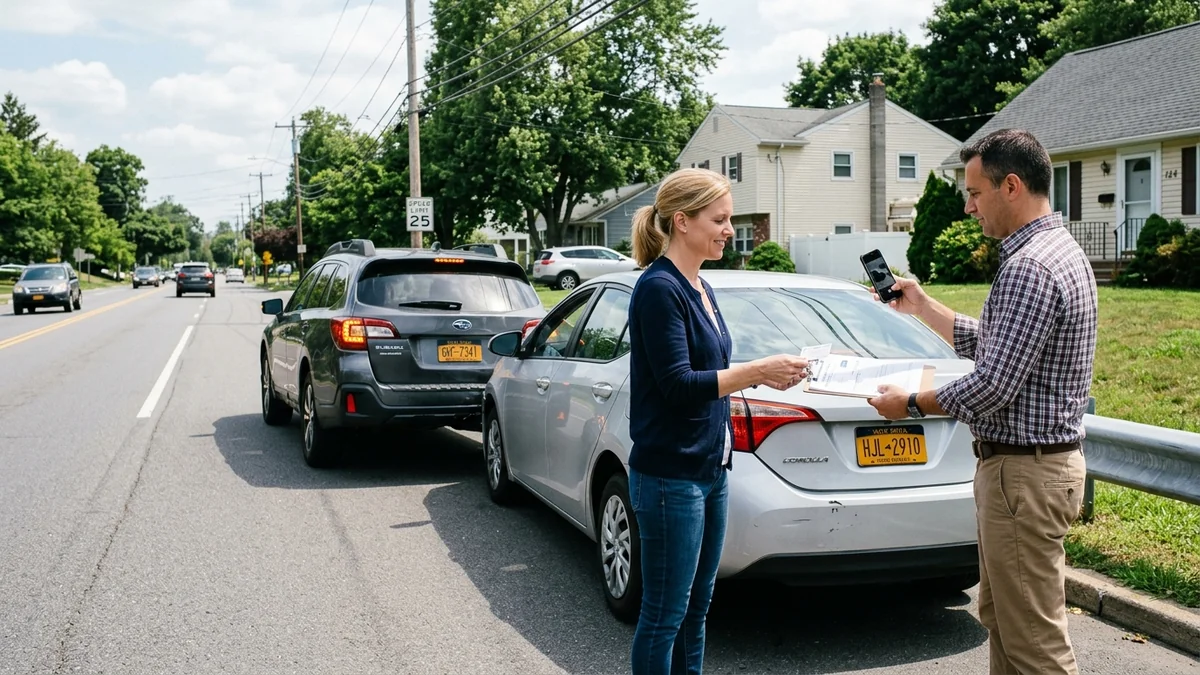
Remaining calm, securing the scene, exchanging required insurance documents, and avoiding admissions of fault protects your legal and financial interests after a crash.
Quick Answer & Key Takeaways
Following a collision: 1) Stop immediately (leaving the scene is a criminal hit-and-run). 2) Check for injuries and call 911 if medical help is needed. 3) Move drivable vehicles to the shoulder under 'Steer It, Clear It' laws. 4) Activate hazard flashers. 5) Exchange driver license, insurance, and contact details with all involved motorists. 6) Document everything with clear smartphone photos of vehicle damage, license plates, and road skid marks. 7) Never admit fault or say 'I'm sorry.' 8) File required state DMV crash reports (e.g. California SR-1 form within 10 days if damage exceeds $1,000).
- Never leave the scene: Even a minor scratch on an unattended car requires leaving a detailed note to avoid hit-and-run charges.
- Move drivable cars off active lanes: 'Steer It, Clear It' laws mandate moving non-injury fender benders to the shoulder to prevent secondary pileups.
- Avoid apologizing: Saying 'I'm so sorry, I didn't see you' can be used in insurance arbitration or court as an admission of legal liability.
- File DMV Form SR-1: You must report accidents causing injury or property damage over $1,000 to the DMV, regardless of who was at fault.
The 8-Step Emergency Action Protocol
A sudden collision triggers a surge of adrenaline and confusion. Whether you were rear-ended at a stoplight or involved in a multi-lane highway scrape, following these eight sequential steps ensures physical safety and preserves your insurance coverage under NHTSA emergency roadside guidelines:
- Stop immediately: Never continue driving. Leaving the scene of an accident—even with minor scratches—is classified as a misdemeanor or felony hit-and-run resulting in mandatory license suspension and possible arrest.
- Check for injuries and call 911: Assess yourself, your passengers, and occupants of other vehicles. If anyone reports neck pain, dizziness, or visible bleeding, request emergency medical assistance immediately.
- Move vehicles out of traffic ("Steer It, Clear It"): If there are no serious injuries and the vehicles are drivable, carefully maneuver them to the nearest shoulder, median, or parking lot.
- Secure the scene: Shift into Park, shut off the ignition, turn on your four-way hazard flashers, and deploy reflective safety triangles or flares if available.
- Call law enforcement for an official police report: Request police dispatch to the scene. An official police collision report is the single most authoritative piece of evidence used by insurance adjusters to assign fault.
- Exchange mandatory information: Exchange driver's license numbers, full names, phone numbers, vehicle registration numbers, insurance carrier names, and policy numbers.
- Photograph the entire scene thoroughly: Take close-up and wide-angle photos of vehicle damage, license plates, skid marks, broken glass, traffic lights, and street signs before vehicles are towed.
- Notify your insurer and file state DMV reports: Contact your insurance company to open a claim and file mandatory state accident forms (such as California Form SR-1) within statutory deadlines.
Deep-Dive: "Steer It, Clear It" Laws
A dangerous misconception among drivers is that vehicles must remain frozen in the middle of active highway lanes until police arrive so officers can "see the original crash positions."
In reality, secondary collisions caused by stopped vehicles in active freeway lanes account for almost 20% of all highway fatalities.
The Legal Rule:
Under "Steer It, Clear It" / "Move It" laws enacted across almost all US states, if an accident involves only property damage (no serious bodily injury) and the vehicles can be driven safely, drivers are legally required to move their cars to the nearest shoulder or off-ramp to prevent traffic gridlock and deadly secondary rear-end crashes.
What Information to Exchange (And What to Keep Private)
When exchanging information with the other party, remain polite, professional, and factual. Use your phone camera to photograph their documents directly to eliminate handwriting errors:
Required Information to Collect:
- Full legal name and contact phone number
- Driver’s license number and state of issuance
- Insurance company name and policy number (review our guide to auto insurance 101: liability vs collision)
- Vehicle license plate number, state, and VIN (Vehicle Identification Number)
- Make, model, year, and color of all vehicles involved
- Names and contact information of any independent eyewitnesses
Information You Should Never Share:
- Your Social Security Number or credit card numbers
- Your home address (unless required by the investigating police officer—see our protocol for interacting safely with police officers)
- Your insurance coverage policy financial limits
The #1 Legal Mistake: Why You Must Never Say "I’m Sorry"
In everyday social situations, saying "I'm so sorry" is a natural expression of empathy. At a car accident scene, however, words of apology can be disastrous.
Insurance companies and opposing attorneys will seize upon statements like "I’m sorry, I was looking down at my GPS" or "I didn't see you coming" as an explicit, recorded admission of legal negligence.
What to Say Instead:
- Ask: "Is anyone injured? Are you okay?"
- Say: "Let's exchange insurance information and contact the police."
- Stick strictly to verifiable facts when speaking with responding police officers. Never speculate on vehicle speeds, distances, or mechanical conditions.
State DMV Reporting Deadlines (The SR-1 Form Trap)
Most motorists assume that because a police officer investigated the crash, or because their insurance company is handling repairs, they do not need to notify the DMV.
This assumption can lead to a suspended driver's license.
Mandatory DMV Reporting Rules:
- The Property Damage / Injury Threshold: In states like California, New York, and Texas, you must file an official DMV accident report (such as Form SR-1) if anyone was injured (no matter how minor) or if property damage to any vehicle exceeds $1,000.
- Strict Statutory Deadlines: In California, Form SR-1 must be filed within 10 days of the accident date.
- Mandatory for All Drivers: You must file this form regardless of whether you were at fault or innocent. Failure to submit Form SR-1 can result in an automatic 1-year administrative license suspension.
If you are involved in a minor collision with no injuries and your vehicle is drivable on a busy freeway, what are you legally required to do?
Frequently Asked Questions
What should you do if you hit an unattended parked vehicle?
You must stop immediately, attempt to locate the owner, and if they cannot be found, leave a securely attached note with your name, phone number, address, and an explanation of the incident. You must also notify the local police department.
Should you see a doctor even if you feel fine after a crash?
Yes. Adrenaline masks pain immediately after trauma, and soft-tissue injuries such as whiplash or concussions often take 24 to 48 hours to manifest. A prompt medical evaluation also creates an official timeline for your insurance claim.
Does filing a DMV accident report increase your insurance rate?
No. State DMV accident reports (like the SR-1) are statutory records used for state collision statistics and tracking uninsured motorists. Rates are adjusted by insurance carriers based on actual fault determinations, not the filing of mandatory state forms.
Authoritative Sources & Regulatory References
Content and statutory guidelines in this guide are verified against official state vehicle codes, federal transportation standards, and authoritative regulatory documentation:
- California DMVReport of Traffic Accident Occurring in California (Form SR-1)(State of California Department of Motor Vehicles)
- NHTSAWhat to Do After a Car Crash: Step-by-Step Safety Guide(National Highway Traffic Safety Administration)
- FHWASteer It, Clear It: Incident Management Protocols(Federal Highway Administration Emergency Transportation Operations)
84% of people found this article helpful.
Click a star to add your vote
106 votes • average 4.24 out of 5
Official 2026 DMV Practice Tests by State
Select your state to practice real exam questions based on the latest 2026 driver handbook.
Ready to Pass the DMV Test on Your First Try?
Practice real 2026 DMV questions with instant answer explanations, simulated timers, and pass-guarantee study guides.
Start Free Practice TestRecommended Driver Guides
What to Do When Being Pulled Over by Police: Step-by-Step Safety & Legal Protocol
Learn the exact steps to take when pulled over: where to stop safely, cabin preparation, and your legal rights.
Tips to Navigate Winter Roads Like a Pro: Snow, Slush, and Black Ice Tactics
Master the physics of winter driving: stopping distance, black ice detection, oversteer vs understeer skid recovery, and proper ABS braking on ice.
Who Has the Right-of-Way at a 4-Way Stop? The Complete Rulebook
Master the 4 golden rules of four-way stops: first-come first-served, the car-on-the-right tiebreaker, and straight vs turns.