The Zipper Merge Method: Why Merging at the Last Second Is Actually Faster & Safer
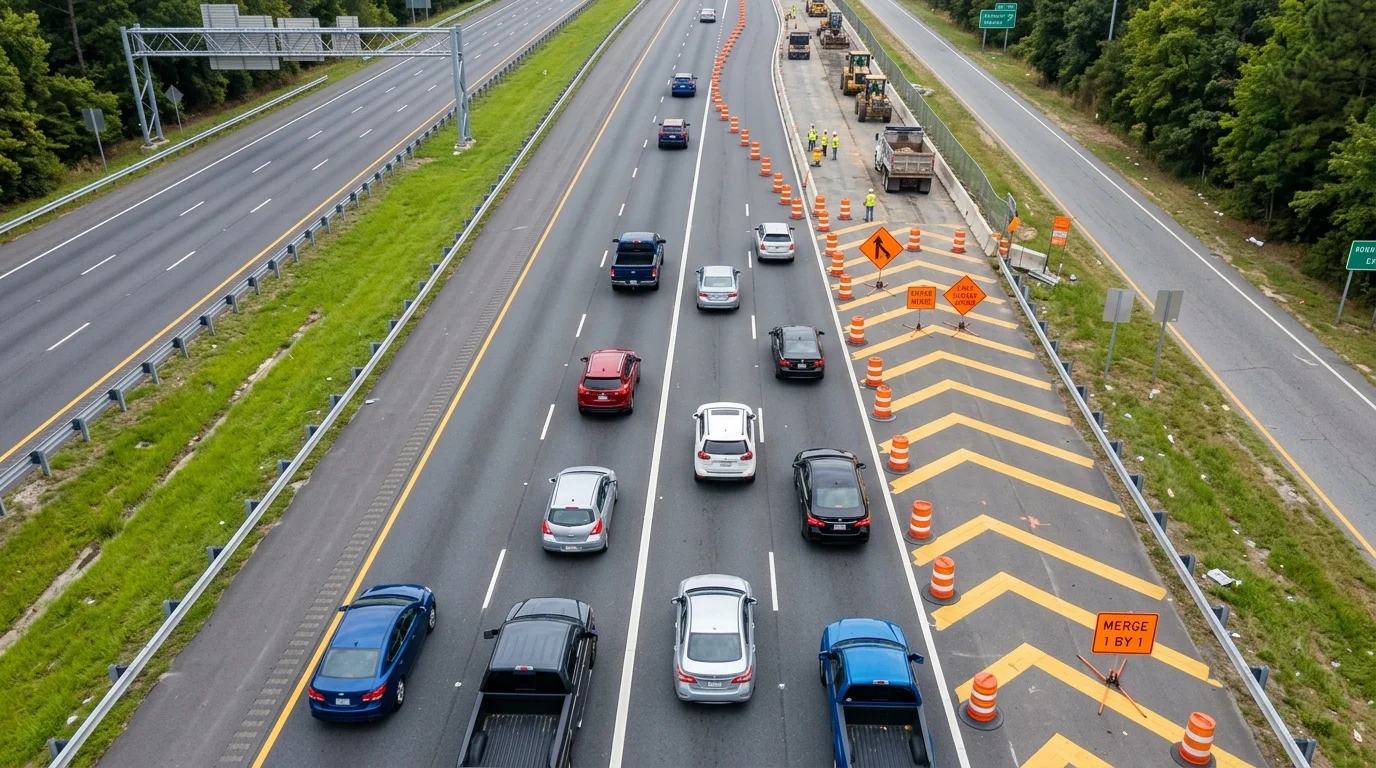
The zipper merge method utilizes both highway lanes fully up to the obstruction point, where cars alternate one-for-one like teeth on a zipper.
Quick Answer & Key Takeaways
The Zipper Merge (or 'Late Merge') is the traffic engineering practice where motorists utilize both highway lanes fully until reaching the actual lane closure taper point, at which point drivers in the open lane and closing lane alternate one-by-one like the teeth on a zipper. When traffic is congested, early merging creates a single-lane queue that backs up for miles, blocks highway exits, and increases rear-end collision risk. Studies by state DOTs show the zipper merge reduces traffic queue lengths by 40% and speeds up overall corridor throughput by 15%.
- Utilize All Open Pavement: In heavy stop-and-go traffic, staying in the closing lane until the taper is the legally encouraged practice, NOT 'cutting in line'.
- Alternating 1-for-1: At the merge point, drivers in the continuous lane must allow exactly ONE vehicle from the closing lane to merge ahead.
- Reduces Queue Length by 40%: Keeps backups from spilling over into upstream off-ramps and arterial city streets.
- Lane Blocking Is Illegal: Straddling both lanes to block other drivers from reaching the merge point is reckless driving and a citeable moving violation.
The Early Merge Fallacy: Why "Polite" Merging Causes 3-Mile Backups
When approaching a highway work zone with a sign reading "Lane Closed 1 Mile Ahead", most American drivers have an instinctive reflex: immediately brake and merge into the open lane as early as possible.
While well-intentioned, transportation research from the Minnesota Department of Transportation (MnDOT) reveals that early merging is the primary catalyst for catastrophic traffic gridlock:
- Wasting 5,000+ Feet of Usable Pavement: Early merging leaves an entire highway lane sitting completely empty for a mile, condensing two lanes of traffic into a single line twice as long.
- Clogging Upstream Interchanges: The elongated single-lane queue spills backward past highway exit ramps, trapping local drivers trying to leave the freeway.
- Dangerous Speed Differentials: Cars crawling at 5 mph in the open lane sit next to an empty lane where approaching cars travel at 50 mph, dramatically increasing high-speed rear-end and sideswipe crash risks in active work zones.
How the Zipper Merge Operates (The Alternating Tooth Mechanism)
Under guidelines published by the Federal Highway Administration (FHWA), the Zipper Merge operates on a simple principle:
- Fill Both Lanes: Motorists continue driving side-by-side in both lanes at a matched, steady pace all the way to the lane closure cones or barrels.
- Alternate at the Taper: When reaching the merge point, drivers in the continuous lane let exactly one vehicle from the terminating lane merge ahead of them (Car A, Car B, Car A, Car B), exactly like interlocking teeth on a zipper.
The Traffic Physics: 40% Shorter Backups & 15% Higher Flow
Field studies across state transportation departments demonstrate significant operational improvements:
- 40% Reduction in Queue Length: A 3-mile single-lane backup shrinks to a 1.5-mile double-lane queue.
- 15% Improvement in Corridor Throughput: Constant rolling motion at the merge point eliminates the "accordion brake wave" where vehicles stop and start.
- Equal Fairness: Eliminates the resentment felt when drivers in a long slow queue watch cars fly by in the empty closing lane.
When to Use Zipper Merge (Heavy Congestion) vs. Early Merge (Free-Flow)
The optimal merging strategy depends entirely on traffic speed:
| Traffic Condition | Correct Merging Method | Driver Action Required |
|---|---|---|
| Free-Flowing Traffic (50+ MPH) | Early Merge | Merge early into open gaps using S.M.O.G. without braking |
| Heavy Congestion / Stop-and-Go | Zipper Merge (Late Merge) | Use both lanes to the taper point, then alternate 1-by-1 |
Lane Blocking & Road Rage: Why "Traffic Vigilantism" Is Illegal
A dangerous road rage phenomenon occurs when an uninformed driver straddles the center line or pulls a semi-truck into the middle of the road to physically block other motorists from driving down the open lane.
Lane blocking is illegal in all 50 states.
Under state vehicle codes, blocking a lawful lane of travel constitutes impeding traffic and reckless driving. State highway patrols routinely cite vigilante drivers who attempt to prevent others from reaching the zipper merge point.
The 4-Step Protocol for Executing a Flawless Zipper Merge
- Resist the Urge to Merge Early in Traffic: If highway speeds drop below 30 mph, remain in your lane.
- Match Speed with Adjacent Traffic: Do not speed aggressively down the closing lane; cruise at a steady matched speed.
- Signal Early: Activate your turn signal approximately 100 feet before the merge taper cones.
- Take Turns (One-for-One): If you are in the open lane, create a gap and wave one car in. If you are in the closing lane, merge smoothly behind the car ahead and thank the driver with a wave.
Interactive Knowledge Check
Question: Under state DOT zipper merge rules, when highway traffic is heavy and crawling in stop-and-go congestion approaching a lane closure, what is the most efficient driving action?
Authoritative Sources & Regulatory References
Content and statutory guidelines in this guide are verified against official state vehicle codes, federal transportation standards, and authoritative regulatory documentation:
- FHWAWork Zone Zipper Merge Guidelines and Operational Benefits(Federal Highway Administration)
- MnDOTZipper Merge Study and Traffic Queue Reductions(Minnesota Department of Transportation)
- TTIWork Zone Capacity and Dynamic Late Merge Comparisons(Texas A&M Transportation Institute)
88% of people found this article helpful.
Click a star to add your vote
113 votes • average 4.44 out of 5
Official 2026 DMV Practice Tests by State
Select your state to practice real exam questions based on the latest 2026 driver handbook.
Ready to Pass the DMV Test on Your First Try?
Practice real 2026 DMV questions with instant answer explanations, simulated timers, and pass-guarantee study guides.
Start Free Practice TestRecommended Driver Guides

Construction and Work Zone Signs: Why Fines Double in Active Zones

How to Merge onto a High-Speed Freeway Without Causing Traffic Conflicts
