Construction and Work Zone Signs: Why Fines Double in Active Zones
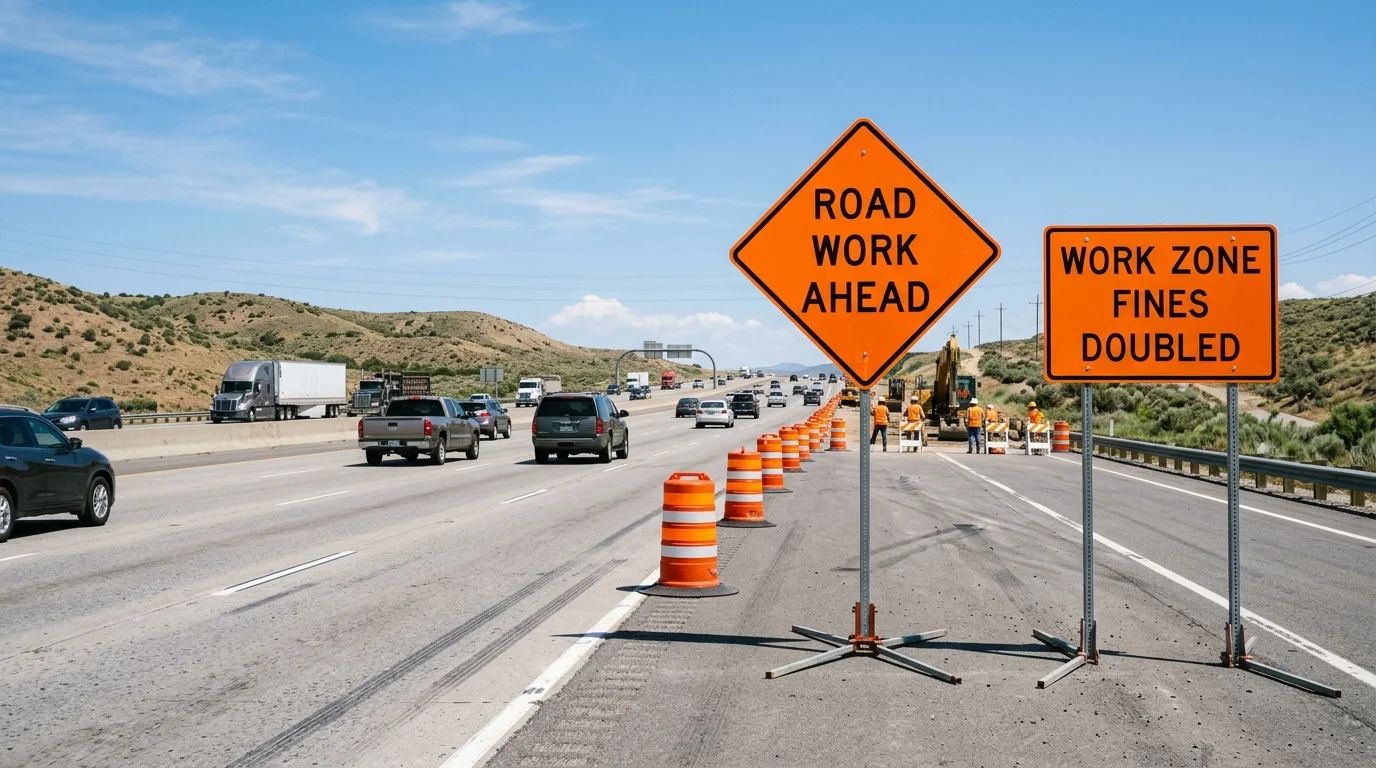
Traffic violations committed inside active highway construction zones carry mandatory doubled fines and enhanced license penalties.
Quick Answer & Key Takeaways
Under state and federal transportation codes, highway construction and maintenance zones are designated by FLUORESCENT ORANGE diamond signs, cones, barrels, and electronic arrow boards. Core rules: 1) Obey all temporary posted speed limits immediately. 2) Flaggers directing traffic with STOP/SLOW paddles have full police authority; disobeying a flagger is a major misdemeanor. 3) Under statutory 'Double Fine' laws (e.g. California CVC § 42010), speeding and traffic violation fines are automatically doubled whenever workers are present or signs are posted.
- Fluorescent Orange Color: Reserved exclusively for Temporary Traffic Control (TTC) and maintenance operations.
- Fines Double by Law: Speeding, tailgating, and reckless driving fines automatically double in active construction zones (citations push $600–$1,000).
- Flaggers Have Law Enforcement Power: You must obey human flaggers directing one-lane alternating traffic.
- Expand Following Distance: Rear-end collisions are the #1 crash type in work zones; maintain at least a 4-second buffer behind the car ahead.
Why Highway Work Zones Are High-Risk Environments
According to alarming national safety statistics from the National Work Zone Safety Information Clearinghouse, over 850 people are killed and 40,000 injured in highway work zone collisions each year.
Critically, over 85% of people killed in work zone crashes are motorists and passengers, not road construction workers.
Work zones create sudden environmental changes: narrowed lanes, abrupt lane shifts, uneven pavement drop-offs, concrete K-rail barriers with zero escape shoulders, and sudden deceleration from 65 mph to a dead stop.
The Color Code: Fluorescent Orange Signs Decoded
Under FHWA MUTCD Part 6, Fluorescent Orange is the standard color for all Temporary Traffic Control (TTC) signage:
- ROAD WORK AHEAD (W20-1): Posted 500 feet to 1 mile before the active zone; signal to slow down and prepare for lane mergers.
- RIGHT / LEFT LANE CLOSED AHEAD (W20-5): Advance notice to begin merging into open through lanes using the S.M.O.G. method.
- FLAGGER AHEAD (W20-7, Silhouette of person holding flag): Warns that a human traffic control officer is stationed ahead; be prepared to stop.
- SHOULDER WORK AHEAD (W21-5): Construction crews or utility trucks are operating on the shoulder; apply state Move Over Laws.
- END ROAD WORK (G20-2): Marks the official termination of the work zone and resumed standard speed limits.
Barrels, Cones, and Portable Changeable Message Signs (PCMS)
Engineers deploy physical channelizing devices to guide vehicles safely through complex construction corridors:
- Orange Traffic Cones & Drums (Barrels): Delineate lane shifts and closed lanes. Striking a 50-pound rubber barrel at 60 mph can cause severe vehicle front-end damage and loss of steering control.
- Flashing Sequential Arrow Boards: Large illuminated matrix boards displaying sweeping arrows directing traffic to merge left or right. A flashing horizontal bar or four corners means "Caution / Drive Slow in Lane."
Human Flaggers & Pilot Cars: Legal Authority & Hand Signals
On two-lane rural highways where one lane is closed for paving, traffic is alternated using human flaggers and pilot vehicles:
- The STOP / SLOW Paddle: Flaggers hold an 18-inch octagonal paddle. When the red STOP face is presented, you must come to a complete stop before the flagger. When the orange SLOW face is presented, proceed through the single open lane at no more than 15–20 mph.
- Pilot Cars ("PILOT CAR - FOLLOW ME"): A designated lead vehicle that escorts a queue of civilian cars through the single-lane construction zone. Never pass a pilot car; you must remain in line behind it until safely through the zone.
Why Fines Double: Statutory Penalties & Moving Violation Points
Under California Vehicle Code § 42010 and statutes across all 50 states:
- Mandatory Fine Doubling: Any speeding violation, improper lane change, or reckless driving infraction committed within a marked Highway Construction or Maintenance Area carries an automatic 100% fine multiplier.
- Total Financial Toll: A routine $250 speeding ticket routinely expands to $600 to $1,000+ after county penalty assessments and construction surcharges are applied.
The 5 Defensive Driving Rules for Work Zones
Protect yourself and road crews by following these five rules:
- Slow Down Immediately: Comply with the temporary reduced speed limit before entering the taper.
- Expand Following Distance to 4+ Seconds: Leave ample braking room to avoid sudden rear-end pileups under stopping distance physics.
- Eliminate All In-Car Distractions: Put away phones, turn down music, and keep both hands on the wheel.
- Merge Early and Smoothly: Don't wait until the last 10 feet of cones to force your way into open traffic.
- Expect the Unexpected: Watch for slow-moving construction dump trucks entering or exiting traffic lanes from the median.
Interactive Knowledge Check
Question: What color is specifically reserved for traffic signs indicating highway construction, road work, and maintenance operations?
Authoritative Sources & Regulatory References
Content and statutory guidelines in this guide are verified against official state vehicle codes, federal transportation standards, and authoritative regulatory documentation:
- California LegislatureCalifornia Vehicle Code § 42010: Violations in Highway Construction Zones(State of California Vehicle Code)
- FHWATemporary Traffic Control (MUTCD Part 6)(Federal Highway Administration)
- NWZSICWork Zone Fatalities and Worker Struck-by Incident Data(National Work Zone Safety Information Clearinghouse)
86% of people found this article helpful.
Click a star to add your vote
291 votes • average 4.33 out of 5
Official 2026 DMV Practice Tests by State
Select your state to practice real exam questions based on the latest 2026 driver handbook.
Ready to Pass the DMV Test on Your First Try?
Practice real 2026 DMV questions with instant answer explanations, simulated timers, and pass-guarantee study guides.
Start Free Practice TestRecommended Driver Guides
Move Over Laws Explained: How to Safely Pass Emergency & Utility Vehicles
The Basic Speed Law Explained: Why You Can Get a Ticket Driving Under the Speed Limit