Tire Tread Depth: The Penny Test vs. The Quarter Test (2/32-Inch vs. 4/32-Inch Rules)
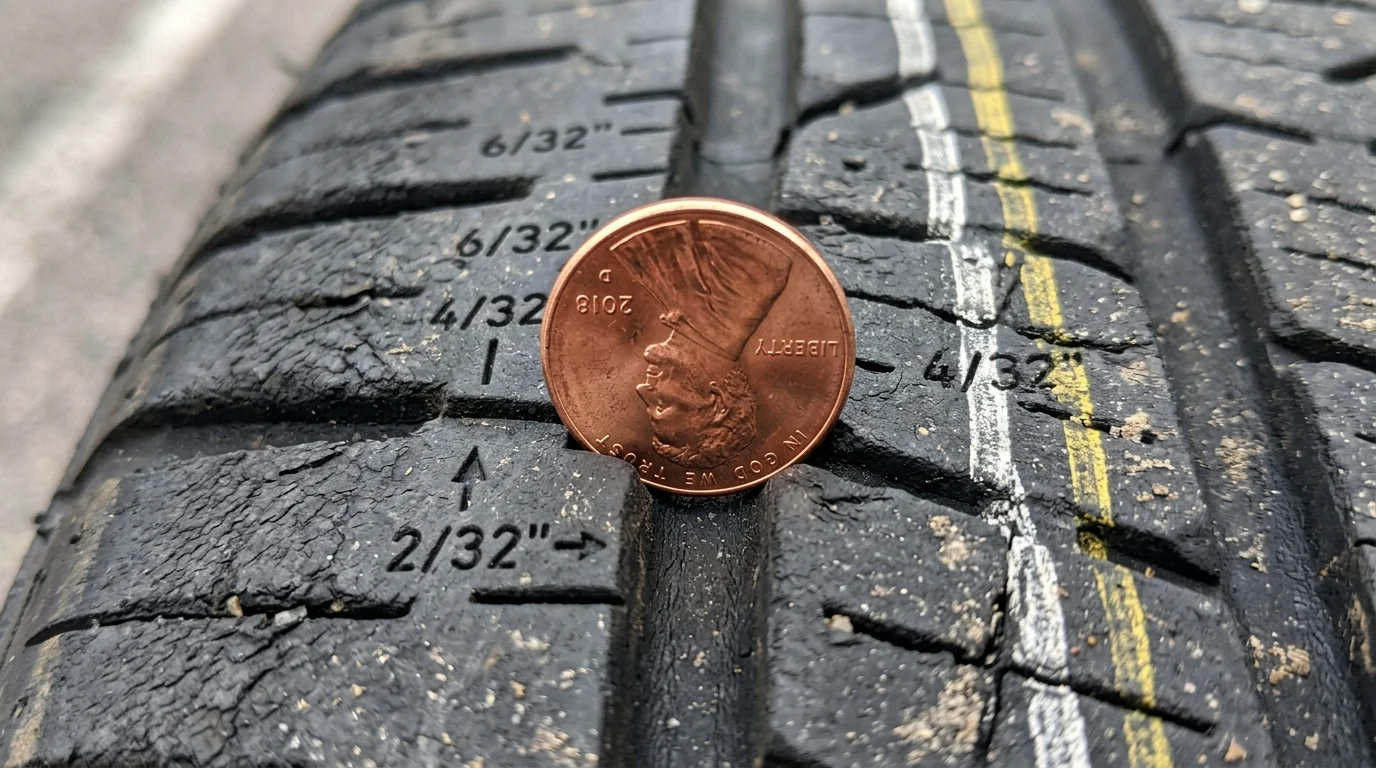
Using simple coin tests allows drivers to instantly measure tire tread depth and know exactly when wet-weather traction is compromised.
Quick Answer & Key Takeaways
Tire tread depth is measured in 32nds of an inch: 1) THE PENNY TEST (2/32-inch Legal Minimum): Insert a US penny upside-down with Lincoln's head facing you into the tread groove. If you can see the TOP OF LINCOLN'S ENTIRE HEAD, your tires are worn down to 2/32" or less, making them legally bald, illegal in most states, and prone to extreme hydroplaning. 2) THE QUARTER TEST (4/32-inch Wet Weather Safety): Insert a quarter upside-down. If Washington's head is partially covered, you have at least 4/32" of tread remaining. While 2/32" is the bare legal minimum, tire engineers recommend replacing tires at 4/32" because wet stopping distances double below this mark.
- Penny Test = 2/32" (Legally Bald): If the top of Lincoln's head is visible, replace tires immediately.
- Quarter Test = 4/32" (Wet Safety Limit): If the top of Washington's head is visible, replace tires before driving in rain or snow.
- Stopping Distance Doubles: At 70 mph in rain, a car on 2/32" tires takes an extra 100+ FEET (nearly 10 car lengths) to stop compared to new tires.
- Check Built-In Wear Bars: Raised rubber bars inside the tread grooves indicate exactly when 2/32" has been reached.
Why Tread Depth Dictates Wet Weather Braking & Hydroplaning
Tire tread grooves are not designed for dry asphalt grip—they are high-volume hydraulic channels designed to evacuate gallons of water per second out from beneath your vehicle.
When rain falls on a roadway, your tires must maintain physical contact with the pavement. As rubber wears down, the groove channels shrink in volume. When water cannot be channeled away fast enough, a wedge of standing water builds under the tire, causing the vehicle to lift off the pavement and hydroplane uncontrollably.
The Penny Test: The Legal Minimum (2/32" Lincoln Head)
Under US Department of Transportation standards and state vehicle safety inspection codes:
2/32 of an inch (1.6 mm) is the universal legal minimum tire tread depth across the United States.
How to Perform the Penny Test:
- Take a standard US penny and turn Abraham Lincoln upside down.
- Insert the coin into the deepest groove across the center of the tire tread.
- If Lincoln’s hair is covered by the tread: You have more than 2/32" of tread remaining.
- If you can see the TOP OF LINCOLN’S ENTIRE HEAD: Your tires are legally bald (at or below 2/32"). Replace them immediately.
The Quarter Test: The Real-World Safety Standard (4/32" Washington Head)
While 2/32" is the legal limit, tire manufacturers and consumer testing agencies advocate for the Quarter Test:
- Place a US quarter upside-down with George Washington's head facing you into the tread.
- If Washington’s head is partially covered: You have at least 4/32" of tread remaining, providing adequate wet-weather rain traction.
- If the top of Washington’s head is fully visible: You have less than 4/32". Your wet stopping capability is severely degraded.
Stopping Distance Physics: How Worn Tires Double Braking Distance
According to wet track braking tests published by Tire Rack:
When braking from 70 MPH on a wet highway under emergency stopping conditions:
- New Tires (10/32" Tread): Stops in 195 feet.
- Half-Worn Tires (4/32" Tread): Stops in 290 feet (+95 additional feet).
- Legally Minimum Tires (2/32" Tread): Takes 379 FEET to stop—nearly double the distance of new tires! When the car on new tires has come to a dead stop, the car on 2/32" tires is still sliding forward at 45 MPH.
Tread Wear Indicator (TWI) Bars: How to Spot Built-In Warning Bridges
You don't even need a coin to inspect your tires:
Look for small triangular symbols or the letters "TWI" molded into the outer tire sidewall shoulder. Follow the triangle inward into the tread grooves: you will find narrow raised rubber bridges molded at exactly 2/32" height.
When the outer tire tread wears down flush with these cross-bars, the tire is 100% worn out.
Tread Depth Measurement & Replacement Guide Table
| Tread Depth | Coin Test Result | Safety & Wet Traction Status | Action Required |
|---|---|---|---|
| 10/32"–12/32" | Deeply covers Lincoln & Washington | Brand New (Peak Wet Traction) | Drive normally; rotate every 6k miles |
| 4/32"–6/32" | Covers top of Washington's head (Quarter) | Adequate (Prepare for replacement) | Replace before winter snow or heavy rain |
| ≤ 2/32" | Top of Lincoln's head visible (Penny) | DANGEROUS (Legally Bald) | Replace tires immediately |
Interactive Knowledge Check
Question: When performing the Penny Test to check tire tread depth, what indicates that your tires are at the legal minimum depth (2/32") and must be replaced immediately?
Authoritative Sources & Regulatory References
Content and statutory guidelines in this guide are verified against official state vehicle codes, federal transportation standards, and authoritative regulatory documentation:
- USTMATire Tread Depth and Wet Traction Safety Guidelines(US Tire Manufacturers Association)
- NHTSATire Safety, Tread Wear Indicators, and Wet Stopping Distances(National Highway Traffic Safety Administration)
- Tire RackWet Stopping Distance Test: New vs. 4/32" vs. 2/32" Tires(Tire Rack Testing Field Studies)
96% of people found this article helpful.
Click a star to add your vote
91 votes • average 4.81 out of 5
Official 2026 DMV Practice Tests by State
Select your state to practice real exam questions based on the latest 2026 driver handbook.
Ready to Pass the DMV Test on Your First Try?
Practice real 2026 DMV questions with instant answer explanations, simulated timers, and pass-guarantee study guides.
Start Free Practice TestRecommended Driver Guides

How to Prevent and Recover from Hydroplaning in Heavy Rain

How to Change a Flat Tire Step-by-Step: Jack Placement, Lug Nuts, Spare Donut