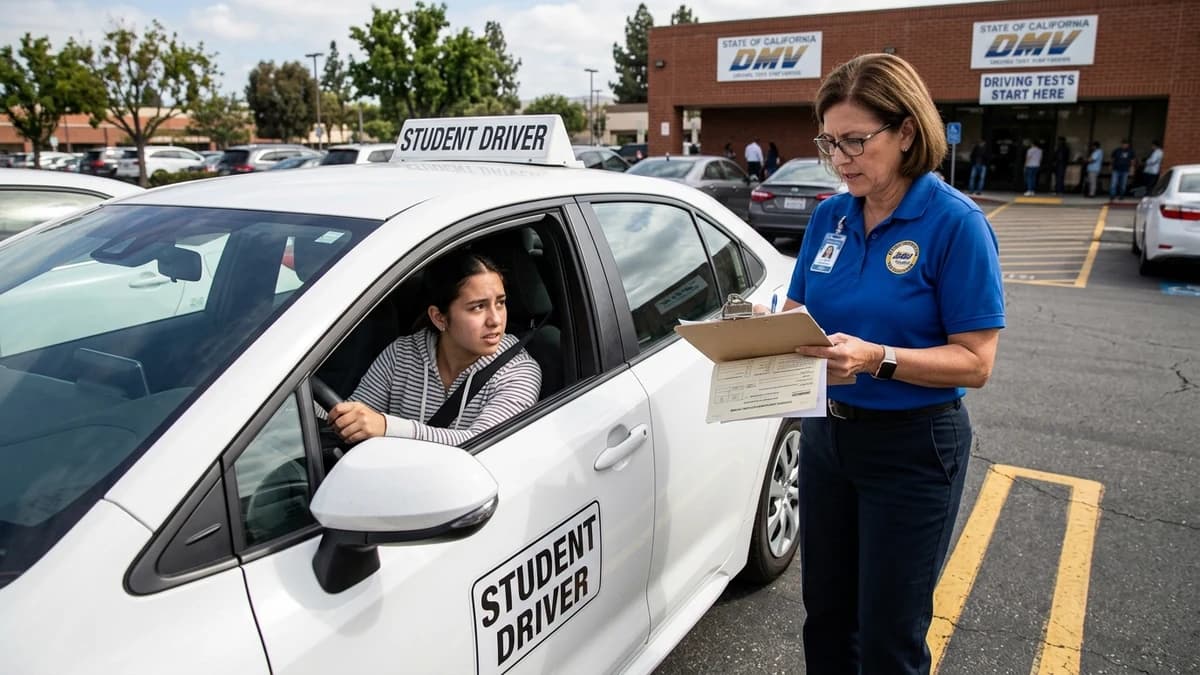
DMV Road Test Scoring Sheet: Critical Errors vs. Minor Faults
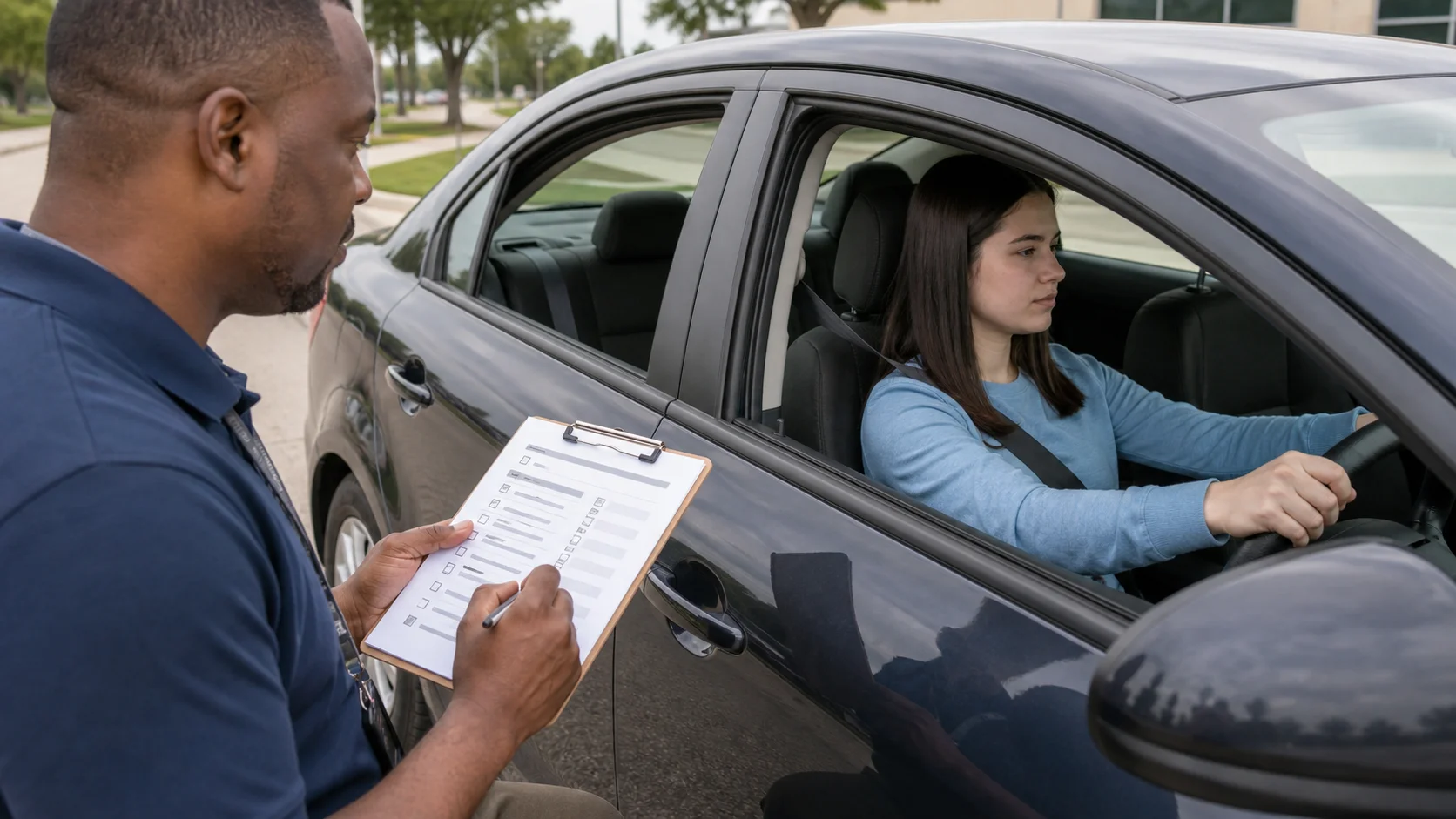
Understanding the difference between 1-point minor deductions and instant automatic fails ensures a passing score.
Quick Answer & Key Takeaways
The official DMV Driving Performance Evaluation (DPE Form DL 385) divides behind-the-wheel scoring into two distinct categories: 1) CRITICAL DRIVING ERRORS (AUTOMATIC FAILS): Making even ONE critical error ends the test immediately with an automatic failure. These include dangerous maneuvers requiring examiner intervention, striking a curb/object, running a red light or stop sign, speeding 10+ MPH over limit, failing to yield right-of-way, or making an unsafe lane change without looking over your shoulder. 2) MINOR DRIVING ERRORS: You are allowed up to 15 minor deduction points (such as braking slightly abruptly, turning too wide, or driving 3–5 MPH too slow). If you receive 16 or more minor errors, you fail.
- Critical Errors = Instant Fail: A single critical error terminates the test immediately regardless of how well you performed elsewhere.
- 15 Minor Deductions Allowed: You pass if you have 15 or fewer minor errors and ZERO critical errors.
- Examiner Intervention: If the examiner touches the dual brake, grabs the steering wheel, or shouts a verbal warning to avoid a crash, you fail automatically.
- Over-the-Shoulder Blind Spot Checks: Missing a head check during lane changes or curb pull-outs is the single most common cause of accumulated deductions.
How the DMV Driving Performance Evaluation (DPE) Is Scored
When you sit in the driver's seat for your practical road exam, the DMV licensing examiner holds a standardized evaluation clipboard (Form DL 385 in California, Form DS-89 in Texas, or MV-285 in New York).
The test is divided into two parts: the Pre-Drive Safety Check and the Driving Performance Evaluation.
To pass the test, you must satisfy two strict mathematical conditions:
- Condition 1: Accumulate ZERO (0) Critical Driving Errors.
- Condition 2: Accumulate 15 or fewer Minor Errors across all maneuvers.
The 8 Critical Driving Errors: 1 Mistake = Automatic Test Failure
Marking any one of the following 8 boxes on the score sheet results in an instant AUTOMATIC FAILURE:
- Examiner Intervention: The examiner grabs the steering wheel, touches the passenger brake, or shouts a verbal emergency command to prevent a collision.
- Strikes Object or Curb: Allowing any vehicle tire to mount or forcefully impact a concrete curb, trash can, or barrier while turning or parking.
- Disobeys Traffic Signs or Signals: Rolling through a STOP sign without a complete cessation of wheel motion, or entering an intersection on a solid red light.
- Disobeys Safety Personnel: Ignoring directions from a police officer, construction flagger, or school crossing guard.
- Dangerous Maneuver: Changing lanes directly into the path of an approaching vehicle, forcing another driver to brake or swerve.
- Speeding Violation: Driving 10 MPH or more over the posted speed limit, or driving at an unsafe high speed in rain/fog under the Basic Speed Law.
- Auxiliary Equipment Failure: Inability to operate defroster or windshield wipers during active rain.
- Lane Violation: Driving in the opposing oncoming traffic lane or crossing double solid yellow lines improperly.
Minor Deduction Categories: The 15-Point Allowance Threshold
Minor deductions represent non-dangerous technical imperfections. You are permitted up to 15 total checkmarks:
- Braking & Stopping: Stopping too abruptly, stopping more than 5 feet behind the limit line, or stopping slightly past the crosswalk line without blocking traffic.
- Speed Control: Driving 3 to 7 MPH below the posted limit when traffic flow is clear.
- Steering: Letting the steering wheel slip uncontrollably through hands during a turn, or turning too wide into an adjacent lane.
- Scanning & Mirrors: Failing to glance in the rearview mirror every 5 to 8 seconds, or failing to check cross-traffic at a green light.
Pre-Drive Checklist Scoring: 3 Pre-Drive Fails Disqualify You Instantly
Before leaving the DMV parking space, the examiner tests your knowledge of critical vehicle safety equipment:
You must correctly locate and operate: hand signals (left turn, right turn, stop), headlights, emergency hazard flashers, windshield wipers, defroster buttons, emergency/parking brake, and horn.Failing more than 3 pre-drive items disqualifies the vehicle, requiring you to reschedule.
Maneuver Scoring Breakdown: Turns, Curb Reversing & Intersections
The examiner scores every driving phase according to four continuous evaluation criteria:
- Traffic Checks: Did you look over your right shoulder before pulling away from a curb?
- Signal Timing: Did you activate your turn signal at least 100 feet in advance?
- Speed & Deceleration: Did you brake smoothly before turning, rather than braking mid-corner?
- Lane Positioning: Did you finish your left turn in the leftmost travel lane?
Official DMV Road Test Scoring Sheet Rubric Table
| Score Sheet Category | Error Classification | Point Value | Allowable Margin |
|---|---|---|---|
| Critical Driving Errors | Immediate Auto-Fail | Fatal Disqualification | 0 Allowed (1 = Fail) |
| Pre-Drive Safety Check | Equipment Verification | 1 Point per item | Max 3 Errors (4+ = Reschedule) |
| Behind-the-Wheel Minor Faults | Technique & Lane Position | 1 Point per deduction | Up to 15 Errors Allowed (Pass) |
| Total Minor Fail Threshold | Cumulative Technical Flaws | 16+ Points | 16+ = Test Failure |
Interactive Knowledge Check
Question: On the official California DMV Driving Performance Evaluation (DPE), what is the maximum number of minor error deductions an applicant can receive and still PASS the behind-the-wheel exam?
Authoritative Sources & Regulatory References
Content and statutory guidelines in this guide are verified against official state vehicle codes, federal transportation standards, and authoritative regulatory documentation:
- California DMVDriving Performance Evaluation (DPE) Scoring Criteria Manual (Form DL 385)(California Department of Motor Vehicles)
- AAMVAAAMVA Non-Commercial Driver Skills Test Administration Standards(American Association of Motor Vehicle Administrators)
- NHTSABehind-the-Wheel Road Exam Evaluation Standards (NHTSA DOT HS 810 933)(National Highway Traffic Safety Administration)
88% of people found this article helpful.
Click a star to add your vote
82 votes • average 4.43 out of 5
Official 2026 DMV Practice Tests by State
Select your state to practice real exam questions based on the latest 2026 driver handbook.
Ready to Pass the DMV Test on Your First Try?
Practice real 2026 DMV questions with instant answer explanations, simulated timers, and pass-guarantee study guides.
Start Free Practice TestRecommended Driver Guides

Top 10 Automatic Fails on the DMV Driving Test (And How to Avoid Them)

How to Prepare for the Behind-the-Wheel Drive Test: Common Auto-Fails to Avoid