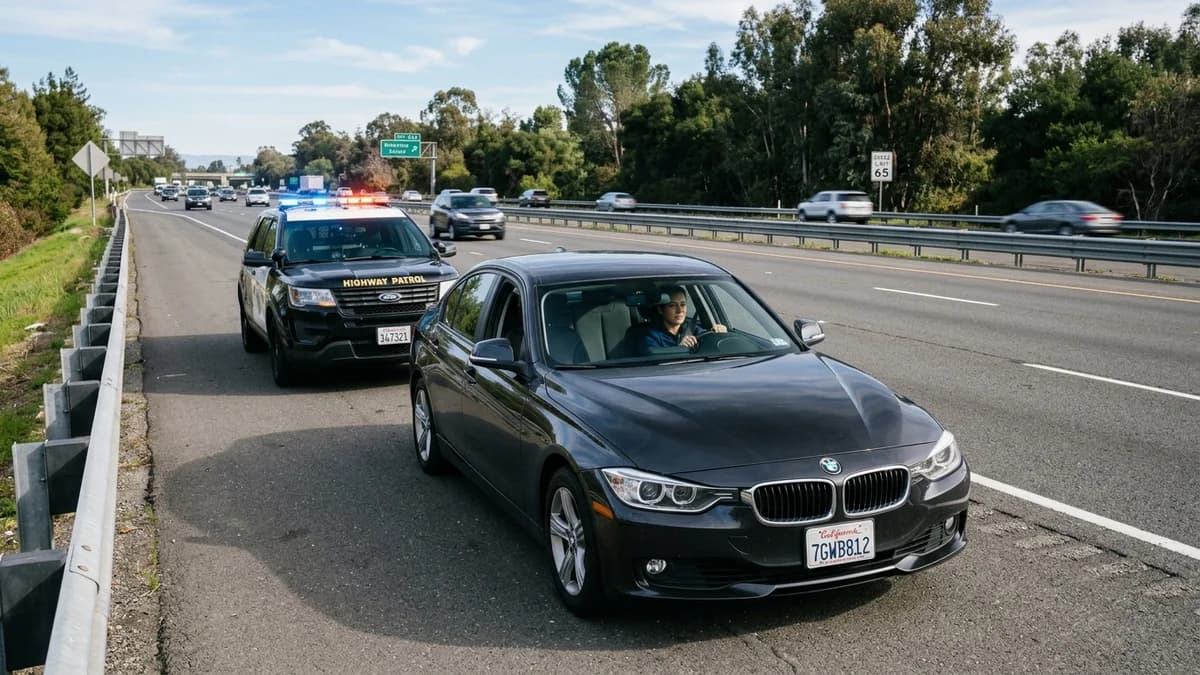
What to Do If an Unmarked Police Car Tries to Pull You Over
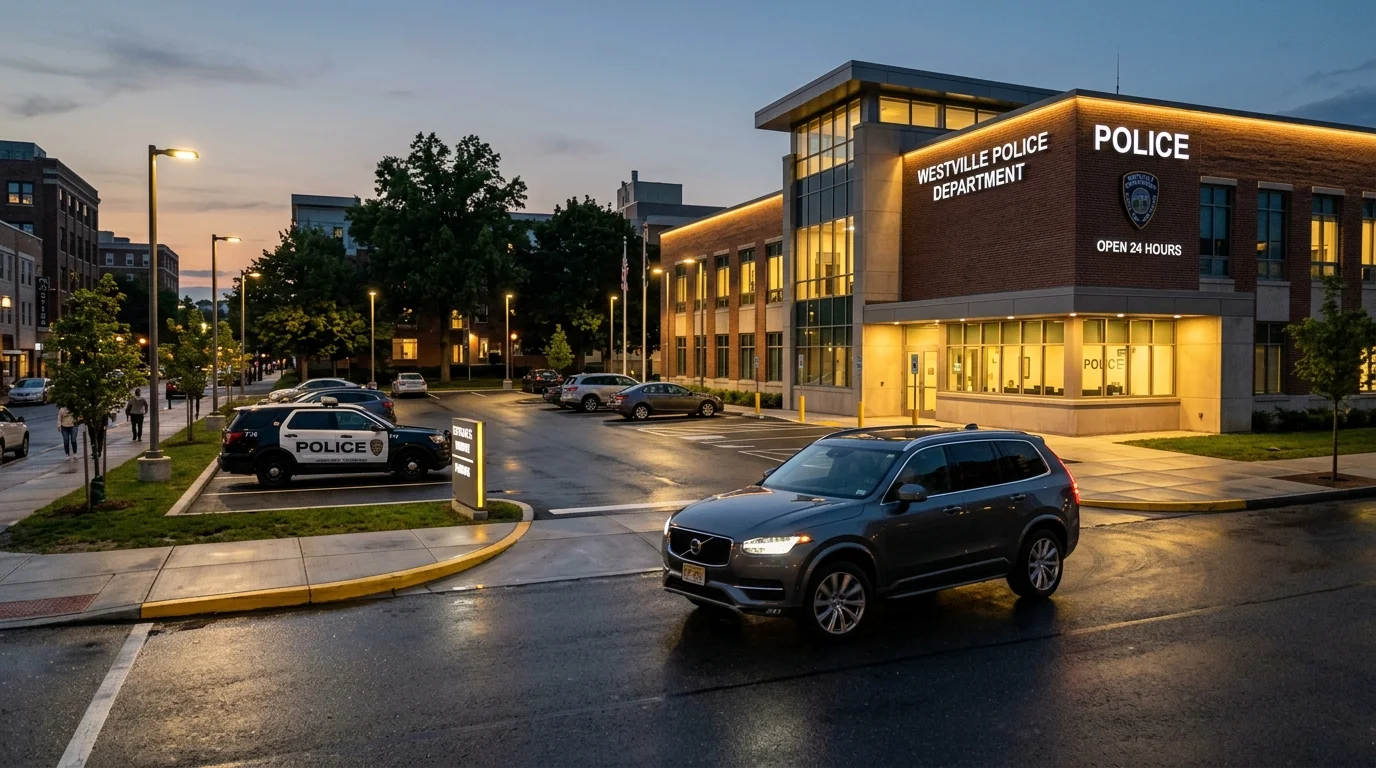
Activating hazard flashers and calling 911 protects you from criminal impersonators without facing evading charges.
Quick Answer & Key Takeaways
If an unmarked vehicle (a car without official police department decals or a roof lightbar) activates flashing red/blue grille lights behind you on a dark or isolated road, you have the legal right to verify the officer's identity before pulling over: 1) ACKNOWLEDGE THE OFFICER: Turn on your emergency hazard flashers (4-way flashers) and slow down by 10–15 MPH to signal that you are complying. 2) CALL 911 IMMEDIATELY: Dial 911 on hands-free speaker. State: 'An unmarked vehicle with flashing lights is following me. I am continuing to a well-lit public area. Can you confirm an officer is conducting a traffic stop on my car?' 3) DRIVE TO A WELL-LIT AREA: Continue driving slowly to a 24-hour gas station, grocery plaza, or police station. 4) CRACK WINDOW 1 INCH: Keep doors locked until a uniformed officer displays their badge or 911 confirms the stop.
- Turn On Hazard Flashers Instantly: Proves to the officer you are acknowledging them and not fleeing.
- Call 911 on Hands-Free: Police dispatch can track your GPS location and verify if an unmarked unit is behind you.
- Drive to Light and Witnesses: Never stop on a dark, desolate rural road or unlit highway shoulder.
- Keep Doors Locked: Crack your window only 1 to 2 inches to request badge and supervisor verification.
The Unmarked Vehicle Dilemma: Police Impersonation vs. Real Stops
Law enforcement agencies across the country utilize unmarked cruisers (often blacked-out Dodge Chargers, Ford Explorers, or Chevy Tahoes) for traffic enforcement and undercover operations.
However, criminals have occasionally purchased cheap aftermarket red and blue LED strobe lights online to impersonate law enforcement officers and commit armed robberies or carjackings.
According to International Association of Chiefs of Police (IACP) model policies, legitimate law enforcement officers understand and support motorists verifying stops through official dispatch channels.
The 4-Step Acknowledgment Protocol: Hazards & Speed Reduction
To ensure the officer does not assume you are attempting to flee under evading arrest statutes (CVC § 2800.1):
- Activate Hazard Flashers: Turn on your 4-way emergency flashers immediately. This signals: "I see you and I am complying."
- Reduce Speed: Slow down to approximately 10 to 15 MPH below the posted speed limit.
- Move to the Right Lane: Move into the far-right lane, but do NOT stop on a dark or isolated shoulder.
- Maintain Smooth Driving: Do not accelerate, make erratic turns, or try to outrun the vehicle.
Dialing 911: Verifying the Traffic Stop with Emergency Dispatch
Use your hands-free smartphone or Bluetooth system to call 911 immediately:
- What to Say: "Hello, I am driving a [Make/Model/Color] at [Current Street/Highway location]. An unmarked vehicle with flashing lights is attempting to pull me over. I feel unsafe stopping on this dark road. Can you verify if an active officer is conducting this stop?"
- The 911 emergency dispatcher will communicate via police radio with local patrol units.
- If it is a legitimate officer, dispatch will confirm the unit number and inform the officer over the radio that you are cooperating and driving to a lit area.
- If it is an impersonator, the dispatcher will immediately dispatch marked cruisers to intercept the vehicle.
Continuing to a Well-Lit Public Location: Gas Stations & Police Stations
Continue driving slowly with hazards on until you reach a safe public location with lighting and witnesses:
- A 24-hour gas station or well-lit convenience store parking lot.
- A busy supermarket or shopping plaza entrance.
- A local police precinct or sheriff's substation.
In-Car Interaction: Locked Doors, Rolled-Up Windows & Badge Proof
Once stopped in the lit area:
- Turn on your interior dome light. Keep your vehicle doors locked.
- Roll down your driver's window only 1 to 2 inches.
- Keep your hands flat and visible at 12 o'clock on the steering wheel under pulled over safety guidelines.
- Politely request: "Officer, because your vehicle is unmarked, I contacted 911 to verify your identity. May I please see your official police identification badge and departmental credentials?"
- Legitimate officers are legally mandated by department regulations to present official photo credentials upon request.
Unmarked Police Stop Safety Protocol & Dispatch Verification Table
| Step | Action Required | Purpose | Mistake to Avoid |
|---|---|---|---|
| 1. Acknowledge | Turn on 4-way hazard flashers + slow down | Proves compliance to officer | Speeding up (Evading charge) |
| 2. Verify | Call 911 on speakerphone | Confirms authentic police unit | Assuming anyone with lights is legitimate |
| 3. Location | Drive slowly to lit gas station / plaza | Ensures witnesses and lighting | Stopping on pitch-black rural road |
| 4. Interaction | Roll window 1" + request badge credentials | Protects physical safety | Exiting vehicle or rolling window all the way down |
Interactive Knowledge Check
Question: An unmarked car with red and blue flashing grille lights attempts to pull you over on a pitch-black, isolated rural road at night. What is the safest and legally correct procedure?
Authoritative Sources & Regulatory References
Content and statutory guidelines in this guide are verified against official state vehicle codes, federal transportation standards, and authoritative regulatory documentation:
- IACPIACP Model Policy on Unmarked Police Vehicles and Traffic Enforcement Protocol(International Association of Chiefs of Police)
- NHTSANHTSA Guidelines for Law Enforcement Traffic Stops and Motorist Safety (DOT HS 810 998)(National Highway Traffic Safety Administration)
- California LegislatureCalifornia Vehicle Code § 2800.1: Fleeing or Evading Law Enforcement Exceptions(California Vehicle Code)
93% of people found this article helpful.
Click a star to add your vote
294 votes • average 4.69 out of 5
Official 2026 DMV Practice Tests by State
Select your state to practice real exam questions based on the latest 2026 driver handbook.
Ready to Pass the DMV Test on Your First Try?
Practice real 2026 DMV questions with instant answer explanations, simulated timers, and pass-guarantee study guides.
Start Free Practice Test