What to Do When Being Pulled Over by Police: Step-by-Step Safety & Legal Protocol
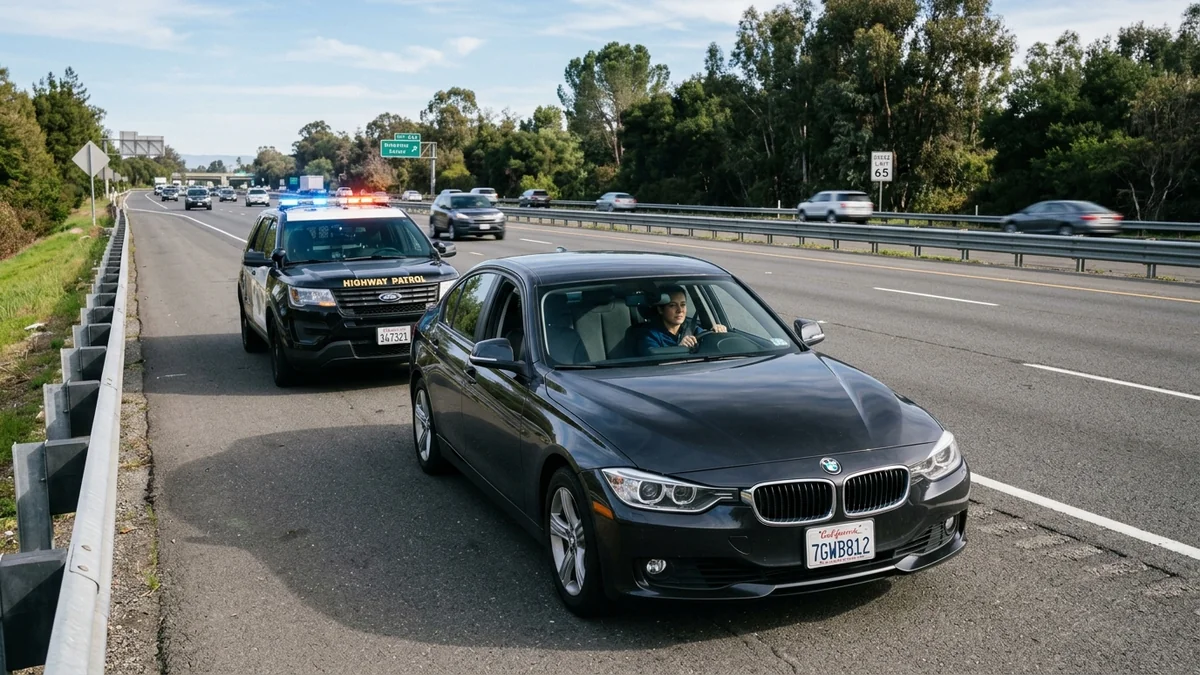
Safely acknowledging the officer with your turn signal, stopping on the right shoulder, and keeping your hands visible on the steering wheel sets a calm, safe tone for the traffic stop.
Quick Answer & Key Takeaways
Immediately activate your right turn signal and smoothly pull over to the right shoulder or a safe, well-lit location. Shift into Park, shut off your engine, roll down your driver window, and turn on the interior dome light at night. Place both hands at the 10 and 2 positions on the steering wheel. Never reach for your license or registration until the officer explicitly asks for them.
- Acknowledge the officer immediately: Activate your right turn signal so the officer knows you see them and intend to stop.
- Keep hands clearly visible: Rest both hands on the top rim of the steering wheel until instructions are given.
- Narrate before reaching: Verbally tell the officer where your documents are before opening the glovebox or reaching into pockets.
- Unmarked cruisers or dark roads: Slow down, turn on hazard lights, and call 911 dispatch to verify the stop if you feel unsafe.
The 60-Second Reaction Plan: Where and How to Stop
Seeing red and blue flashing lights in your rearview mirror triggers an immediate spike in adrenaline. However, how you react in the first sixty seconds establishes the safety, tone, and legal trajectory of the entire encounter under ACLU traffic stop guidelines.
Under US traffic statutes across all fifty states, drivers are legally required to yield to emergency vehicles with activated lights and sirens. Follow these steps sequentially:
- Signal immediately: Turn on your right blinker within three seconds of noticing the emergency lights. This communicates to the officer that you are compliant and actively searching for a safe stopping point.
- Pull completely to the right shoulder: Move as far to the right edge of the roadway as safety permits. If on a multi-lane highway, check your mirrors and change lanes one at a time.
- Avoid stopping on blind curves or narrow bridges: If the shoulder is dangerously narrow, reduce your speed to 15–20 mph, turn on your four-way hazard flashers, and pull into the nearest well-lit parking lot or wide shoulder.
- Provide safety space for the officer: Leave ample clearance between your driver side and active traffic lanes so the officer can approach your vehicle without being struck by passing motorists.
Cabin Preparation & Hand Positioning
From a law enforcement perspective, a traffic stop is among the most unpredictable and dangerous duties an officer performs. The officer cannot see through heavily tinted windows, does not know if weapons are present, and must remain on high alert for sudden movements.
Before the officer even steps out of their patrol cruiser, take these four calming actions inside your vehicle:
- Place vehicle in Park and turn off the engine: Shifting to Park and removing your foot from the brake eliminates any suspicion that you may attempt to accelerate away.
- Roll down the driver window completely: If your vehicle has deeply tinted rear or passenger windows, consider rolling down the front passenger window as well to maximize cabin visibility.
- Turn on your interior dome light at night: Illuminating the cabin removes shadows and reassures the approaching officer immediately.
- Place both hands on the steering wheel: Rest your hands at the 10 and 2 o'clock or 12 o'clock position on the steering wheel rim with fingers relaxed and open. Instruct all passengers to keep their hands resting quietly on their laps.
Document Retrieval Protocol: The Golden Rule
The single most common mistake drivers make during a traffic stop is immediately frantically digging through the glove compartment, center console, or back pocket before the officer arrives at the window.
To an approaching officer, reaching into hidden compartments looks identical to reaching for a firearm or concealing contraband.
The Golden Rule of Document Retrieval:
- Wait for the direct request: Keep your hands on the steering wheel until the officer introduces themselves and asks for your REAL ID or driver's license, vehicle registration, and proof of mandatory auto insurance. (For permit holders, remember that Graduated Driver Licensing (GDL) laws require a licensed adult supervisor present).
- Narrate your movement before reaching: Clearly tell the officer: "My registration and insurance card are inside the glove compartment. May I reach over to get them?"
- Move slowly and deliberately: Never make sudden jerky movements or grab objects quickly.
- Digital insurance cards: If your state permits electronic proof of insurance on your smartphone, inform the officer before unlocking and handing over your device.
What to Do If Pulled Over at Night or by Unmarked Vehicles
Being signaled to pull over on a deserted rural road or by an unmarked vehicle with hidden dashboard strobe lights can be deeply unsettling. Law enforcement agencies establish clear protocols to protect both drivers and genuine officers:
- Acknowledge with hazard lights: Turn on your four-way hazard flashers and slow down. This legally acknowledges the vehicle without coming to an immediate stop in a dark, vulnerable area.
- Drive to the nearest populated, illuminated area: Continue driving at a safe, reduced speed to the nearest well-lit gas station, convenience store plaza, or busy intersection.
- Call 911 dispatch from your phone: If the cruiser is unmarked or the driver is in plainclothes, dial 911 immediately and ask dispatch: "I am driving a [Car Make/Model] on [Street Name]. There is an unmarked police vehicle behind me with flashing lights. Can you confirm an active traffic stop by an on-duty officer?"
- Request identification: If an officer approaches in plainclothes without a standard duty uniform, you have the legal right to politely request to see their official police badge and photo identification card.
Your Legal Rights vs. Lawful Officer Commands
Understanding where an officer's authority begins and where your constitutional protections lie ensures you remain respectful while preserving your legal rights:
- Exiting the vehicle (Pennsylvania v. Mimms): If an officer orders you or any passengers to step out of the vehicle, you must legally comply. Under US Supreme Court precedent, officers may order occupants out for officer safety during any lawful traffic stop.
- Vehicle searches (Fourth Amendment): Unless an officer has a search warrant or clear probable cause (e.g., visible contraband in plain sight or odor of illicit substances), you have the constitutional right to politely state: "Officer, I do not consent to any searches of my vehicle."
- Right to remain silent (Fifth Amendment): Aside from identifying yourself and providing required driving documents, you are not legally obligated to answer leading questions such as "Do you know how fast you were going?" or "Where are you heading tonight?" You can politely state: "I prefer not to answer questions without an attorney."
- Right to record the encounter: In the United States, citizens have a First Amendment right to record police officers performing official duties in public, provided the camera does not physically obstruct the officer's work or reach toward the officer.
When an emergency vehicle or police patrol car approaches behind you with flashing red or blue lights, you must:
Frequently Asked Questions
What documents are required during a standard traffic stop?
You are legally required to provide three documents: your valid driver’s license, current vehicle registration, and proof of active auto insurance.
Does signing a traffic ticket mean you are admitting guilt?
No. Signing a traffic citation is merely a legal promise to appear in court or pay the designated fine by the specified date. Refusing to sign a citation can lead to immediate arrest in many jurisdictions.
Can police search your phone during a traffic stop?
No. Under the Supreme Court ruling in Riley v. California (2014), police officers cannot search digital data on your cell phone without a search warrant, even if you are under arrest.
Authoritative Sources & Regulatory References
Content and statutory guidelines in this guide are verified against official state vehicle codes, federal transportation standards, and authoritative regulatory documentation:
- ACLUKnow Your Rights: Stopped by Police (Traffic Stops)(American Civil Liberties Union)
- California DMVWhat to Do During a Law Enforcement Traffic Stop(State of California Department of Motor Vehicles)
- IACPModel Policy on Police-Motorist Encounters(International Association of Chiefs of Police)
95% of people found this article helpful.
Click a star to add your vote
78 votes • average 4.81 out of 5
Official 2026 DMV Practice Tests by State
Select your state to practice real exam questions based on the latest 2026 driver handbook.
Ready to Pass the DMV Test on Your First Try?
Practice real 2026 DMV questions with instant answer explanations, simulated timers, and pass-guarantee study guides.
Start Free Practice TestRecommended Driver Guides
How to Choose the Right Car Wash: Touchless vs. Soft-Cloth vs. Hand Wash
Discover which car wash protects your paint best. Compare touchless laser bays, soft-cloth tunnels, and DIY hand washing.
Which Way to Turn Your Wheels When Parking on a Hill (And Why)
Understand the core physics behind hill parking so you never have to memorize confusing tables again.
Left & Right Turns Explained: Which Lane Do You End Up In?
Learn the exact lane selection rules for single-turn, multi-turn, and intersecting highway corridors.