What to Do If Your Brakes Fail at High Speed: Emergency Stopping Guide
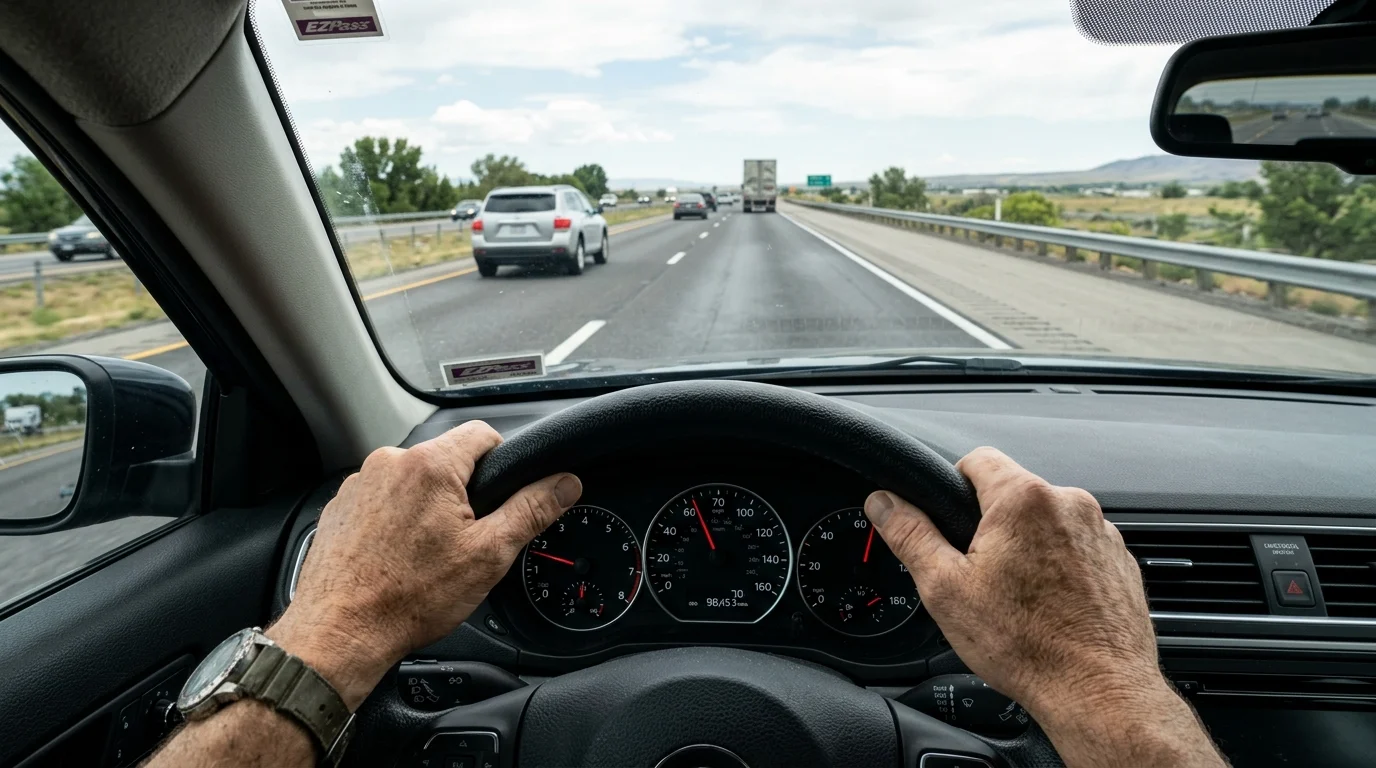
If your brake pedal goes straight to the floor, execute rapid pumping, progressive downshifting, and controlled emergency brake modulation.
Quick Answer & Key Takeaways
If your brake pedal sinks to the floor and your vehicle fails to decelerate at high speed, follow this mandatory 5-step emergency sequence immediately: 1) RAPIDLY PUMP THE BRAKE PEDAL: Fast, continuous pumping can rebuild residual pressure in dual-split master cylinder systems. 2) DOWNSHIFT TO LOWER GEARS: Shift an automatic transmission into 'L', '3', '2', or '1' (or use steering paddle shifters / manual clutch) to force powertrain engine braking. 3) MODULATE THE PARKING BRAKE: Slowly pull the manual emergency handbrake while holding the release button, or hold the electric parking brake (EPB) switch upward (modern EPBs pulse rear ABS brakes). 4) WARN OTHERS: Turn on hazard flashers and honk your horn. 5) NEVER TURN OFF THE IGNITION: Turning off the key locks the steering wheel and cuts power steering!
- Pump the Pedal Fast: Dual-circuit hydraulics often have enough fluid in the secondary chamber to generate 30% braking power upon fast pumping.
- Engine Compression Downshifting: Engine braking mechanically slows your vehicle from 70 MPH down to 20 MPH without friction brakes.
- Parking Brake Modulation: Pull handbrakes gradually to prevent rear tires from locking and sending the car into a violent spinout.
- Never Turn Off the Ignition: Cutting the engine engages the anti-theft steering column lock, leaving you with zero steering control.
The Nightmare Scenario: Total Hydraulic Brake Loss
You are cruising at 65 MPH on the highway, traffic begins to slow ahead, you press the brake pedal, and your foot goes straight to the floor with zero resistance.
Hydraulic brake failure—caused by burst steel brake lines, severely overheated boiling DOT fluid, or blown master cylinder seals—is one of the most terrifying automotive emergencies.
Staying calm and executing the correct physical sequence will bring your vehicle to a safe stop without crashing.
Rapidly Pump the Brake Pedal: Restoring Hydraulic Pressure
Every vehicle manufactured since 1968 features a dual-split master cylinder hydraulic system. If one brake line ruptures, the other independent hydraulic circuit (controlling the diagonal wheels) may still function.
- Action: Rapidly and forcefully pump the brake pedal 4 to 5 times in rapid succession.
- Result: Fast pumping compresses remaining air pockets and pressurizes residual fluid in the backup chamber, often restoring enough stopping power to slow the vehicle.
Downshift to Lower Gears: Utilizing Engine Compression Braking
Harness the natural resistance of your internal combustion engine or EV motor:
- In an Automatic Car: Move the shift lever from "D" (Drive) into "M" (Manual), "S" (Sport), or downshift sequentially to 3 → 2 → 1 (or "L") using steering wheel paddle shifters.
- In a Manual Car: Depress the clutch, downshift one gear at a time (e.g. 5th → 4th → 3rd → 2nd), and smoothly release the clutch after each gear change.
- The Physics: Under engine braking principles, intake manifold vacuum and high engine RPMs act as an enormous mechanical retarder, shedding 40 to 50 MPH in seconds.
Engage the Emergency / Parking Brake: Avoiding Rear-Wheel Locks
The emergency parking brake is a completely independent, mechanical steel cable (or electric servo) connected directly to your rear brake calipers or drums:
- Manual Handbrake (Lever in Center Console): Hold the thumb release button IN continuously and pull up slowly and progressively. If the rear wheels screech or the rear end begins to fish-tail, immediately release slight tension to prevent a spinout.
- Foot-Pedal Parking Brake (Far Left Floor): Apply gradual foot pressure. Keep your hand on the "Brake Release" pull lever to disengage if rear wheels lock.
- Electronic Parking Brake (EPB Switch): Pull and HOLD the EPB button upward. Modern Electronic Stability Control (ESC) systems will actively pulse the rear ABS actuators to bring the car to a controlled, straight-line emergency stop.
Communication: Hazard Flashers, Horn & Finding a Soft Escape Route
While your powertrain decelerates the car:
- Activate your 4-way hazard hazard flashers immediately.
- Lay on your car horn in continuous bursts to alert surrounding motorists.
- Check your rearview mirrors and guide your vehicle safely toward the right shoulder or breakdown lane.
Friction Stops: Using Curbs, Bushes & Escape Ramps as Last Resort
If downhill terrain prevents full deceleration before an intersection or red light:
- Scrape the Curb: Steer your front passenger tire against the concrete curb line at a shallow angle. The friction of the tire sidewall grinding against the concrete curb will scrub off speed.
- Seek Soft Landscaping: Steer into a thick grass median, dirt embankment, or low hedges.
- Highway Runaway Ramps: On mountain descents, look for gravel runaway truck escape ramps.
NEVER TURN OFF THE ENGINE WHILE MOVING! Turning the ignition key to "OFF" will lock the steering wheel mechanism, cutting power assist and leaving you unable to steer away from obstacles!
High-Speed Brake Failure 5-Step Action Protocol Table
| Sequence Order | Emergency Action | Mechanical Objective | Critical Danger to Avoid |
|---|---|---|---|
| Step 1 | Rapidly Pump Brake Pedal | Builds residual dual-circuit fluid pressure | Giving up after one soft pedal push |
| Step 2 | Downshift to Lower Gears (L/2/1) | Engine compression vacuum braking | Shifting directly into Reverse or Park at speed |
| Step 3 | Modulate Emergency Parking Brake | Mechanical cable engages rear brakes | Yanking handbrake abruptly (locks rear wheels) |
| Step 4 | Hazards + Horn + Steer to Shoulder | Alerts traffic and clears travel lane | Freezing in the center lane |
| Fatal Mistake | NEVER TURN OFF IGNITION | Maintains steering column unlock | Steering wheel locks; total loss of control |
Interactive Knowledge Check
Question: If your vehicle experiences sudden total brake failure at 60 MPH, why must you NEVER turn off the ignition key to stop the car?
Authoritative Sources & Regulatory References
Content and statutory guidelines in this guide are verified against official state vehicle codes, federal transportation standards, and authoritative regulatory documentation:
- NHTSAEmergency Stopping Procedures and Hydraulic Brake Failure Diagnostics(National Highway Traffic Safety Administration)
- AAADefensive Driving in Extreme Mechanical Emergencies: Brake Loss Management(American Automobile Association)
- FHWAGeometric Design of Runaway Vehicle Escape Ramps (FHWA-SA-94-041)(Federal Highway Administration)
92% of people found this article helpful.
Click a star to add your vote
130 votes • average 4.65 out of 5
Official 2026 DMV Practice Tests by State
Select your state to practice real exam questions based on the latest 2026 driver handbook.
Ready to Pass the DMV Test on Your First Try?
Practice real 2026 DMV questions with instant answer explanations, simulated timers, and pass-guarantee study guides.
Start Free Practice TestRecommended Driver Guides

Mountain Driving Safety: How to Use Engine Braking on Steep Downhill Grades
Stopping Distance Physics: Perception Time, Reaction Distance, and Braking Distance