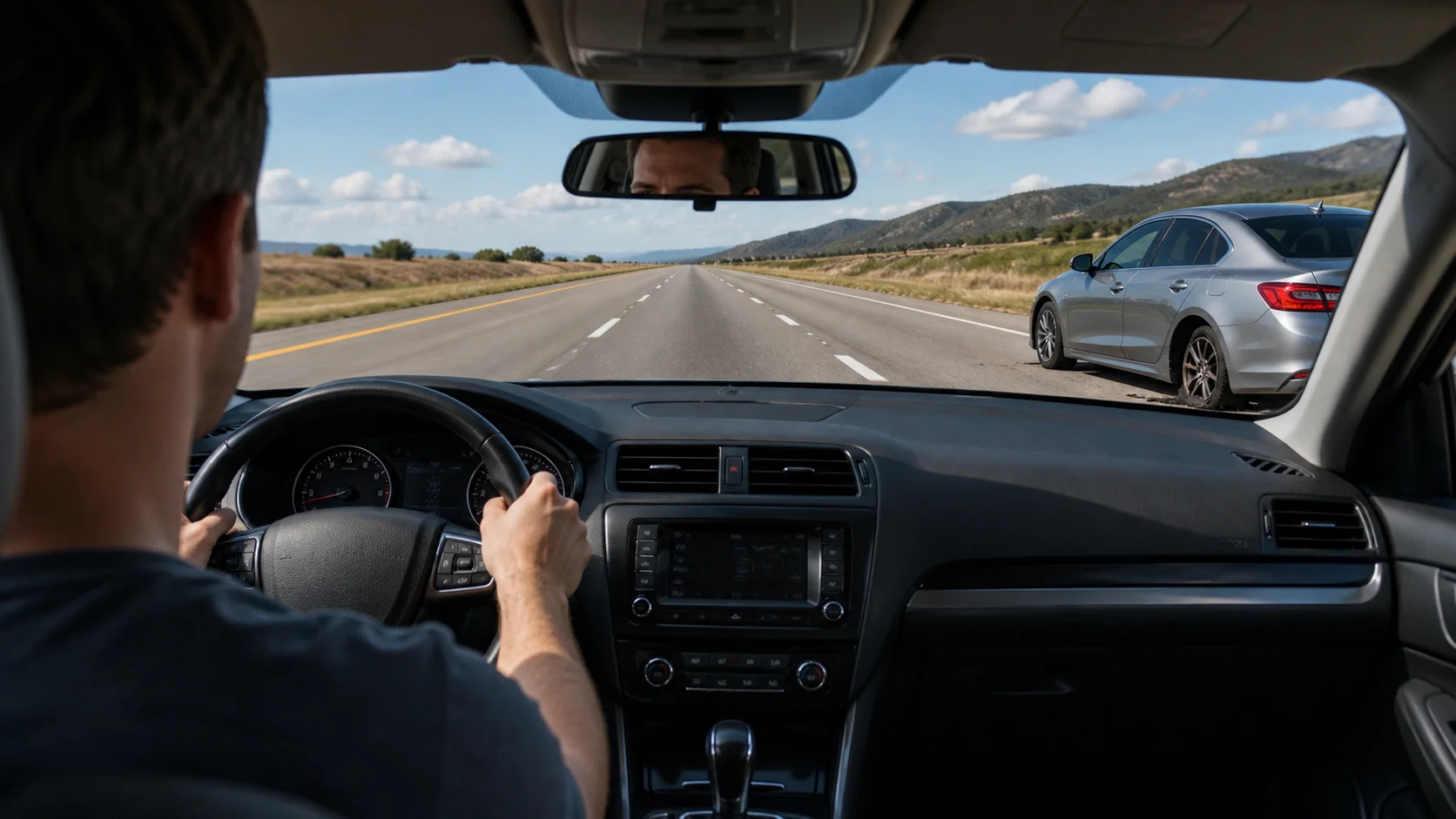
ABS Brakes vs. Threshold Braking in Snow: How ABS Works

Modern ABS pulses brake pressure up to 20 times per second, maintaining full steering control during emergency stops.
Quick Answer & Key Takeaways
Anti-lock Braking Systems (ABS), standard on all US passenger cars since 2012 (FMVSS 126), prevent wheels from locking during emergency panic stops on wet, icy, or snowy roads: 1) THE CORE PURPOSE: ABS is designed to PRESERVE STEERING CONTROL, not necessarily shorten stopping distance. A locked tire that slides across ice has ZERO directional steering capability; ABS keeps the wheel rotating slightly so you can steer around obstacles. 2) HOW TO USE ABS ('STOMP, STAY & STEER'): In an emergency, STOMP the brake pedal to the floor with maximum force, STAY pressed down firmly (ignore the loud grinding noise and pedal vibrations), and STEER around hazards. 3) NEVER PUMP ABS BRAKES: Manually pumping the pedal confuses ABS computer algorithms and triples stopping distances. 4) THRESHOLD BRAKING: Used only in vintage non-ABS cars.
- Steering Control Is Primary: ABS allows you to steer and dodge obstacles while braking at 100% force.
- Stomp, Stay & Steer: Apply maximum pressure, hold it down firmly, and steer toward safety.
- Never Pump the Brake Pedal: Pumping defeats the 15-pulse-per-second ABS computer system.
- Grinding & Vibration Is Normal: Rapid pulsing creates mechanical shuddering—do NOT release the pedal.
- Deep Snow Stopping Distance: ABS can slightly increase stopping distance in loose snow because it prevents tires from digging into snow wedges.
The Physics of Wheel Lockup: Why Locked Tires Cannot Steer
When a driver slams the brakes on an icy or wet roadway in a car without ABS, the brake pads clamp the rotors until the wheels stop spinning completely (wheel lockup).
The Fatal Result: Under basic tire friction physics, a sliding tire has zero lateral grip. Even if you turn the steering wheel completely to the left or right, a car with locked front tires will slide in a straight line governed purely by forward momentum.
The primary engineering objective of the Anti-lock Braking System (ABS) is to maintain rolling tire rotation so the driver can steer away from collisions.
How Modern ABS Works: 15–20 Hydraulic Pulses Per Second
Under Federal Motor Vehicle Safety Standard FMVSS No. 126, every vehicle uses magnetic wheel speed sensors and a hydraulic electronic control unit (HECU):
- Wheel speed sensors monitor rotational speed hundreds of times per second.
- If the computer detects that a wheel is decelerating so rapidly that lockup is imminent, high-speed solenoid valves release and reapply hydraulic brake pressure 15 to 20 times per second.
- This keeps the tire right at the absolute edge of maximum static friction (the highest possible grip point).
The "Stomp, Stay & Steer" Mandate: Never Pump ABS Brakes
Drivers trained decades ago were taught to "pump the brakes" on snow and ice.In a modern ABS-equipped vehicle, pumping the brakes is dangerous.
Follow the standardized AAA / NHTSA emergency braking rule:
- STOMP: Press the brake pedal down to the floorboard as hard and fast as possible.
- STAY: Keep your foot planted firmly on the pedal. You will feel violent mechanical vibrations and hear a loud grinding/buzzing noise. This is the ABS pump operating normally—do NOT lift your foot!
- STEER: Look in the direction you want to travel and steer smoothly around the obstacle or hazard.
Threshold Braking: The Manual Cadence for Older Cars
If you are driving a vintage car (pre-2000s) without ABS:
- Threshold Braking: Apply firm brake pressure right up to the threshold where tires begin to squeal or slip, then ease off pressure by 5% to keep the tires rotating.
- Cadence Braking: Manually pulse the brake pedal once per second to regain steering control if the front wheels lock up.
The Snow Paradox: Why ABS Stopping Distances Lengthen in Deep Snow
According to SAE Paper 920647, drivers should understand a critical winter characteristic of ABS:
- On loose gravel or deep unplowed snow, a locked tire digs into the loose surface, building a wedge of snow in front of the tire that helps halt the vehicle quickly.
- Because ABS prevents the wheel from locking, the tire continues rolling over the top of the snow/gravel layer, which can increase total stopping distances by 15% to 25%.
- However, ABS allows you to steer out of the slide and avoid obstacles, which prevents far more fatal crashes than straight-line skidding.
ABS vs. Threshold vs. Pumping Braking Comparison Table
| Braking Technique | Driver Pedal Action | Steering Capability | Vehicle Compatibility |
|---|---|---|---|
| ABS "Stomp, Stay & Steer" | Maximum continuous downward force | 100% Full Steering Control | All Modern Cars (Post-2012) |
| Threshold Braking | Feather brake right at edge of lockup | Moderate (Requires high skill) | Non-ABS Vintage & Track cars |
| Manual Pumping | Rapidly pressing and releasing pedal | Poor (Triples ABS stopping distance) | DO NOT USE ON ABS CARS |
Interactive Knowledge Check
Question: When performing an emergency stop in a vehicle equipped with Anti-Lock Brakes (ABS) on an icy highway, what should you do when the brake pedal begins vibrating and grinding violently?
Authoritative Sources & Regulatory References
Content and statutory guidelines in this guide are verified against official state vehicle codes, federal transportation standards, and authoritative regulatory documentation:
- NHTSAFMVSS No. 126 & No. 135: Electronic Stability Control and Light Vehicle Brake Systems(National Highway Traffic Safety Administration)
- SAE InternationalSAE Paper 920647: Analysis of Anti-Lock Brake System (ABS) Performance on Low-Coefficient Surfaces (Ice/Snow)(SAE International Automotive Engineering)
- AAA FoundationAAA Foundation: Winter Driving Traction and Anti-Lock Braking System Evaluation(AAA Foundation for Traffic Safety)
97% of people found this article helpful.
Click a star to add your vote
67 votes • average 4.90 out of 5
Official 2026 DMV Practice Tests by State
Select your state to practice real exam questions based on the latest 2026 driver handbook.
Ready to Pass the DMV Test on Your First Try?
Practice real 2026 DMV questions with instant answer explanations, simulated timers, and pass-guarantee study guides.
Start Free Practice TestRecommended Driver Guides

Downshifting & Engine Braking: How to Decelerate Without Overheating Brakes
Why the First 10 Minutes of Rain Are the Most Dangerous for Drivers