Why the First 10 Minutes of Rain Are the Most Dangerous for Drivers
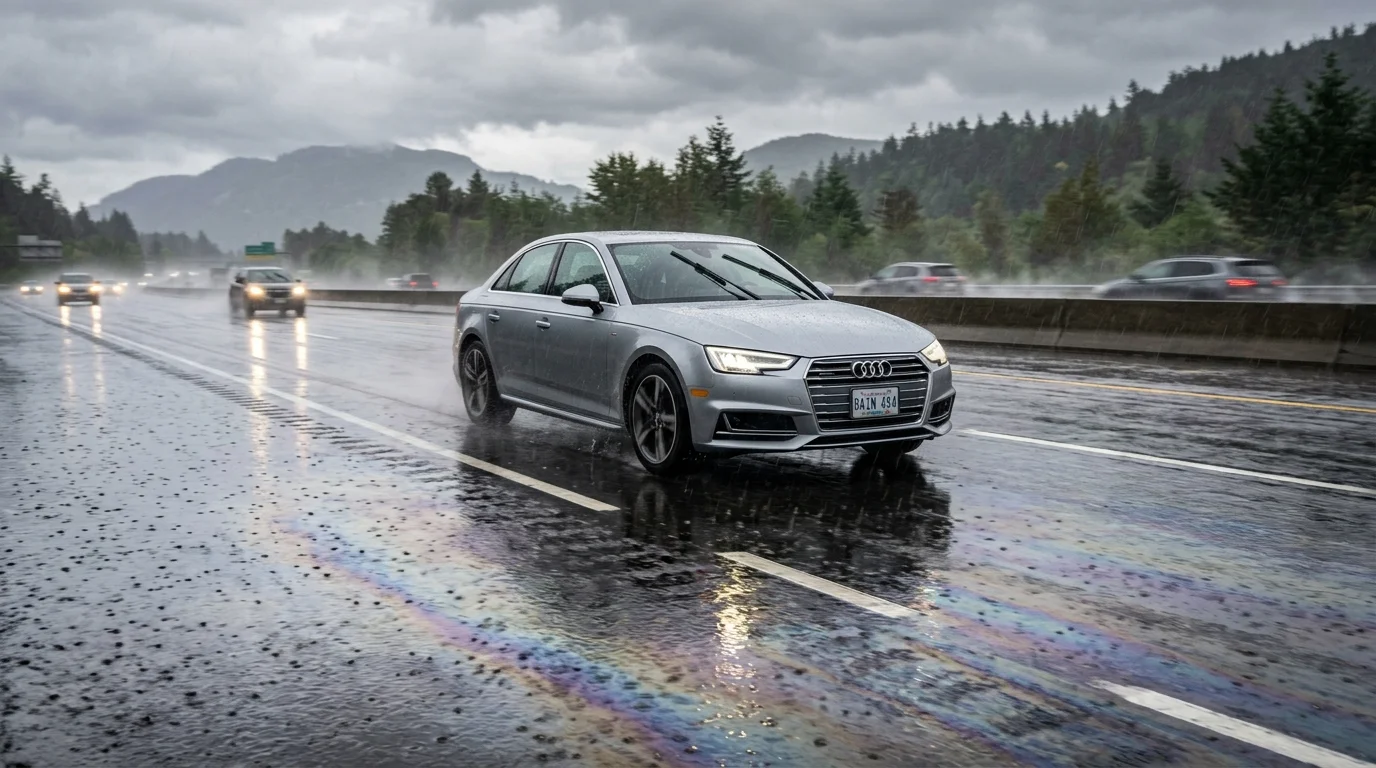
The first 10 to 15 minutes of rain float accumulated motor oil and petroleum residue to the surface, creating soapy asphalt.
Quick Answer & Key Takeaways
The most dangerous driving conditions occur during the FIRST 10 TO 15 MINUTES of a rainfall following a dry spell: 1) THE CHEMICAL CAUSE: Months of accumulated motor oil, transmission fluid, diesel residue, and tire rubber particles sit embedded in the pores of asphalt. When light rain begins, water is denser than petroleum and floats the oils to the surface, creating a slick, greasy emulsion film resembling soapy ice. 2) 60% TRACTION LOSS: Road grip drops dramatically from a dry friction coefficient of 0.8 down to 0.3. 3) AFTER 30 MINUTES: Heavy continuous rain washes the oily slurry off into gutters, actually making the pavement MORE grippy than during the initial shower. 4) MANDATORY ACTION: Reduce speed by 5–10 MPH, double your following distance to 5–6 seconds, and NEVER use Cruise Control on wet pavement.
- Oil Floats to the Surface: Light rain creates a slick petroleum slurry across roadway asphalt.
- Friction Drops by 60%: Stopping distances double on wet pavement compared to dry roads.
- Heavy Rain Cleans the Road: After 30–45 minutes of heavy downpour, the oil is washed away.
- Turn Off Cruise Control: Cruise control on wet roads causes sudden hydroplaning acceleration and spinouts.
- Wipers On, Headlights On: Required by law in over 30 states under CVC § 24400.
The Chemistry of First Rain: Oil, Tar & Rubber Emulsion Film
During dry weeks and months, millions of motor vehicles deposit microscopic drops of crankcase oil, transmission fluid, antifreeze, unburned gasoline, and synthetic tire rubber particles into the porous micro-texture of asphalt pavement.
When rain begins to fall, a chemical reaction occurs: water is denser than petroleum products.
Instead of washing away immediately, the light raindrops seep into asphalt crevices, lifting the embedded oil and grease to the surface where it floats on top of the thin water film, forming a soapy, highly lubricated chemical emulsion.
The Friction Drop: Coefficient of Friction Plummets by 60%
According to Federal Highway Administration (FHWA) road friction studies:
- Dry asphalt provides a coefficient of friction ($\mu$) of approximately 0.75 to 0.85.
- During the first 10 to 15 minutes of rain, the oil-water slurry slashes pavement friction down to 0.30 to 0.35—nearly equivalent to packed snow.
- A vehicle traveling at 55 MPH that requires 140 feet to stop on dry pavement will require over 280 to 320 feet to halt on first-rain asphalt.
Hydroplaning Dynamics: Tire Tread Depth & Critical Speed Limits
As water pools deeper, hydroplaning (aquaplaning) occurs:
- Tire tread grooves channel water out from beneath the contact patch.
- At speeds of 35 MPH to 55+ MPH, water pressure builds in front of the tire until the rubber completely loses contact with the pavement, riding on a pressurized cushion of water.
- Worn tires below 4/32" tread depth lose water evacuation capacity, hydroplaning at speeds as low as 30 MPH under tire safety benchmarks.
Immediate Rain Protocol: Reducing Speed & Disabling Cruise Control
The moment the first raindrops hit your windshield:
- Reduce Speed by 5 to 10 MPH: Under the Basic Speed Law, driving the posted 65 MPH speed limit on slick roads is a ticketable traffic violation.
- Turn OFF Cruise Control Immediately: If cruise control is active when tires hydroplane, the system detects a loss of speed and commands wide-open throttle, causing instant catastrophic spinouts.
- Expand Following Distance to 5–6 Seconds: Give ample room to brake without triggering panic ABS stops.
Lighting & Visibility: Low Beams & Fogging Clearance
Under Wipers On, Headlights On statutes in 30+ states, turn on your low-beam headlights whenever windshield wipers are in continuous use. Activate your air conditioning defroster with the A/C compressor ON to dehumidify interior air and prevent windshield fogging.
Rain Duration vs. Road Slipperiness & Crash Risk Timeline Table
| Rain Elapsed Time | Road Surface Condition | Friction Level | Crash Risk Index |
|---|---|---|---|
| First 0–15 Minutes | Oil & Grease Emulsion Slurry | Lowest (0.30–0.35) | EXTREME HAZARD |
| 15–30 Minutes | Oil begins diluting & washing off | Moderate (0.45–0.55) | Elevated |
| 30–60+ Minutes (Heavy) | Oil completely washed into storm drains | Clean Wet Asphalt (0.60–0.65) | Moderate (Hydroplaning risk remains in standing water) |
Interactive Knowledge Check
Question: Why are roadways most dangerous and slippery during the first 10 to 15 minutes after a rainfall begins following a dry period?
Authoritative Sources & Regulatory References
Content and statutory guidelines in this guide are verified against official state vehicle codes, federal transportation standards, and authoritative regulatory documentation:
- FHWAFHWA Road Weather Management Program: Wet Pavement Crash Analysis and Friction Degradation(Federal Highway Administration)
- California DMVCalifornia DMV Driver Handbook: Extreme Weather and Hydroplaning Safety Protocols(California Department of Motor Vehicles)
- NHTSATire Tread Depth and Wet Braking Distance Study (DOT HS 811 685)(National Highway Traffic Safety Administration)
89% of people found this article helpful.
Click a star to add your vote
128 votes • average 4.50 out of 5
Official 2026 DMV Practice Tests by State
Select your state to practice real exam questions based on the latest 2026 driver handbook.
Ready to Pass the DMV Test on Your First Try?
Practice real 2026 DMV questions with instant answer explanations, simulated timers, and pass-guarantee study guides.
Start Free Practice Test