How to Handle a Tire Blowout at Highway Speeds Without Crashing
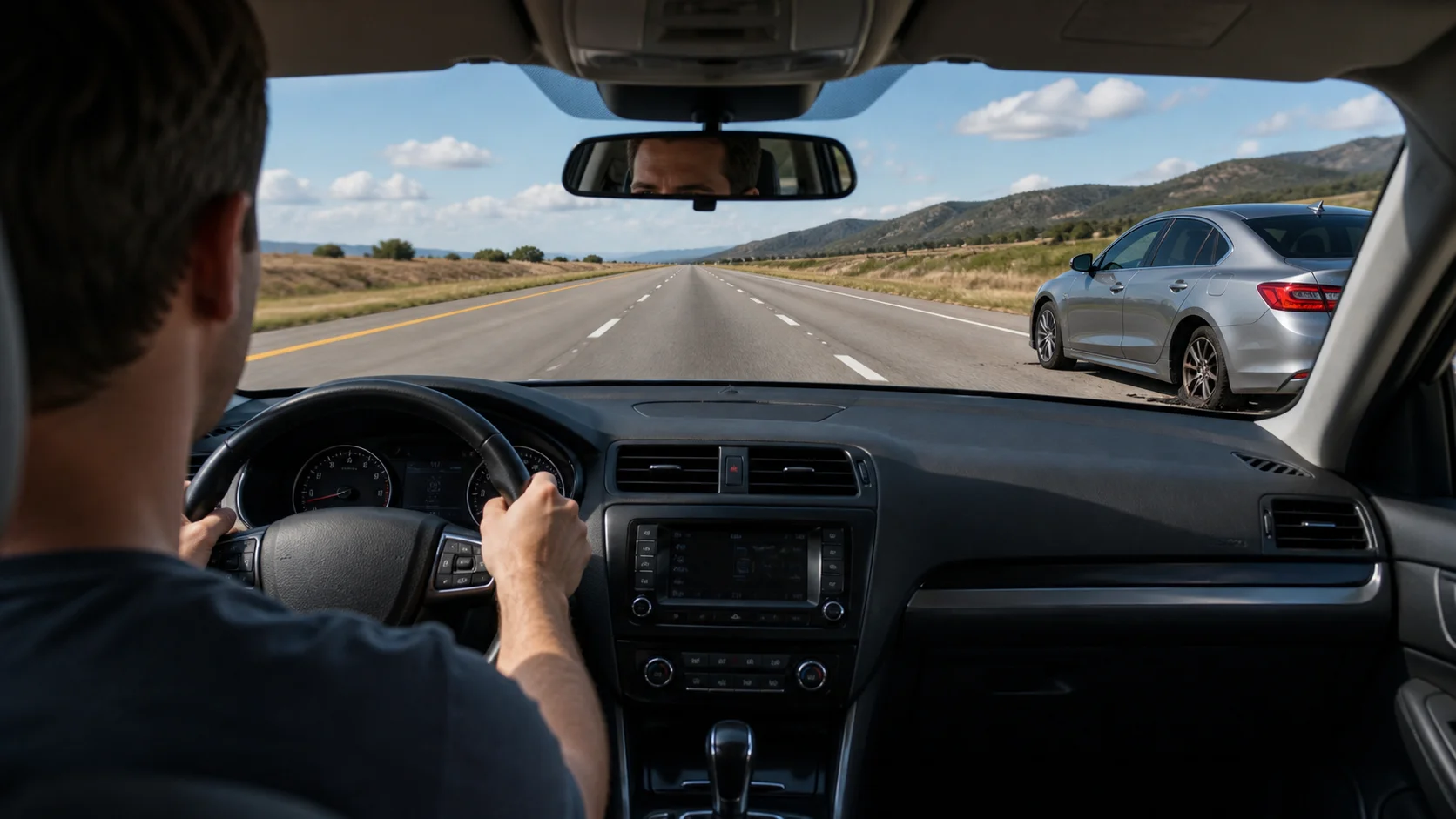
A sudden tire blowout creates violent vehicle drag. Maintaining a firm two-handed grip and resisting the urge to slam the brakes keeps the vehicle stable.
Quick Answer & Key Takeaways
If your tire blows out at 65+ mph: 1) Do NOT slam on the brakes (braking suddenly transfers weight to the shredded wheel and triggers a rollover or violent spin). 2) Grip the steering wheel firmly with both hands at 10 and 2 or 9 and 3. 3) Gently press the accelerator for a split second to stabilize vehicle forward momentum. 4) Allow the vehicle to coast down naturally below 30 mph. 5) Signal, activate hazard lights, and steer smoothly onto the far right shoulder.
- Braking causes rollovers: Stomping on the brakes instantly causes the rim to dig into the asphalt, tripping the vehicle.
- Briefly press the gas: Counter-intuitively, gently maintaining throttle for a moment pulls the car straight against blowout drag.
- Keep steering straight: Counter-steer with smooth, micro-corrections rather than jerky wheel turns.
- Coast to safe shoulder: Only apply gentle braking once speed drops below 25–30 mph.
The Physics of a High-Speed Blowout
A tire blowout is an explosive loss of air pressure that causes the tire carcass to shred or detach from the wheel rim in fractions of a second.
According to safety research published by the National Highway Traffic Safety Administration (NHTSA), blowouts cause over 11,000 traffic collisions annually. When a tire explodes at 70 mph, three physical forces immediately take over:
- Violent Drag Force: The deflated tire acts like a heavy friction anchor, violently pulling the steering wheel toward the side of the blown tire.
- Drop in Ride Height: The vehicle dips 3 to 4 inches on the blown corner, shifting the vehicle's center of gravity and altering suspension geometry.
- Loss of Cornering Traction: Similar to hydroplaning on wet asphalt, the contact patch loses directional grip, making sudden steering maneuvers dangerous.
The Golden Rule: Do NOT Slam on Brakes
When an explosive loud "BOOM" or flapping "thump-thump-thump" sounds from under your car, human survival instinct screams: STOP THE CAR IMMEDIATELY.
Slamming on the brakes during a blowout is the single most dangerous mistake a driver can make. Stomping the brake pedal locks the metal rim against shredded rubber, digging the rim into the pavement like a spade and causing the vehicle to spin out or flip over.
The 4-Step Blowout Survival Sequence
Follow this precise professional driver emergency sequence:
Lock Your Grip on the Wheel (Both Hands)
Clamp both hands on the steering wheel rim with a firm grip at the 9 and 3 or 10 and 2 positions. Resist the heavy pull toward the flat tire and keep the vehicle pointed straight down your lane.
Gently Tap the Gas Pedal (Momentum Correction)
Counter-intuitively, gently applying slight throttle for 1 to 2 seconds overcomes the initial lateral drag shockwave and straightens the vehicle's forward trajectory before beginning deceleration.
Ease Off the Gas & Coast
Smoothly release the accelerator completely. Let the extreme friction of the deflated tire naturally slow the car down. Do not touch the brake pedal until your speed drops below 30 mph.
Signal & Navigate to the Far Right Shoulder
Once your car is under control and moving below 25 mph, activate your hazard flashers and right turn signal. Gently steer across highway lanes onto the far right shoulder, as taught in our post-incident emergency guides.
Front-Tire vs. Rear-Tire Blowouts: Key Differences
Front-Tire Blowout (Steering Pull)
You will feel an intense, violent tug in the steering wheel toward the side of the blown tire. Maintain maximum upper-body arm resistance to keep the vehicle in its lane.
Rear-Tire Blowout (Fishtailing / Oversteer)
You will feel the rear of the car sway and fishtail (similar to skidding on ice). Do not over-correct or whip the steering wheel; steer gently in the direction you want the front to travel.
How to Prevent Highway Blowouts Before They Happen
- Check Cold Tire Pressure Monthly: Under-inflation is the #1 cause of catastrophic tire failure. An under-inflated tire flexes excessively, building internal heat until the rubber separates.
- Inspect Tread Depth (The Penny Test): Insert an upside-down penny into your tread grooves; if the top of Lincoln's head is visible, replace your tires immediately (less than 2/32" tread).
- Watch for Sidewall Bubbles: Impact with curbs or potholes can pinch internal steel belts, creating bulging sidewall blisters that explode under highway heat.
Interactive Knowledge Check
Question: Your front left tire suddenly explodes at 65 mph on the highway. What is the most critical initial action?
Authoritative Sources & Regulatory References
Content and statutory guidelines in this guide are verified against official state vehicle codes, federal transportation standards, and authoritative regulatory documentation:
- NHTSATire Safety, Pressure Monitoring, and Blowout Prevention(National Highway Traffic Safety Administration)
- TIATire Maintenance Best Practices & Inspection Protocols(Tire Industry Association)
- FHWAEmergency Highway Stopping and Shoulder Safety(Federal Highway Administration)
95% of people found this article helpful.
Click a star to add your vote
151 votes • average 4.79 out of 5
Official 2026 DMV Practice Tests by State
Select your state to practice real exam questions based on the latest 2026 driver handbook.
Ready to Pass the DMV Test on Your First Try?
Practice real 2026 DMV questions with instant answer explanations, simulated timers, and pass-guarantee study guides.
Start Free Practice TestRecommended Driver Guides

How to Prevent and Recover from Hydroplaning in Heavy Rain

What to Do Immediately After a Car Accident: The 8-Step Emergency Protocol