Check Engine Light: Flashing vs. Solid Light Meaning and Immediate Actions
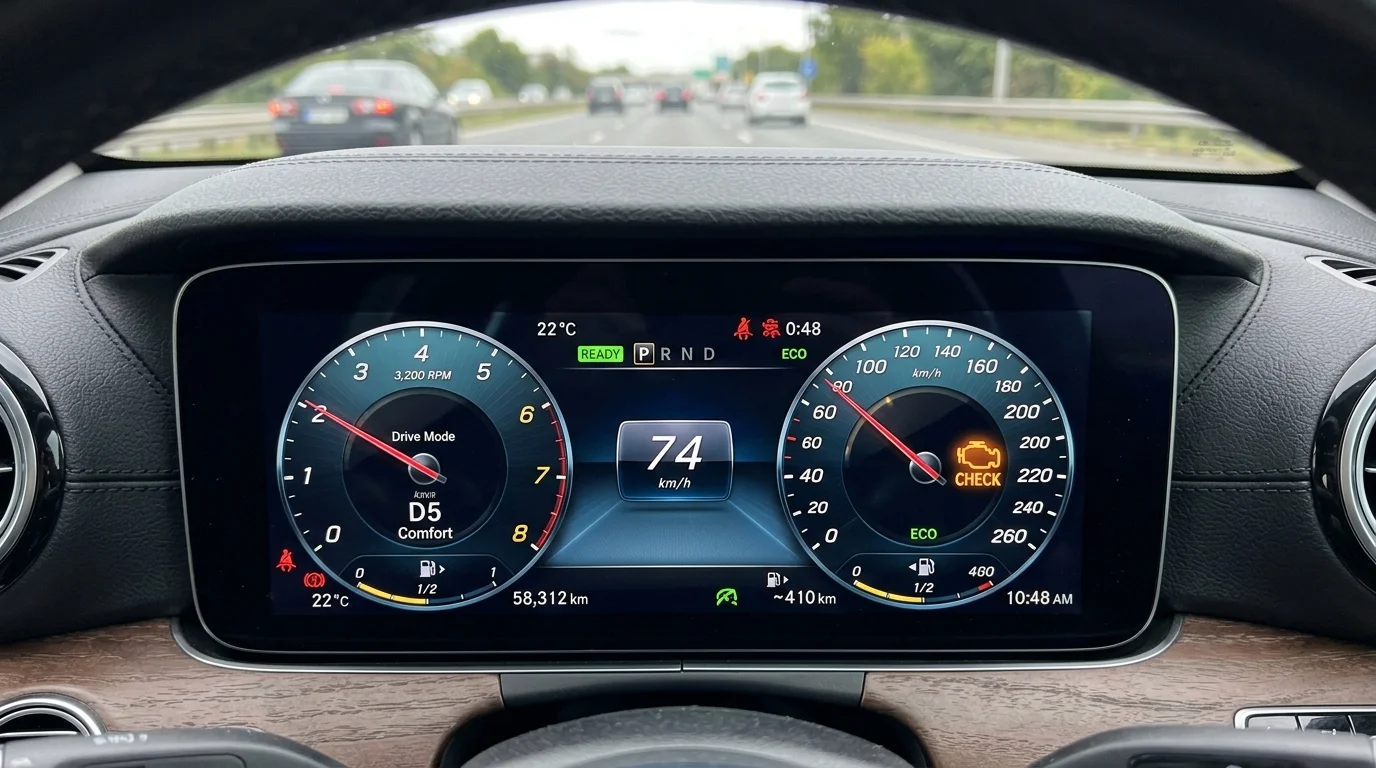
A solid check engine light indicates an emissions or sensor fault, while a flashing light warns of a severe engine misfire requiring immediate shutdown.
Quick Answer & Key Takeaways
The difference between a solid and flashing Check Engine Light (CEL / Malfunction Indicator Lamp) is the severity of immediate damage: 1) SOLID (STEADY) LIGHT: Indicates a non-emergency emissions, sensor, or fuel system fault (e.g., loose gas cap, failing oxygen sensor, catalytic converter inefficiency). You can safely finish driving, but schedule a diagnostic scan within a week. 2) FLASHING (BLINKING) LIGHT: Indicates an active, severe engine cylinder misfire dumping raw unburned gasoline directly into the hot exhaust system. You must pull over safely, shut off the engine immediately, and call a tow truck to prevent melting your $2,000 catalytic converter or causing an undercarriage fire.
- Solid Light = Schedule Service: Safe to drive home or to a repair shop; not an immediate roadside emergency.
- Flashing Light = STOP THE CAR: Blinking light indicates raw fuel entering the exhaust, which destroys the catalytic converter within minutes.
- Tighten Your Gas Cap First: A loose or cracked gas cap is the #1 easiest fix for an unexpected solid check engine light.
- Free Diagnostic Scans: Auto parts stores (AutoZone, O'Reilly, Advance Auto) will scan your OBD-II trouble codes for free.
What the Check Engine Light Monitors: The On-Board Diagnostics (OBD-II) System
Mandated on all cars sold in the United States since 1996 by the Environmental Protection Agency (EPA), the On-Board Diagnostics II (OBD-II) computer system monitors hundreds of vehicle sensors:
- Air-fuel combustion mixture ratios
- Exhaust emission oxygen sensors
- Ignition spark plug timing
- Evaporative emissions fuel vapor systems (EVAP)
- Transmission shift solenoid actuators
When the Engine Control Unit (ECU) detects that a parameter has drifted outside factory engineering tolerances, it illuminates the amber Check Engine Light (Malfunction Indicator Lamp / MIL) and logs a 5-digit Diagnostic Trouble Code (DTC).
Solid (Steady) Check Engine Light: What It Means & How to React
If the check engine light illuminates and glows steadily without blinking:
- Meaning: The ECU has registered a persistent fault that affects emissions efficiency, fuel economy, or secondary sensor readings, but is not currently causing immediate catastrophic mechanical destruction.
- Action Required: You do not need to pull over on the highway shoulder. Check your dashboard gauges (coolant temperature and oil pressure). If gauges are normal and the car drives smoothly, finish your trip and have the trouble code scanned within a few days.
Flashing (Blinking) Check Engine Light: Catastrophic Engine Misfire
A flashing check engine light is an urgent mechanical emergency!
If the light blinks on and off repeatedly:
- The Phenomenon (Raw Fuel Misfire): One or more engine cylinders are failing to ignite (due to a failed ignition coil, fouled spark plug, or stuck fuel injector).
- The Destruction (Catalytic Converter Meltdown): Raw, unburned liquid gasoline is being pumped directly out of the exhaust valves into the exhaust pipe. When this raw fuel hits the 1,400°F catalytic converter, it ignites internally, melting the precious metal honeycomb matrix within minutes (causing $2,000+ in damage) and posing an undercarriage fire hazard.
- Action Required: Pull over safely to the shoulder, shut off the engine immediately, and call a flatbed tow truck. Do NOT continue driving.
The Top 5 Most Common Causes (From Loose Gas Caps to O2 Sensors)
According to the annual CarMD Vehicle Health Index, over 65% of all check engine lights are caused by five components:
- Loose, Missing, or Damaged Gas Cap (Code P0455 / P0457): The EVAP system detects fuel vapor leaks. Fix: Tighten gas cap until it clicks 3 times; light resets after 2–3 drive cycles.
- Failing Oxygen (O2) Sensor (Code P0130–P0167): Measures unburned oxygen in exhaust; faulty sensors reduce fuel mileage by up to 40%.
- Catalytic Converter Inefficiency (Code P0420 / P0430): Degradation of the exhaust emissions scrubber.
- Mass Airflow (MAF) Sensor (Code P0100–P0104): Measures incoming intake air volume.
- Worn Spark Plugs or Ignition Coils (Code P0300–P0308): Triggers engine hesitation and misfires.
How to Get Diagnostic Trouble Codes (DTC) Scanned for Free
Never pay a mechanic $150 just to read a trouble code.
Most major auto parts retailers (AutoZone, Advance Auto Parts, O'Reilly Auto Parts, Pep Boys) will bring an OBD-II handheld scanner out to your vehicle in their parking lot and scan your trouble codes 100% free of charge, providing a printed printout of the code (e.g. "P0301 - Cylinder 1 Misfire Detected").
Emergency Action Matrix: Solid vs. Flashing Warning Light
| Light Status | Severity Level | Immediate Driver Action |
|---|---|---|
| Solid / Steady Amber Light | Moderate (Emissions / Sensor) | Check gas cap; schedule diagnostic scan within 7 days |
| Flashing / Blinking Amber Light | CRITICAL EMERGENCY | Pull over immediately; shut off engine; call tow truck |
Interactive Knowledge Check
Question: If your vehicle's Check Engine Light starts FLASHING (blinking) repeatedly while driving on the highway, what should you do immediately?
Authoritative Sources & Regulatory References
Content and statutory guidelines in this guide are verified against official state vehicle codes, federal transportation standards, and authoritative regulatory documentation:
- EPAOn-Board Diagnostic (OBD-II) Regulations and Emissions Standards(United States Environmental Protection Agency)
- SAE InternationalSAE J1979 Diagnostic Test Modes and Trouble Code Standards(Society of Automotive Engineers)
- CarMDVehicle Health Index: Annual Check Engine Light Repair Cost Study(CarMD Automotive Telematics)
88% of people found this article helpful.
Click a star to add your vote
191 votes • average 4.44 out of 5
Official 2026 DMV Practice Tests by State
Select your state to practice real exam questions based on the latest 2026 driver handbook.
Ready to Pass the DMV Test on Your First Try?
Practice real 2026 DMV questions with instant answer explanations, simulated timers, and pass-guarantee study guides.
Start Free Practice TestRecommended Driver Guides

How to Check and Top Off Engine Oil Step-by-Step: Reading the Dipstick
The Pre-Drive Safety Inspection Checklist: What Examiners Check Before Starting