Countersteering Physics: How to Steer a Motorcycle Over 15 MPH
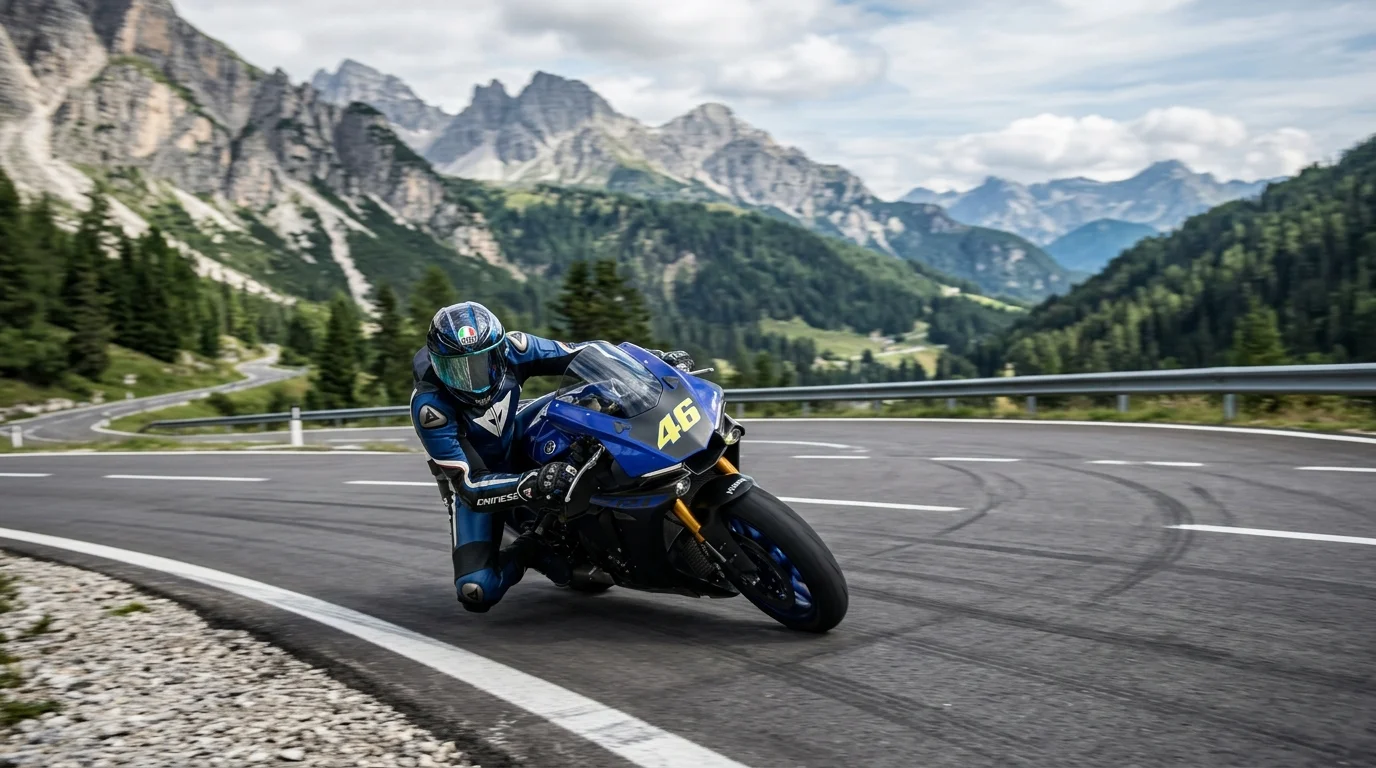
At speeds exceeding 15 MPH, single-track two-wheeled physics require pushing the left handlebar to initiate a left-hand turn.
Quick Answer & Key Takeaways
Countersteering is the universal physical mechanism used to turn any single-track two-wheeled vehicle (motorcycle or bicycle) at speeds above 12–15 MPH. 1) THE CORE RULE: 'PUSH LEFT TO TURN LEFT, PUSH RIGHT TO TURN RIGHT'. When entering a left turn, pushing forward on the left handgrip momentarily turns the front tire slightly to the RIGHT. 2) THE PHYSICS: Steering the front wheel right pulls the tires out from underneath the motorcycle to the right, causing gravity and centrifugal force to immediately lean the chassis to the LEFT. 3) BODY LEAN MYTH: Shifting your body weight in the saddle does virtually nothing to turn a 500-pound moving motorcycle; active handlebar pressure initiates 100% of high-speed directional changes.
- Push Left = Go Left: Pressing the left handlebar forward initiates an immediate, stable leftward lean.
- Below 15 MPH = Direct Steering: In parking lots, turn handlebars right to turn right (conventional steering).
- Body Weight Shifting Is a Myth: You cannot turn a motorcycle at speed merely by leaning your hips without handlebar counter-pressure.
- Cure for Running Wide: If a curve tightens unexpectedly, do NOT grab the brake; push harder on the inside handlebar and look through the exit.
The Golden Motorcycling Axiom: "Push Left to Go Left"
Every beginner motorcyclist is taught the golden rule of two-wheeled dynamics:
To turn left, push forward on the left handlebar. To turn right, push forward on the right handlebar.
To non-riders, this sounds completely backwards. However, under Motorcycle Safety Foundation (MSF) research, countersteering is the only way a two-wheeled vehicle can initiate a turn at speed.
The 15 MPH Threshold: Direct Steering vs. Single-Track Countersteering
Motorcycles operate under two distinct steering regimes based on forward momentum:
- Low Speeds (Below 12–15 MPH / "Direct Steering"): In parking lots, gas stations, or walking speeds taught in MSF beginner exercises, steering is direct: turning the handlebar left turns the motorcycle left.
- Higher Speeds (Above 15 MPH / "Countersteering"): Forward kinetic momentum and gyroscopic wheel stability make the bike want to stand straight up. Turning the wheel directly will not turn the bike; you must actively countersteer to lean the chassis into the turn.
The Physics: Contact Patch Out-Tracking & Gyroscopic Precession
What happens mechanically when you push the left handlebar forward at 45 MPH?
- Pushing the left grip forward turns the front wheel slightly to the RIGHT.
- Out-Tracking the Contact Patch: The tire contact patches instantly steer out from beneath the motorcycle to the right.
- Gravitational Lean Inversion: With the wheels moved to the right, the heavy motorcycle chassis immediately rolls and falls into a controlled lean to the LEFT.
- Self-Centering Camber Thrust: Once the motorcycle leans left, the front wheel's steering geometry (rake and trail) automatically swings back to the left into the curve, carving a stable arc through the turn.
The 4-Step Cornering Protocol: Slow, Look, Press, Roll
Mastering sweepers and highway switchbacks requires the 4-step MSF cornering rhythm:
- SLOW: Reduce speed and downshift to the correct entry speed BEFORE entering the curve.
- LOOK: Turn your head and eyes to look far ahead toward the exit of the turn (never look down at the yellow center line).
- PRESS: Press forward on the inside handlebar (press left for left turn) to establish the required lean angle.
- ROLL: Roll on smooth, gentle throttle throughout the curve to stabilize suspension geometry and maintain rear tire traction.
Target Fixation & Emergency Mid-Corner Countersteering
The leading cause of solo motorcycle fatalities is running wide off the road in a curve.
When a beginner rider enters a turn too fast, panic sets in: they stare at the outer guardrail (target fixation) and grab the front brake lever. Grabbing the front brake stands the motorcycle upright, sending the rider flying straight off the road.
The Emergency Fix: Trust the motorcycle's tire grip! Press harder on the inside handlebar, lean deeper, and look through the curve exit!
The Body Leaning Myth: Why Shifting Body Weight Alone Does NOT Turn a Bike
A common myth among inexperienced riders is that hanging your body off the seat turns the motorcycle.
In controlled engineering experiments conducted with locked steering stems by SAE International, riders who stood on footpegs and threw their upper bodies violently to the side produced less than 2 degrees of lean with zero effective turning radius. Bar pressure is responsible for 100% of motorcycle roll initiation.
Low-Speed vs. High-Speed Motorcycle Steering Table
| Operating Speed | Steering Method | Handlebar Action for Left Turn | Physics Mechanism |
|---|---|---|---|
| < 12–15 MPH | Direct Steering | Turn handlebar to the left (pull left grip back) | Mechanical front wheel alignment |
| >15 MPH | Countersteering | PUSH forward on the left handgrip | Out-tracks tire contact patch; initiates lean |
| Emergency Swerve (20+ MPH) | Rapid Countersteer | Firm push-press forward on left grip | Instant lateral chassis displacement (4 feet) |
Interactive Knowledge Check
Question: When traveling at 45 MPH on a motorcycle and entering a sharp curve to the right, what physical input must the rider apply to the handlebars?
Authoritative Sources & Regulatory References
Content and statutory guidelines in this guide are verified against official state vehicle codes, federal transportation standards, and authoritative regulatory documentation:
- MSFMotorcycling Excellence: The Physics of Single-Track Vehicle Dynamic Steering(Motorcycle Safety Foundation)
- SAE InternationalSingle-Track Two-Wheeled Vehicle Dynamics and Gyroscopic Steering (SAE J2135)(Society of Automotive Engineers)
- NHTSAMotorcycle Dynamics: Steering Inversion and Collision Avoidance Maneuvers(National Highway Traffic Safety Administration)
90% of people found this article helpful.
Click a star to add your vote
69 votes • average 4.54 out of 5
Official 2026 DMV Practice Tests by State
Select your state to practice real exam questions based on the latest 2026 driver handbook.
Ready to Pass the DMV Test on Your First Try?
Practice real 2026 DMV questions with instant answer explanations, simulated timers, and pass-guarantee study guides.
Start Free Practice TestRecommended Driver Guides

MSF Basic RiderCourse: What to Expect, Exercises & Exam Breakdown
How to Get a Motorcycle License (Class M): Permit Test vs. MSF Waiver