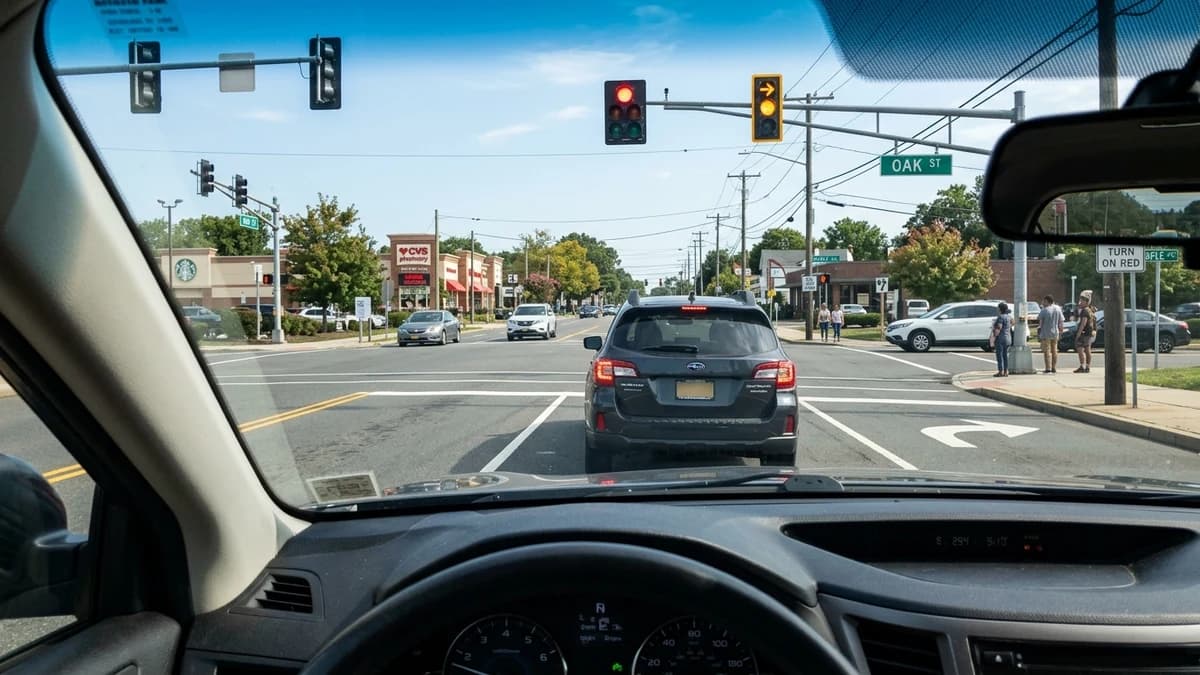
What Does a Flashing Red Traffic Light Mean? Rules vs. Flashing Yellow
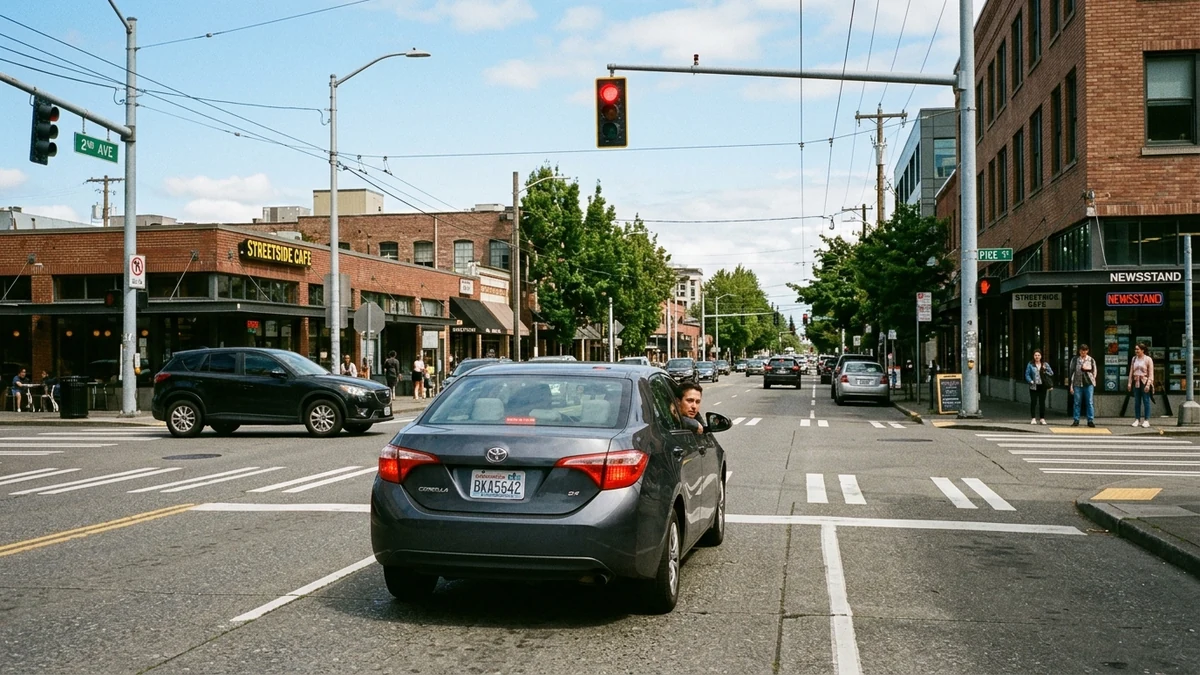
A flashing red traffic signal has the exact same legal meaning as an octagonal STOP sign: you must come to a 100% complete stop before proceeding.
Quick Answer & Key Takeaways
Here is the essential breakdown: 1) FLASHING RED LIGHT = STOP SIGN. You must come to a full, complete stop behind the limit line or crosswalk, yield right-of-way to pedestrians and crossing vehicles, and proceed only when clear. 2) FLASHING YELLOW LIGHT = PROCEED WITH CAUTION. You do NOT need to stop, but you must slow down, scan the intersection, and be prepared to yield to cross traffic or pedestrians.
- Flashing Red = Full Stop: Treat it identically to a conventional red STOP sign (a rolling stop is a moving violation).
- Flashing Yellow = Caution: Slow down and be alert; do not stop unless forced by an obstruction.
- Split Intersections: Frequently, major streets face flashing yellow while side cross-streets face flashing red (major street has right-of-way).
- Blacked-Out Signals: If a traffic light loses all power and goes dark, state law requires treating the entire intersection as an All-Way Stop.
Why Traffic Signals Switch to Flashing Mode
Standard three-color traffic signals operate on fixed cycle times or actuated ground loop sensors during regular daytime hours. However, municipal traffic engineers program signals into flashing mode under three specific circumstances under FHWA MUTCD standards:
- Late-Night Off-Peak Hours: In low-traffic hours (e.g., 1:00 AM to 5:00 AM), signals are switched to flashing mode to prevent lone drivers from idling unnecessarily at empty red lights.
- Emergency Weather or Power Surges: Electrical brownouts, lightning strikes, or controller cabinet faults automatically trigger a failsafe flashing mode to prevent conflicting green lights.
- Active Construction / Maintenance Zones: Road construction crews place signals in flash mode during temporary lane reconfigurations.
What a Flashing Red Light Means: The Stop Sign Rule
Under California Vehicle Code § 21457(a) and uniform traffic laws across all 50 states:
"When a red lens is illuminated with rapid intermittent flashes, drivers shall stop at a marked limit line, but if none, before entering the crosswalk on the near side of the intersection."
You must execute a full, 100% complete dead stop. Once stopped, you must yield to any pedestrians in the crosswalk and yield right-of-way to vehicles already in the intersection or approaching so closely as to constitute an immediate hazard under standard right-of-way rules. You may proceed only when the way is completely clear.
What a Flashing Yellow Light Means: The Caution Rule
Under CVC § 21457(b), a Flashing Circular Yellow Light instructs motorists to:
"Proceed through the intersection or past the signal only with caution."
You are NOT required to come to a stop.Coming to an unexpected dead stop at a flashing yellow light when no pedestrians or obstructions are present disrupts highway flow and causes rear-end pileups. Instead, ease off the accelerator, cover the brake pedal with your foot, scan both left and right for crossing traffic, and proceed at a controlled speed.
Note: Do not confuse a flashing circular yellow ball with a flashing yellow arrow, which specifically governs unprotected left turns.
All-Way Flashing Red vs. Split Red/Yellow Intersections
When approaching a flashing intersection, always observe the signal faces for cross-traffic:
- All-Way Flashing Red (4-Way Flash): All four approaches face flashing red lights. The junction operates exactly like an all-way 4-way stop sign: the first car to stop has right-of-way; if two cars stop simultaneously, the driver on the right goes first.
- Split Flashing Intersection (Red + Yellow): The main arterial boulevard faces Flashing Yellow (traffic does not stop), while the secondary cross-street faces Flashing Red (must stop and yield). If you are facing flashing red, you must wait for a complete gap in arterial cross-traffic before entering.
What to Do When a Signal Is Completely Blacked Out (Power Outage)
During severe storms, rolling blackouts, or utility power failures, traffic light bulbs may go completely dark with no illuminated colors.
Under state vehicle codes nationwide (e.g., California Vehicle Code § 21800(d)(1)), a non-operational, dark traffic signal MUST be treated as an All-Way Stop (4-Way Stop) by every vehicle on every approach. Blowing through a dark intersection at 45 mph without stopping is an extreme hazard that carries severe moving violation citations and automatic failure on DMV road exams.
Top 4 Errors Drivers Make at Flashing Signals
Avoid these dangerous mistakes during DMV exams and daily driving:
- Rolling the Flashing Red (Automatic Failure): Treating a flashing red light like a yield sign by slowing to 5 mph without stopping fails your exam on critical safety grounds.
- Stopping at a Flashing Yellow: Halting in the middle of a clear through lane when facing a flashing yellow creates immediate rear-end collision hazards.
- Assuming Cross Traffic Stops: When facing a flashing red, never assume cross traffic has a stop sign until you visually confirm they are stopping.
- Failing to Look for Pedestrians: Pedestrians have absolute right-of-way in crosswalks at flashing signal junctions.
Interactive Knowledge Check
Question: You are approaching an intersection and the overhead traffic light is flashing yellow. What is the legally correct action?
Authoritative Sources & Regulatory References
Content and statutory guidelines in this guide are verified against official state vehicle codes, federal transportation standards, and authoritative regulatory documentation:
- FHWAFlashing Operation of Traffic Control Signals (MUTCD Section 4D.30)(Federal Highway Administration)
- California LegislatureCalifornia Vehicle Code § 21457: Flashing Signal Indications(State of California Vehicle Code)
- NHTSAIntersection Safety and Signalized Traffic Control Systems(National Highway Traffic Safety Administration)
93% of people found this article helpful.
Click a star to add your vote
61 votes • average 4.69 out of 5
Official 2026 DMV Practice Tests by State
Select your state to practice real exam questions based on the latest 2026 driver handbook.
Ready to Pass the DMV Test on Your First Try?
Practice real 2026 DMV questions with instant answer explanations, simulated timers, and pass-guarantee study guides.
Start Free Practice TestRecommended Driver Guides
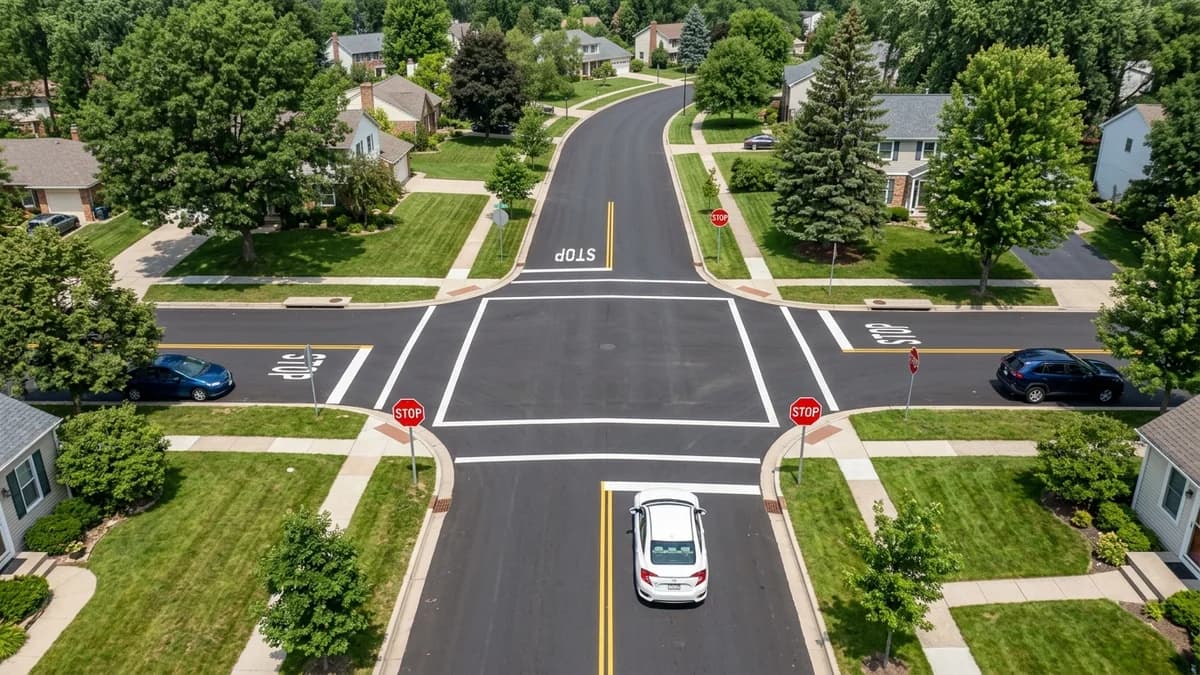
Who Has the Right-of-Way at a 4-Way Stop? The Complete Rulebook
Unprotected Left Turns vs. Flashing Yellow Arrows: Rules & Common Mistakes