Who Has the Right-of-Way at a 4-Way Stop? The Complete Rulebook
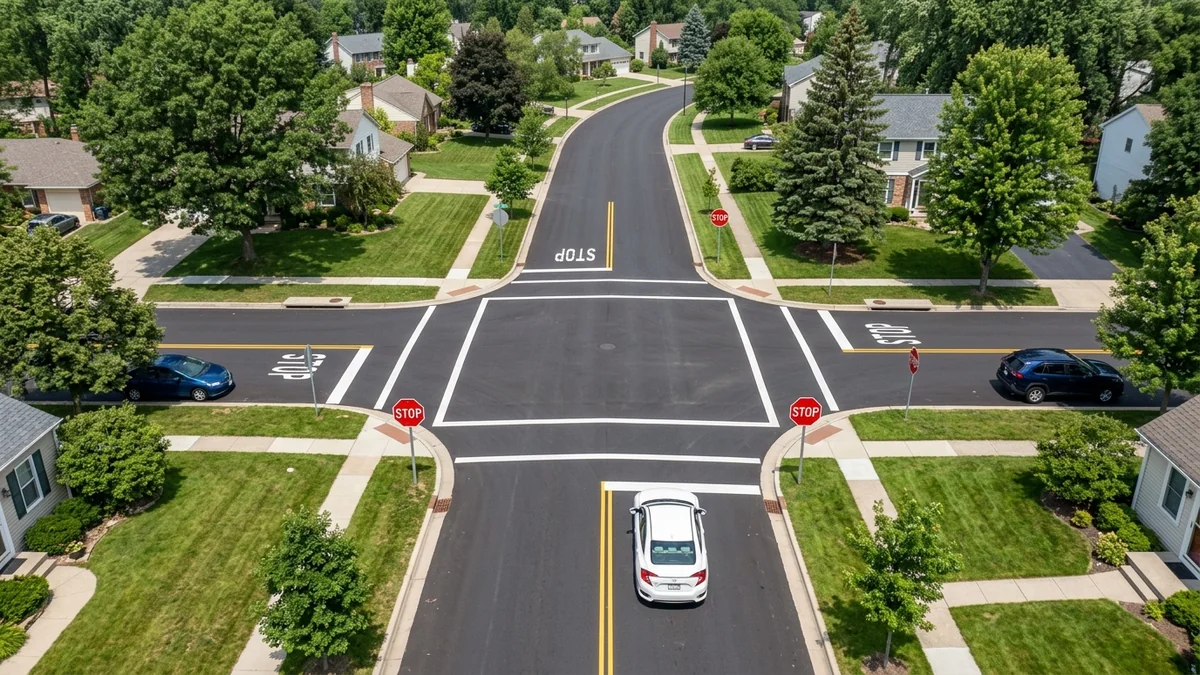
Understanding the first-come first-served order, the vehicle-on-your-right tiebreaker, and straight-versus-turning priority prevents intersection collisions.
Quick Answer & Key Takeaways
At an all-way or 4-way stop intersection: 1) First to come to a complete stop goes first. 2) If two vehicles arrive simultaneously side-by-side, yield to the vehicle on your right. 3) If two vehicles arrive simultaneously facing each other, straight-through traffic goes before turning vehicles, and right-turning vehicles go before left-turning vehicles. 4) Pedestrians in crosswalks always have absolute priority.
- First-in, first-out (FIFO): Whoever stops completely first has the legal right-of-way to cross.
- Tiebreaker #1 (Side-by-side): If arriving simultaneously at perpendicular angles, the car on the right goes first.
- Tiebreaker #2 (Head-to-head): If arriving simultaneously facing each other, straight traffic beats turns, and right turns beat left turns.
- Full legal stop required: Rolling stops do not establish legal priority and will fail your DMV driving exam.
The 4 Golden Rules of Four-Way Stops
Navigating an all-way stop intersection (often marked with an octagonal red STOP sign accompanied by an "ALL WAY" or "4-WAY" plaque under FHWA MUTCD standards) is one of the most frequently tested topics on state DMV written exams. (For junctions with zero signs, review our dedicated guide to uncontrolled intersections and right-of-way).
While four-way stops may initially seem confusing when multiple cars arrive at once, state vehicle codes follow four hierarchical rules that resolve every traffic situation with mathematical clarity:
- (First-Come, First-Served): The first vehicle to reach a complete, motionless stop at the intersection has the legal right-of-way to proceed first.
- (Yield to the Right): When two vehicles arrive and stop at the exact same moment from perpendicular directions, the driver on the left must yield to the driver on the right.
- (Straight Over Turns): When two vehicles arrive simultaneously from opposite directions facing each other, straight-traveling vehicles proceed before turning vehicles.
- (Right Turn Over Left Turn): If both opposing vehicles intend to turn onto the same street, the right-turning driver has priority over the left-turning driver.
First to Arrive, First to Proceed (FIFO)
The overarching principle governing all-way stops is First In, First Out (FIFO). It does not matter whether you are turning left, turning right, or traveling straight—if your vehicle comes to a complete halt before any other approaching car stops, you have earned the right-of-way.
Key Rule Nuance:
Priority is established when a vehicle comes to a complete, motionless stop at the stop line, not when the car is rolling slowly or approaching the intersection. If Car A approaches faster but Car B comes to a full stop one second earlier, Car B has the legal right to proceed.
Simultaneous Side-by-Side (Yield to the Right)
Under Uniform Vehicle Code § 11-401 and state statutes (such as California Vehicle Code § 21800), when two vehicles approach or enter an intersection from different highways at approximately the same time, the driver of the vehicle on the left shall yield the right-of-way to the vehicle on the right.
How to Apply the "Car on the Right" Rule:
- Look directly to your right-hand side. Is there a stopped vehicle to your right? If yes, wait and yield to them.
- Look to your left-hand side. If there is a vehicle to your left and no one to your right, you are on their right—meaning you have the right-of-way to proceed first.
- Proceed smoothly and predictably without hesitation once you verify the other driver is yielding.
Head-to-Head Simultaneous Arrival (Straight vs. Turns)
When two cars arrive at the exact same moment from opposite sides of the intersection facing each other, neither car is "to the right" of the other. The tiebreaker shifts to turn signals and intended travel paths:
- Both going straight: Both vehicles can safely proceed across the intersection simultaneously since their travel paths do not cross.
- One going straight, one turning left: The straight-traveling vehicle has the right-of-way. The left-turning vehicle must wait until oncoming straight traffic clears before turning across oncoming lanes.
- One turning right, one turning left (into the same lane): The right-turning vehicle has the right-of-way because right turns represent a shorter, non-crossing maneuver into the closest lane.
The 4-Car Deadlock: What If Everyone Arrives at Once?
A true four-car simultaneous arrival—where four vehicles arrive and stop at all four stop signs down to the exact millisecond—is statistically rare, but it creates a legal paradox because every driver has another car to their right.
State vehicle handbooks do not mandate a single rigid rule for four-car deadlocks. Instead, safety protocol requires clear driver communication:
- Make direct eye contact: Look at the other drivers to gauge their awareness and intentions.
- Polite wave or flash of headlights: One driver typically yields by gesturing to the driver to their right or allowing the straightest car to proceed.
- Proceed with caution: The driver who initiates movement slowly edges forward to claim the intersection, and the remaining three cars immediately resume standard clockwise "yield to the right" order.
Where to Legally Stop at a Stop Sign (Avoid Road Test Fails)
On a DMV driving road test, stopping past the legal line or performing a rolling stop is one of the most common automatic fail Critical Driving Errors on the road test.
Under traffic laws, you must bring your vehicle to a complete stop behind these markers in order of presence:
- Painted White Stop Line: If a solid white stop line (limit line) is painted across your lane, your front bumper must stop completely before the line.
- Marked Crosswalk: If there is no painted stop line but a marked pedestrian crosswalk exists, you must stop completely before entering the crosswalk lines.
- Unmarked Crosswalk / Sidewalk Corner: If there are no painted lines, stop at the point nearest the intersecting roadway where you have a clear view of approaching traffic before entering the intersection.
- The "Two-Stop" Maneuver for Blocked Views: If parked cars, hedges, or fences block your view of cross-traffic, come to a complete stop at the legal limit line first. Then, slowly creep forward and stop a second time where visibility is clear before proceeding.
Two vehicles stop at a 4-way stop intersection at the exact same time at a 90-degree angle to each other. Who has the right-of-way?
Frequently Asked Questions
What is the difference between a 2-way stop and a 4-way stop?
At a 2-way stop, cross-traffic does not stop and has uninterrupted right-of-way. At a 4-way stop (all-way stop), every single approaching vehicle must come to a complete stop and take turns proceeding.
How long are you legally required to stay stopped at a stop sign?
While many driving instructors suggest a "3-second rule" to build good habits, state traffic laws do not specify an exact number of seconds. Legally, the vehicle’s wheels must come to a complete, motionless cessation of forward movement.
Do bicyclists have to follow 4-way stop rules?
In most states, bicycles are considered road vehicles and must obey all stop signs and right-of-way rules. However, in states with "Idaho Stop" laws (such as Idaho, Delaware, and Colorado), cyclists may treat stop signs as yields when the intersection is clear.
Authoritative Sources & Regulatory References
Content and statutory guidelines in this guide are verified against official state vehicle codes, federal transportation standards, and authoritative regulatory documentation:
- FHWAManual on Uniform Traffic Control Devices (MUTCD) - Section 2B.05: STOP Signs(Federal Highway Administration)
- CA LegislatureCalifornia Vehicle Code § 21800: Right-of-Way at Intersections(California Vehicle Code)
- NHTSAIntersection Safety and Multi-Way Stop Guidelines(National Highway Traffic Safety Administration)
88% of people found this article helpful.
Click a star to add your vote
164 votes • average 4.44 out of 5
Official 2026 DMV Practice Tests by State
Select your state to practice real exam questions based on the latest 2026 driver handbook.
Ready to Pass the DMV Test on Your First Try?
Practice real 2026 DMV questions with instant answer explanations, simulated timers, and pass-guarantee study guides.
Start Free Practice TestRecommended Driver Guides
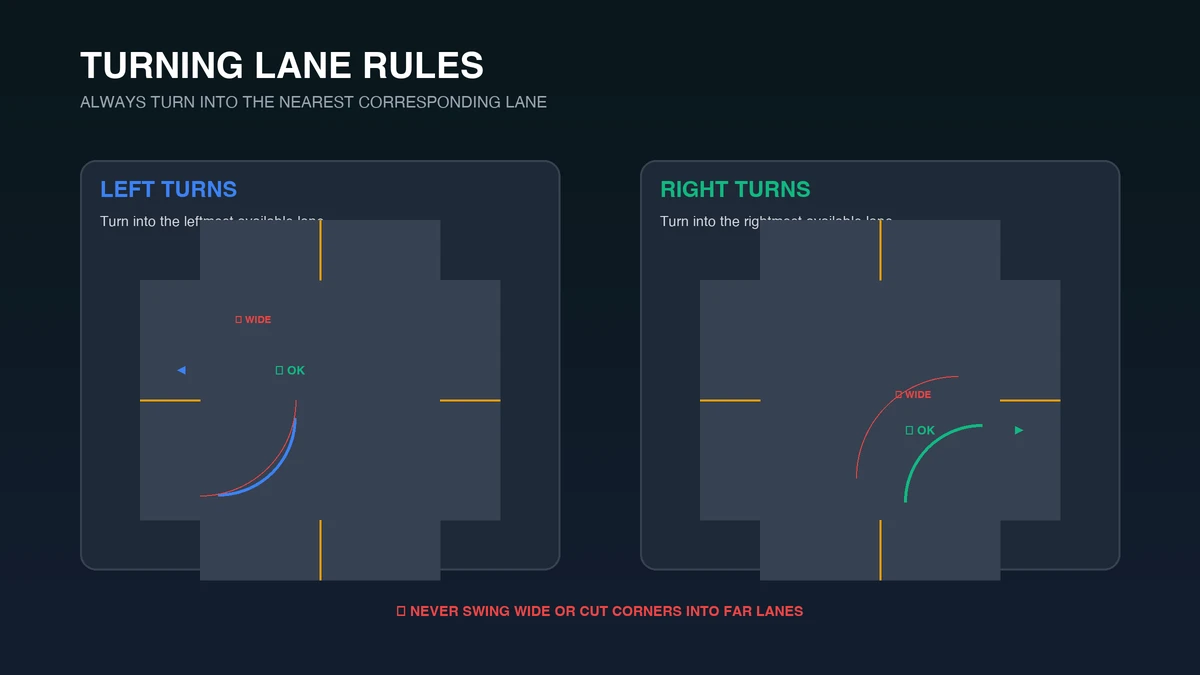
Left & Right Turns Explained: Which Lane Do You End Up In?
Learn the exact lane selection rules for single-turn, multi-turn, and intersecting highway corridors.
What to Do When Being Pulled Over by Police: Step-by-Step Safety & Legal Protocol
Learn the exact steps to take when pulled over: where to stop safely, cabin preparation, and your legal rights.
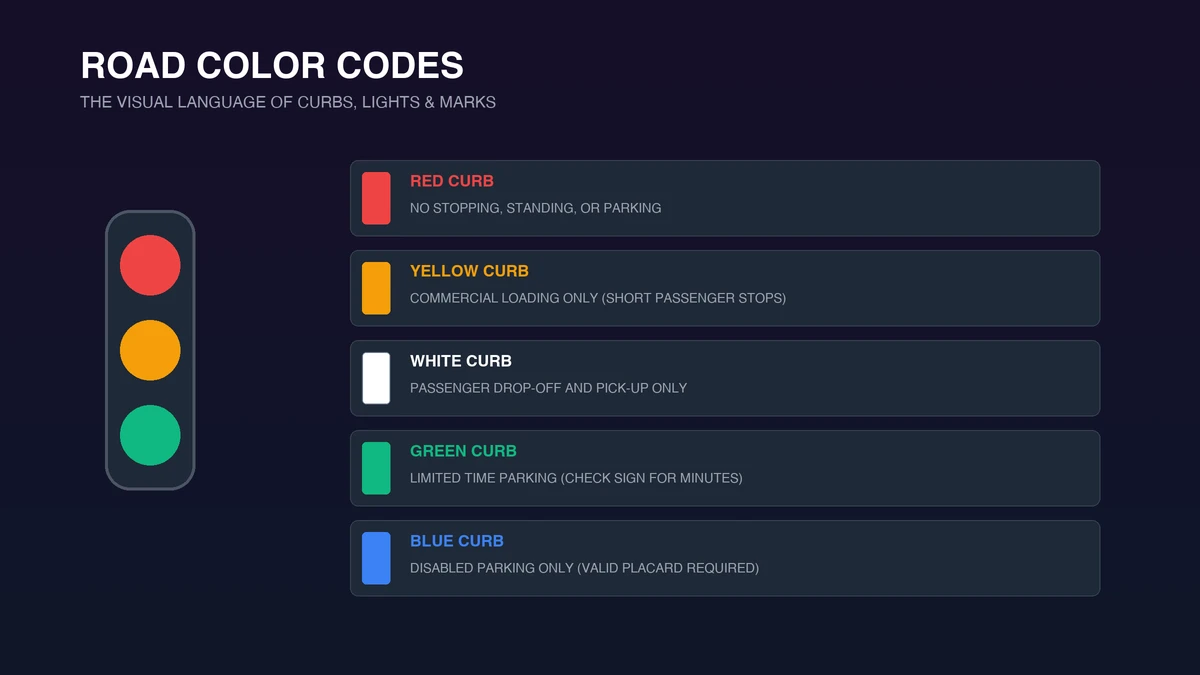
Every Road Color Explained: Curbs, Lights, Signs & Markings
A complete visual guide to every curb color, pavement stripe, and traffic beacon on US roads.