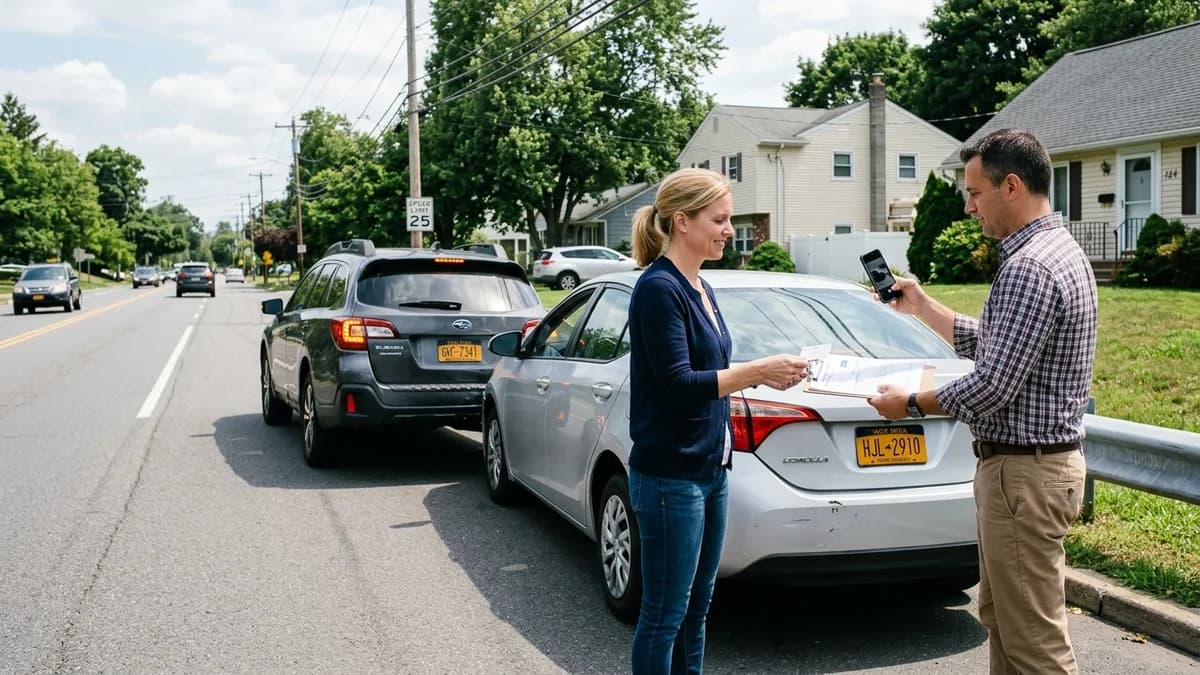
Gap Insurance Explained: Who Needs It and How It Protects Leased & Financed Cars

GAP insurance pays the difference between your vehicle's depreciated Actual Cash Value (ACV) and your remaining bank loan balance if totaled.
Quick Answer & Key Takeaways
GAP (Guaranteed Asset Protection) insurance covers the financial shortfall ('gap') between what your car is worth (Actual Cash Value / ACV) and what you still owe on your bank auto loan or lease if the vehicle is totaled or stolen. Because new cars depreciate 20% in the first year, a standard collision policy will only pay the car's current market value—leaving you to pay thousands of dollars out-of-pocket on a destroyed car. Buy GAP coverage directly from your auto insurance carrier for $20–$40/year rather than paying $800+ at the car dealership.
- Covers Negative Equity: Pays the unpaid loan balance when your car's market value is less than your bank loan ('underwater').
- Mandatory on Leases: Most auto leasing contracts (BMW, Honda, Toyota) automatically bundle GAP insurance into the monthly lease.
- Avoid Dealership Markups: Dealerships charge $700–$1,000 rolled into 6-year financing; standard auto insurance companies charge only $2 to $4 per month.
- Cancel When Equity Turns Positive: Once your loan principal drops below the car's Kelley Blue Book value, you can cancel GAP immediately.
What Is GAP (Guaranteed Asset Protection) Insurance?
When you purchase a vehicle with an auto loan or lease, standard comprehensive and collision insurance only reimburses the vehicle’s Actual Cash Value (ACV) at the exact second of a crash.
Standard insurance policies do NOT care how much money you still owe your bank or financing credit union.
GAP (Guaranteed Asset Protection) insurance is a supplementary policy that pays the difference between the insurer’s settlement check and your outstanding bank loan principal.
The Depreciation Math: Actual Cash Value (ACV) vs. Loan Balance
According to automotive depreciation data from Edmunds:
- Minute 1: A brand new car loses 9% to 11% of its value the second its tires roll off the dealership lot.
- Year 1: A new car loses approximately 20% of its total value in the first 12 months.
- Year 3: The vehicle has lost roughly 40% to 50% of its original MSRP.
If you put down a small down payment (0% to 10%) or financed taxes and dealership documentation fees into a 60-to-72-month loan, you are "underwater" (upside-down) for the first 2 to 4 years of ownership.
A Concrete Real-World GAP Claim Example ($8,000 Saved)
Consider this common real-world total loss scenario:
| Financial Item | Amount | Explanation |
|---|---|---|
| Outstanding Bank Loan | $36,000 | What you owe the lender after 14 months of payments |
| Insurance ACV Payout | $28,000 | The car's depreciated market value after a total loss crash |
| Insurance Deductible | $500 | Your standard collision policy deductible |
| THE FINANCIAL SHORTFALL (GAP) | $8,500 | WITHOUT GAP: You must write a check for $8,500 for a car you no longer have! |
| WITH GAP INSURANCE | $0 Out-of-Pocket | GAP insurer pays the entire $8,500 balance directly to your bank. |
Who Absolutely Needs GAP Insurance (The 5 High-Risk Profiles)
Under guidelines from the Consumer Financial Protection Bureau (CFPB), you should purchase GAP coverage if:
- You put down less than 20% cash at purchase.
- You financed for 60 months (5 years) or longer (e.g. 72 or 84 months).
- You leased the vehicle (most lease contracts mandate GAP).
- You rolled negative equity from an old trade-in into your new loan.
- You bought a vehicle that depreciates unusually fast (e.g. luxury sedans or high-end electric vehicles).
Where to Buy GAP: Dealership Markup ($895) vs. Auto Insurer ($20/yr)
Never buy GAP in the dealership finance office without checking your auto insurer first:
- The Dealership Rip-Off ($600–$1,000): Dealership finance managers mark up GAP policies to $700–$1,000 and roll it into your 72-month loan, meaning you pay interest on the GAP policy itself.
- The Auto Insurer Endorsement ($20–$40 per year): Major carriers (GEICO, Progressive, State Farm, Allstate) offer GAP or "Loan/Lease Payoff Coverage" as a policy endorsement for just $2 to $4 per month ($25/year).
When Can You Safely Cancel GAP Insurance?
You do not need GAP for the entire life of your car loan. Check your loan balance against your car’s private-party value on Kelley Blue Book every 6 months. The moment your loan balance is lower than the car’s market value (you have positive equity), call your insurance provider and remove GAP coverage immediately to save money.
Interactive Knowledge Check
Question: What does GAP (Guaranteed Asset Protection) insurance cover in the event of a total loss vehicle collision?
Authoritative Sources & Regulatory References
Content and statutory guidelines in this guide are verified against official state vehicle codes, federal transportation standards, and authoritative regulatory documentation:
- IIIGuaranteed Asset Protection (GAP) Insurance Basics and Depreciation(Insurance Information Institute)
- CFPBWhat Is GAP Insurance and Do I Need It for My Auto Loan?(Consumer Financial Protection Bureau)
- EdmundsNew Car Depreciation Trends and Residual Values(Edmunds Automotive Industry Insights)
90% of people found this article helpful.
Click a star to add your vote
220 votes • average 4.53 out of 5
Official 2026 DMV Practice Tests by State
Select your state to practice real exam questions based on the latest 2026 driver handbook.
Ready to Pass the DMV Test on Your First Try?
Practice real 2026 DMV questions with instant answer explanations, simulated timers, and pass-guarantee study guides.
Start Free Practice TestRecommended Driver Guides
Auto Insurance 101 for Beginners: Coverage Types, Deductibles, and Policy Limits

Bodily Injury & Property Damage: Understanding 25/50/25 Coverage Limits