How to Check Engine Coolant / Antifreeze (And Why You Never Open a Hot Cap)
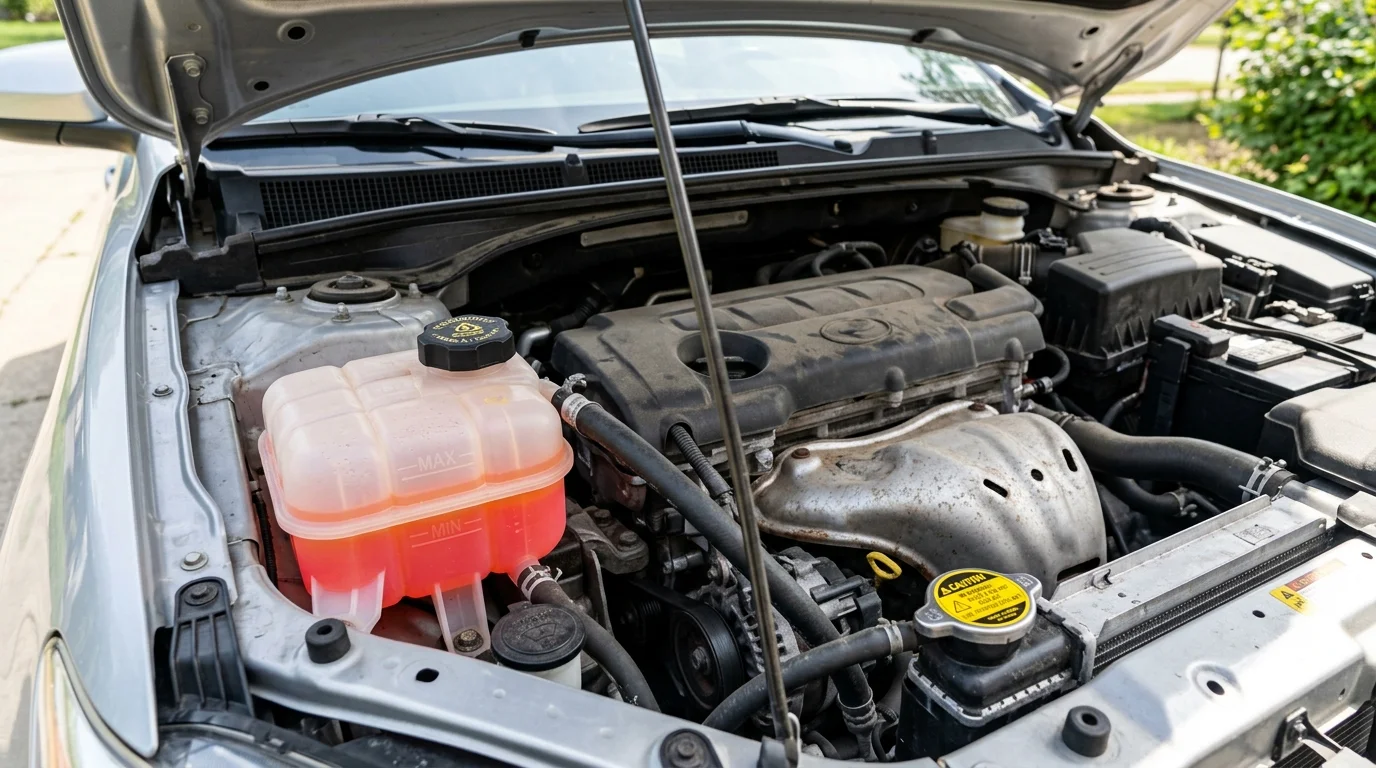
Checking engine coolant must always be done on a stone-cold engine by viewing the translucent expansion tank markings.
Quick Answer & Key Takeaways
Engine Coolant (Antifreeze) regulates internal engine temperatures by transferring heat from cylinder combustion chambers to the radiator. 1) CRITICAL SAFETY RULE: NEVER loosen or open a radiator cap or pressurized expansion tank cap while the engine is warm or hot. Cooling systems operate under 15–20 PSI of pressure; opening a hot cap causes boiling 240°F liquid and steam to erupt violently like a geyser, causing third-degree facial burns. 2) SAFE CHECK: Inspect the fluid level through the translucent plastic side of the coolant reservoir tank while the engine is COLD; the fluid line should sit between the 'MIN' and 'MAX' (or 'COLD FILL') markings. 3) TOPPING OFF: Add a 50/50 prediluted premix matching your vehicle's specific chemical type (OAT, HOAT, or IAT).
- Severe Burn Hazard: Pressurized radiator caps hold boiling 240°F liquid under 16 PSI; wait at least 45 minutes for the engine to cool.
- Inspect the Tank (Not Radiator): Modern cars have clear coolant overflow tanks with visible Cold/Hot fill lines.
- Never Mix Colors: Mixing green Inorganic Acid (IAT) with modern orange/pink Organic Acid (OAT) creates a thick gel that clogs heater cores.
- Emergency Distilled Water: In an emergency, add distilled water to get to a service station; never add tap water containing mineral scale.
Why Coolant Matters: Managing 2,000°F Combustion Temperatures
Inside your vehicle’s engine cylinders, burning gasoline generates peak combustion temperatures of over 2,000°F.
While engine oil lubricates moving parts, Engine Coolant (a 50/50 blend of ethylene glycol and demineralized water) circulates through water jackets around the cylinders to absorb heat and dissipate it through the front radiator.
Running low on coolant causes cylinder heads to warp, head gaskets to blow, and pistons to seize, causing thousands in repairs.
The Scalding Hazard: Why You NEVER Open a Hot Radiator Cap
Under ASTM D3306 standards, cooling systems operate under 14 to 18 PSI of continuous hydraulic pressure.
At this pressure, the boiling point of coolant is elevated to 240°F to 260°F (well above the normal 212°F boiling point of water).
If you twist the radiator cap while the engine is hot, pressure drops instantaneously to atmospheric levels. The superheated liquid instantly flashes into explosive steam, erupting a high-pressure fountain of boiling chemical coolant directly into your face, hands, and chest. Emergency rooms treat thousands of third-degree burns every year from hot radiator caps.
The Safe Method: Inspecting the Clear Expansion Reservoir
You almost never need to remove the metal radiator cap. Follow this procedure:
- Engine Must Be Completely Cold: Park on level ground and ensure the engine has been shut off for at least 1 hour.
- Locate the Translucent Overflow Reservoir: Pop the hood and locate the clear plastic tank containing bright yellow, pink, green, or blue liquid.
- Read the Molded Lines: Look at the side of the tank without opening anything. The liquid level should sit squarely between the "MIN" (or "COLD FULL") and "MAX" indicator marks.
Coolant Chemistry: Green vs. Orange vs. Pink (Never Mix Types)
Coolant colors are not decorative; they denote specific chemical corrosion inhibitors:
- IAT (Inorganic Acid Technology - Bright Green): Traditional formula for older domestic vehicles; requires flushing every 2 years / 30,000 miles.
- OAT (Organic Acid Technology - Orange / Pink / Red): Modern extended-life formula used by GM (Dex-Cool), Toyota (Super Long Life Pink), and VW; lasts 5 years / 100,000+ miles.
- HOAT (Hybrid Organic Acid Technology - Yellow / Blue): Used in Ford, Chrysler, BMW, and Honda.
- The Chemical Reaction Risk: NEVER mix IAT green with OAT orange/pink! The corrosion inhibitors react chemically, turning into a thick, sludge-like jelly that permanently blocks radiator tubes and heater cores.
Emergency Top-Offs: Distilled Water vs. 50/50 Premix Ratios
If your coolant tank is below the MIN mark:
- Best Option: Buy a 50/50 pre-diluted jug matching your owner’s manual specification.
- Emergency Option: If stranded, add distilled water directly into the plastic expansion reservoir. Avoid tap water, as calcium and minerals in tap water cause internal scaling on aluminum radiator cores.
Coolant Types & Maintenance Cheat Sheet
| Coolant Chemistry | Common Colors | Typical Lifespan | Vehicle Applications |
|---|---|---|---|
| IAT (Inorganic) | Bright Green | 2 Years / 30,000 Miles | Older vehicles (Pre-2000) |
| OAT (Organic) | Orange, Pink, Crimson | 5 Years / 100,000 Miles | GM, Toyota, Honda, VW/Audi |
| HOAT (Hybrid) | Yellow, Blue, Turquoise | 5 Years / 100,000 Miles | Ford, Chrysler, European imports |
Interactive Knowledge Check
Question: Why is it extremely dangerous to remove a metal radiator cap or pressurized expansion tank cap while the vehicle engine is hot?
Authoritative Sources & Regulatory References
Content and statutory guidelines in this guide are verified against official state vehicle codes, federal transportation standards, and authoritative regulatory documentation:
- ASTM InternationalAutomotive Cooling Systems and Ethylene Glycol Safety Standards (ASTM D3306)(American Society for Testing and Materials)
- NHTSAPreventing Severe Scald Injuries from Pressurized Radiator Caps(National Highway Traffic Safety Administration)
- AAACoolant Types, Colors, and Head Gasket Protection(American Automobile Association)
95% of people found this article helpful.
Click a star to add your vote
43 votes • average 4.85 out of 5
Official 2026 DMV Practice Tests by State
Select your state to practice real exam questions based on the latest 2026 driver handbook.
Ready to Pass the DMV Test on Your First Try?
Practice real 2026 DMV questions with instant answer explanations, simulated timers, and pass-guarantee study guides.
Start Free Practice TestRecommended Driver Guides

How to Check and Top Off Engine Oil Step-by-Step: Reading the Dipstick
Check Engine Light: Flashing vs. Solid Light Meaning and Immediate Actions