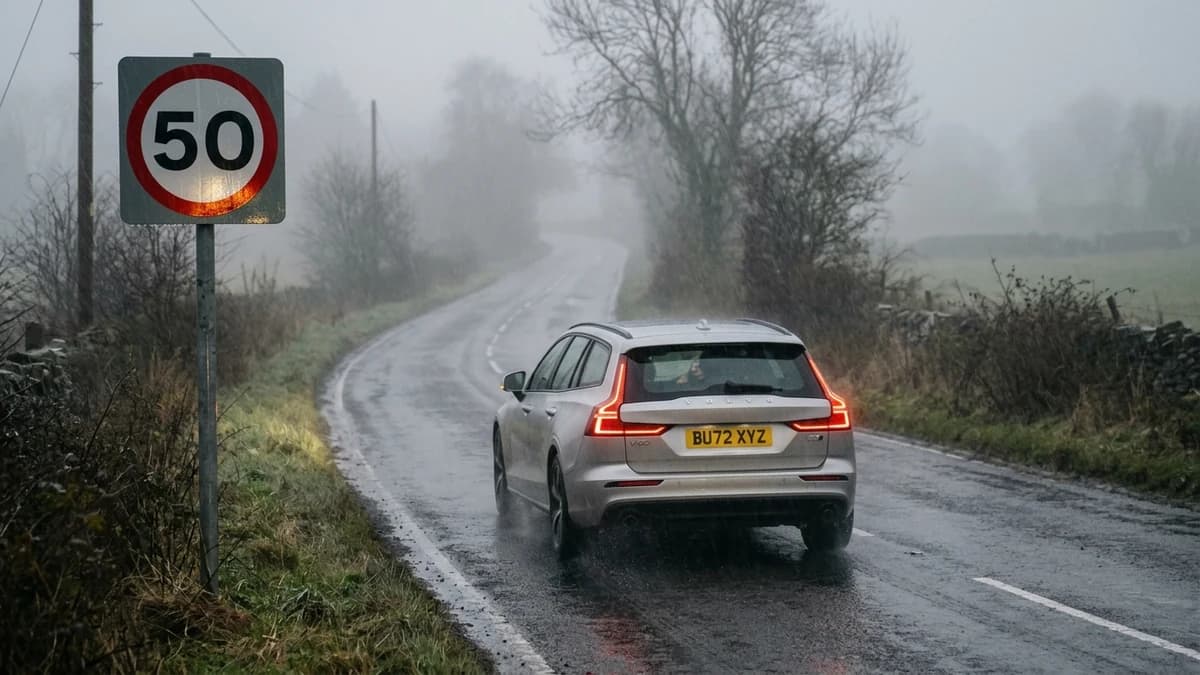
How to Drive in Fog: Why High Beams Make Fog Worse
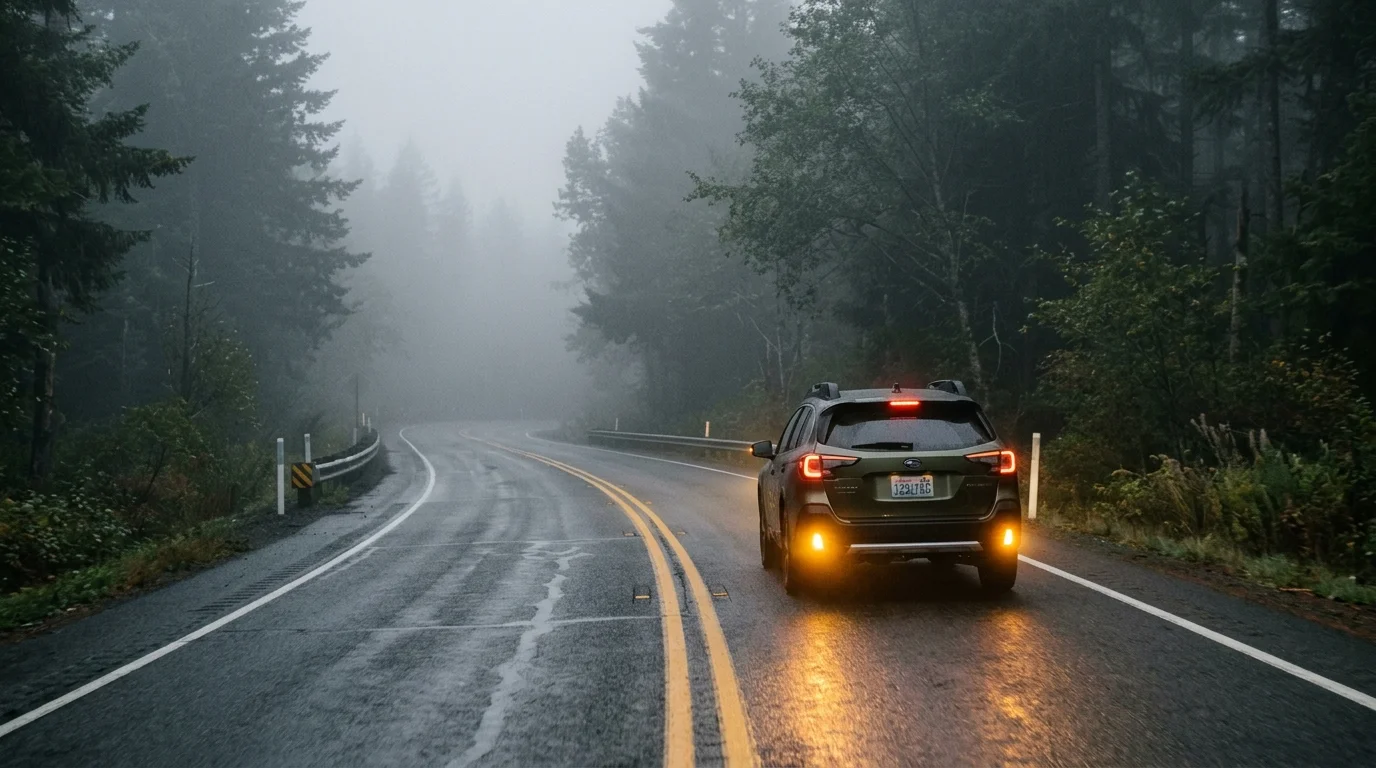
High beams reflect off airborne fog droplets back into the driver's eyes, creating a solid white wall of glare.
Quick Answer & Key Takeaways
Dense fog (such as California's Tule fog or coastal marine layers) is one of the most hazardous driving environments: 1) NEVER USE HIGH BEAMS: Fog consists of billions of microscopic water droplets suspended in the air. High-beam headlights project light straight ahead, where water droplets reflect the light directly back into your eyes (Mie scattering), creating a blinding 'white wall' of glare. 2) USE LOW BEAMS & FOG LIGHTS: Low beams angle light downward onto the pavement beneath the fog layer. 3) FOLLOW THE WHITE 'FOG LINE': Focus your eyes on the solid white line on the FAR-RIGHT EDGE of the roadway. Looking at the yellow center line pulls you into oncoming traffic. 4) CRACK YOUR WINDOW: Turn off music and open windows to hear approaching vehicles. 5) PULLING OVER: If visibility drops under 50 feet, pull COMPLETELY OFF the roadway into a parking lot and TURN OFF ALL LIGHTS.
- Never Use High Beams: Backscatter reflection creates a solid blinding wall of white glare.
- Track the Right-Side Fog Line: The white shoulder line keeps your vehicle centered safely away from oncoming traffic.
- Auditory Driving: Crack your windows to hear approaching sirens and engines.
- The Hazard of Stopping on Shoulders: If you pull onto the shoulder, TURN OFF all lights and foot off brake so trailing cars don't follow your red lights and rear-end you.
- Basic Speed Law: Slow to 15–25 MPH when visibility drops below 100 feet.
The Optics of Fog: Mie Scattering & Why High Beams Blind Drivers
Fog is essentially a cloud touching the earth's surface, consisting of countless microscopic water droplets ranging from 10 to 50 microns in diameter.
When you activate high-beam headlights, the intense, parallel light beams hit these spherical water particles. Under optical physics principles known as Mie Scattering (Backscatter), the light reflects backward at identical angles directly into the driver's pupils.
This transforms the transparent air into an opaque, glowing white wall of light, reducing your forward visibility from 100 feet down to less than 10 feet.
Low Beams & Dedicated Fog Lamps: Asymmetrical Cutoff Geometry
Under California Vehicle Code § 24400 and SAE standards:
- Low-Beam Headlights: Feature a sharp optical cutoff that projects light downward toward the asphalt at a downward angle of 1.5 to 2.5 degrees, illuminating the road surface underneath the fog bank.
- Dedicated Fog Lamps (SAE J583): Mounted low in the bumper (12 to 20 inches above the ground), fog lights project a wide, flat horizontal beam that illuminates road shoulders and curbs without reflecting back.
Auditory Driving: Cracking Windows to Hear Hidden Traffic
When visual sight distance drops below 100 feet:
- Turn off the audio system, air conditioning fans, and heater blower.
- Roll down your driver's window and passenger window 1 to 2 inches.
- Listen carefully for engine revs, tire hiss, horns, and emergency sirens at intersections before proceeding.
When to Pull Off: Completely Leaving the Roadway & Turning Off Lights
If visibility drops to near zero (under 30 to 50 feet):
- Do NOT Stop on the Highway Shoulder: Trailing motorists follow taillights through thick fog. If you stop on the shoulder with your brake lights on, trailing cars will steer straight into your trunk at 50 MPH!
- Exit Completely: Turn into a commercial gas station parking lot or rest area far off the highway.
- If Forced onto the Shoulder: Pull as far onto the dirt/grass as possible. TURN OFF ALL LIGHTS (including headlights and dome lights), put the car in Park, set the emergency brake, and take your foot OFF the brake pedal. This prevents trailing drivers from mistaking your car for a moving vehicle.
Dense Fog Driving Visibility, Lighting & Speed Guideline Table
| Sight Distance (Visibility) | Maximum Safe Speed | Mandatory Headlight Setting | Action Required |
|---|---|---|---|
| >500 Feet (Light Fog) | 45–55 MPH | Low-Beam Headlights | Maintain 4-sec following buffer |
| 100–300 Feet (Dense Fog) | 25–35 MPH | Low Beams + Fog Lamps | Track right white fog line, crack windows |
| < 50 Feet (Zero Visibility) | 0 MPH (Pull off road) | ALL LIGHTS OFF when parked off road | Exit highway completely into parking lot |
Interactive Knowledge Check
Question: Why should a driver NEVER use high-beam headlights when driving through dense fog at night?
Authoritative Sources & Regulatory References
Content and statutory guidelines in this guide are verified against official state vehicle codes, federal transportation standards, and authoritative regulatory documentation:
- FHWAFHWA Road Weather Management Program: Low Visibility & Fog Crash Mitigation (23 CFR Part 655)(Federal Highway Administration)
- California LegislatureCalifornia Vehicle Code § 24400: Headlamp and Fog Lamp Operation Requirements(California Vehicle Code)
- SAE InternationalSAE Technical Standard J583: Front Fog Lamp Beam Pattern Design Standards(SAE International Automotive Engineering)
84% of people found this article helpful.
Click a star to add your vote
51 votes • average 4.28 out of 5
Official 2026 DMV Practice Tests by State
Select your state to practice real exam questions based on the latest 2026 driver handbook.
Ready to Pass the DMV Test on Your First Try?
Practice real 2026 DMV questions with instant answer explanations, simulated timers, and pass-guarantee study guides.
Start Free Practice Test