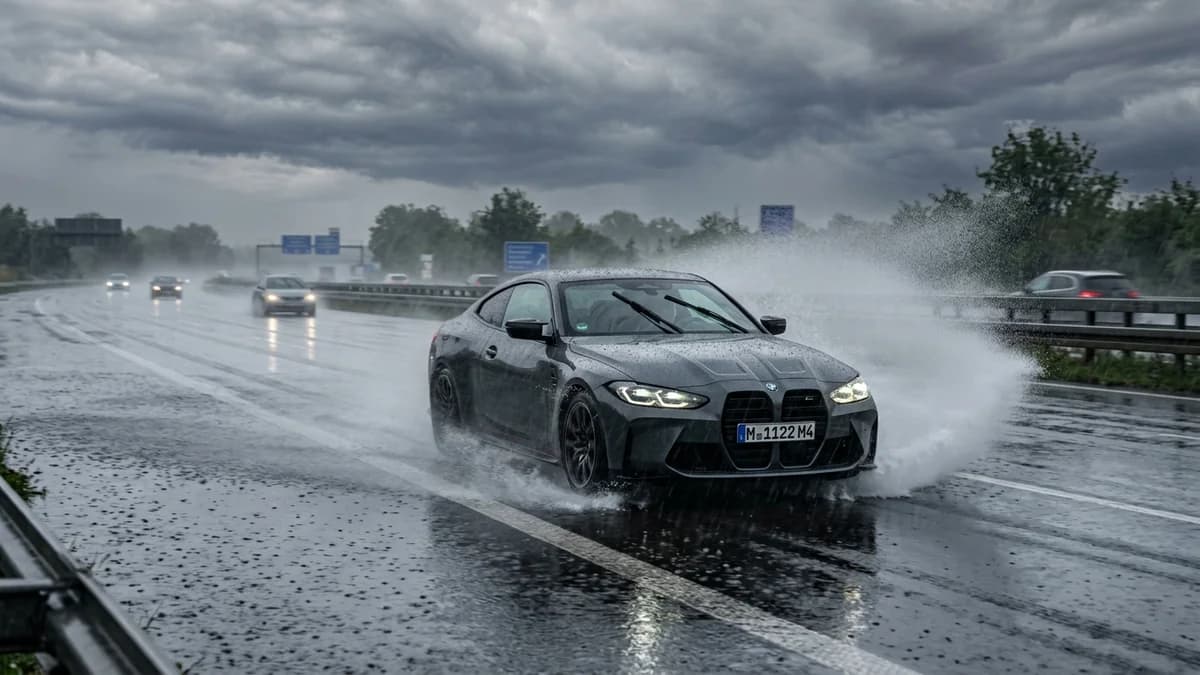
Wipers On, Headlights On: Weather Lighting Laws by State
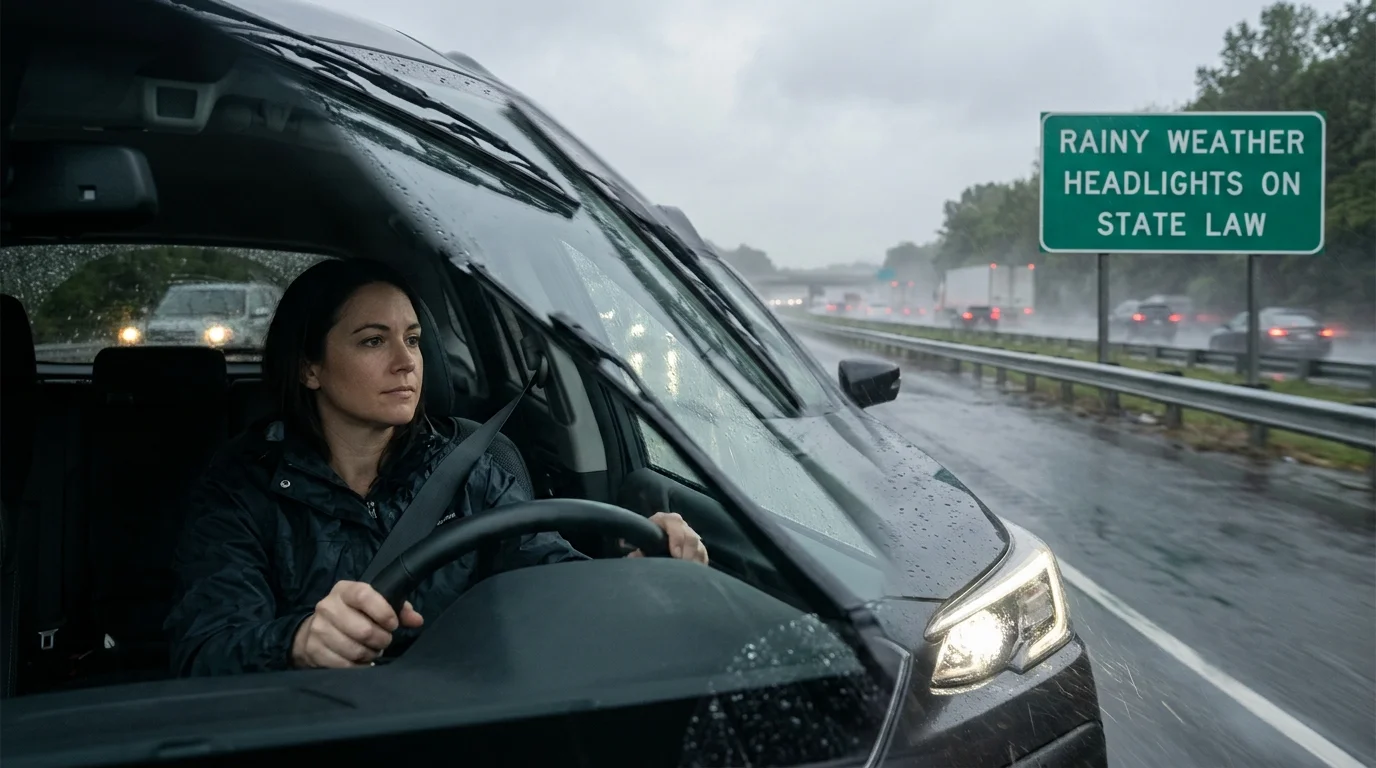
State laws require full low-beam headlights whenever rain or fog requires windshield wipers.
Quick Answer & Key Takeaways
Under statutory weather lighting laws enacted in over 30 US states (including California CVC § 24400, New York VTL § 375, and Pennsylvania Title 75 § 4302), whenever atmospheric conditions require the continuous or intermittent operation of windshield wipers (rain, mist, snow, sleet), drivers are legally required to turn on their vehicle's low-beam headlights. 1) WHY DAYTIME RUNNING LIGHTS (DRLs) FAIL: DRLs only illuminate front lights at reduced power; they DO NOT turn on rear red taillights, leaving your vehicle completely invisible to trailing drivers in heavy road spray. 2) VISIBILITY STANDARD: You must also activate headlights whenever visibility is reduced to under 1,000 feet (500 feet in some states). 3) PENALTIES: Fines range from $50 to $150 plus moving violation court costs.
- 30+ States Require Headlights with Wipers: If weather makes wipers necessary, your low-beam headlights must be manually switched ON.
- DRLs Are Not Enough: Automatic DRLs leave your rear taillights completely dark in heavy rain spray.
- High Beams Prohibited in Fog: Never use high beams in fog or heavy rain; intense light reflects back into your eyes, blinding you.
- Visibility Threshold: Headlights are mandatory anytime atmospheric visibility drops below 1,000 feet.
The "Wipers On, Headlights On" Law: Safety Rationale & Contrast Physics
Rainstorms and wet road surfaces reduce optical contrast dramatically. Gray asphalt, dark overcast storm clouds, and fine tire mist create a monochromatic visual backdrop that makes silver, white, and gray vehicles virtually invisible in rearview mirrors.
The "Wipers On, Headlights On" statute was conceived not to help you see the pavement ahead, but to ensure other motorists see you through heavy water spray.
According to NHTSA crash data, turning on low-beam headlights during precipitation reduces multi-vehicle daytime wet weather collisions by up to 15%.
Why Daytime Running Lights (DRLs) Do NOT Satisfy the Law
The most common mistake drivers make during rainstorms is relying on their vehicle's automatic Daytime Running Lights (DRLs).
Why DRLs Fail the Legal Test:
- Zero Rear Taillights: DRL systems only illuminate the front lamps. In a downpour, the entire rear end of your car remains pitch black, making you invisible to high-speed trucks approaching from behind in the spray.
- No Side Marker Illumination: DRLs do not light amber front or red rear side-marker lights needed for cross-traffic visibility at intersections.
- Reduced Front Lumens: DRLs operate at roughly 50% to 70% of full low-beam wattage.
You must physically turn your lighting dial to the full "ON" (Low-Beam) position.
State Mandates: Continuous vs. Intermittent Wiper Thresholds
State laws define wiper activation thresholds into two categories:
- Continuous Use Requirement (California CVC § 24400): Headlights must be turned on whenever weather conditions require windshield wipers to be in continuous operation (or when visibility is under 1,000 feet).
- Any Wiper Activation (New York VTL § 375, New Jersey, Pennsylvania): Headlights must be illuminated whenever wipers are active in any mode, including intermittent wipe intervals.
Inclement Weather Rules: Rain, Dense Fog, Snow & 1,000-Foot Visibility
Beyond windshield wiper triggers, state vehicle codes mandate low-beam headlights under specific environmental conditions:
- 30 Minutes After Sunset to 30 Minutes Before Sunrise: The universal nighttime lighting standard.
- Visibility Below 1,000 Feet: Mandatory low-beam activation in California, Texas, Florida, and New York anytime fog, smog, smoke, dust, or snow limits sight lines to under 1,000 feet (approximately 3 city blocks).
- No High Beams in Fog: High beams project light directly into suspended water droplets, reflecting severe white glare back into the driver's eyes. Always use low beams or dedicated amber fog lights.
Traffic Enforcement: Fines, Secondary Stops & Moving Violation Points
Driving in the rain without low-beam headlights is an enforceable traffic infraction:
- California: $25 base fine, totaling approximately $160 after state penalty assessments.
- New York: Fines up to $150 and court surcharges.
- Pennsylvania: $25 fine plus mandatory court costs.
50-State Weather Lighting Statute & Visibility Threshold Table
| State Code | Wiper Headlight Statute | Visibility Distance Limit | Are DRLs Legally Sufficient? |
|---|---|---|---|
| California (CVC § 24400) | Continuous Wiper Use | 1,000 Feet | No (Low Beams Required) |
| New York (VTL § 375) | Any Wiper Use (Continuous/Intermittent) | 1,000 Feet | No |
| Pennsylvania (Title 75 § 4302) | Any Wiper Use in Precipitation | 1,000 Feet | No |
| Texas (Trans. Code § 547.302) | When visibility < 1,000 ft | 1,000 Feet | No |
Interactive Knowledge Check
Question: Why do factory Daytime Running Lights (DRLs) fail to comply with state "Wipers On, Headlights On" traffic laws during heavy rainstorms?
Authoritative Sources & Regulatory References
Content and statutory guidelines in this guide are verified against official state vehicle codes, federal transportation standards, and authoritative regulatory documentation:
- California LegislatureCalifornia Vehicle Code § 24400: Headlamp Requirements in Inclement Weather and Continuous Wiper Use(California Vehicle Code)
- NY State LegislatureNew York Vehicle and Traffic Law § 375: Headlights When Operating Windshield Wipers(New York State Senate)
- NHTSALow-Beam Headlamp Effectiveness in Daylight Precipitation and Fog (DOT HS 809 778)(National Highway Traffic Safety Administration)
95% of people found this article helpful.
Click a star to add your vote
240 votes • average 4.80 out of 5
Official 2026 DMV Practice Tests by State
Select your state to practice real exam questions based on the latest 2026 driver handbook.
Ready to Pass the DMV Test on Your First Try?
Practice real 2026 DMV questions with instant answer explanations, simulated timers, and pass-guarantee study guides.
Start Free Practice Test