Tips to Navigate Winter Roads Like a Pro: Snow, Slush, and Black Ice Tactics
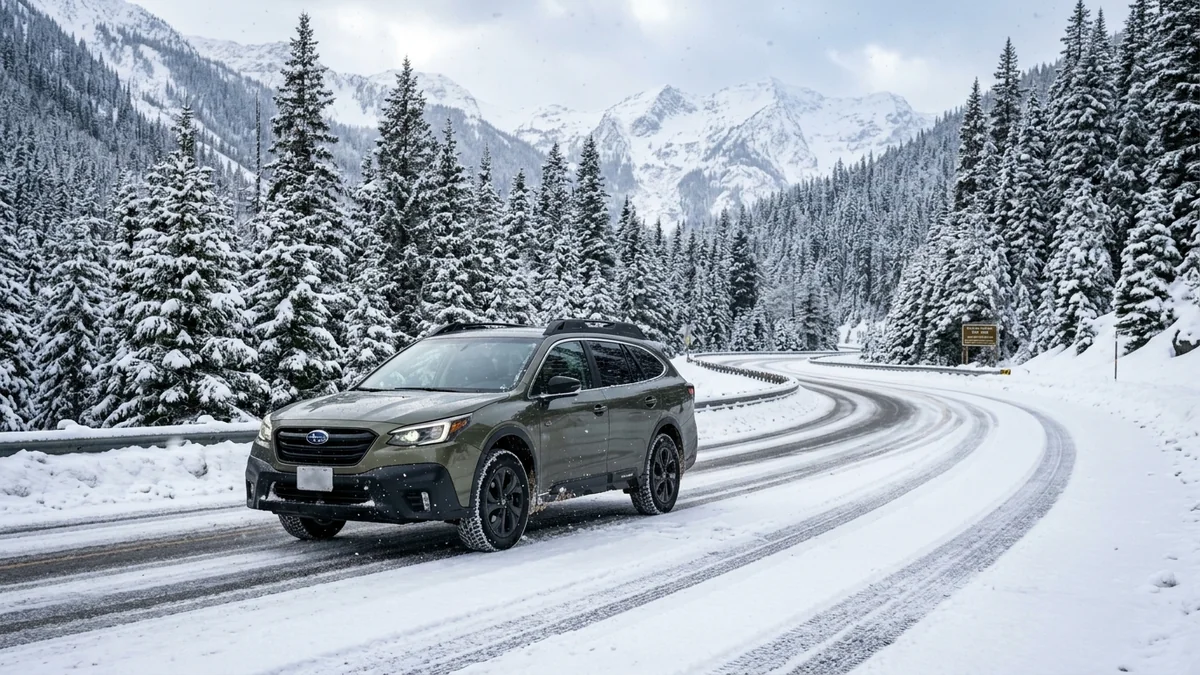
Navigating winter highways requires understanding reduced tire traction, gentle throttle inputs, and knowing how to steer out of sudden black ice skids.
Quick Answer & Key Takeaways
To safely navigate winter roads: expand following distance to 6–10 seconds, accelerate and steer with smooth, gradual inputs, and never use cruise control on slippery pavement. If your vehicle skids on ice, look and steer smoothly in the direction you want the front of the vehicle to go, and let your Anti-lock Braking System (ABS) work by pressing firmly without pumping.
- Expand following distance: Stopping on packed snow requires 3x to 9x more stopping distance than dry asphalt.
- Never use cruise control: Cruise control can cause sudden wheel spin if one drive wheel hits a patch of ice.
- Bridges freeze first: Cold air circulates both above and below bridge decks, causing ice to form well before adjacent roadways.
- Steer into the skid: Look where you want the car to travel and gently steer toward your intended path without panicking.
The Physics of Winter Traction: Why Braking Distance Multiplies
According to stopping distance studies published by the NHTSA Winter Safety Bureau, on dry asphalt at 45 mph, a typical passenger car with good tires requires approximately 140 to 160 feet to come to a complete stop. On packed snow, that stopping distance multiplies by three to four times. On transparent black ice, stopping distance can increase up to nine to ten times, requiring over 500 feet (more than the length of a football field) to halt.
Tires grip the road through microscopic friction. When snow and slush pack into standard tire grooves, the rubber glides on a thin layer of melted water rather than biting into the asphalt. Remember these winter rules of thumb:
- Expand following distance to 6–10 seconds: Under dry conditions, the standard rule is 3 to 4 seconds. On snow or slush, double or triple that gap to provide a safe buffer for unexpected stops.
- Smooth, linear inputs only: Treat the throttle, brake pedal, and steering wheel as delicate instruments. Sudden jabs to the brakes or sharp jerks of the steering wheel instantly break tire traction.
- Disable cruise control completely: If your vehicle hits a slick patch with cruise control engaged, the system will attempt to maintain speed by accelerating, which can induce an uncontrollable skid.
- All-Wheel Drive (AWD) helps you go, not stop: AWD and 4WD provide superior acceleration and traction when climbing hills, but they offer zero advantage when braking or turning on ice.
Black Ice: Where It Hides & How to Spot It
Black ice is not black—it is a paper-thin, nearly invisible glaze of transparent ice that forms over asphalt, allowing the black pavement underneath to show through. It is responsible for a large percentage of winter highway pileups because drivers mistake it for harmless wet road.
High-Risk Zones for Black Ice Formation:
- Bridges and elevated overpasses: Cold air circulates both above and underneath bridge decks, stripping away heat from both sides and freezing moisture up to 30 minutes before nearby ground roads.
- Heavily shaded tree canopies and mountain cuts: Road sections shielded from direct sunlight retain frost and sub-freezing temperatures long into the afternoon.
- Intersections and stoplights: Exhaust steam and idling engines melt snow, which promptly refreezes into slick polished ice sheets as subsequent cars brake.
The Visual Cue to Watch:
Watch the spray coming off the tires of vehicles ahead of you. If you see active water mist throwing into the air, the road is wet (be alert for hydroplaning risks at speeds above 35 mph). If the road looks wet and shiny but the tires ahead are throwing zero spray, you are driving directly on ice.
Skid Recovery: Oversteer vs. Understeer
When a vehicle loses traction on a slippery road, it typically experiences one of two distinct types of skids:
Oversteer (Rear-Wheel Skid / Fishtailing)
Oversteer occurs when the rear tires lose traction and the back end of the vehicle swings outward. To recover:
- Take your foot off the accelerator: Immediately ease off the throttle. Do not stomp on the brake pedal.
- Steer in the direction of the skid: If the rear of your car is sliding to the right, gently steer to the right. Look far down the road toward your intended target and keep your eyes focused on where you want to go.
- Counter-steer smoothly as traction returns: As the rear aligns, straighten the wheel to prevent fishtailing in the opposite direction.
Understeer (Front-Wheel Skid / Plowing)
Understeer happens when the front wheels lose grip while turning, causing the car to slide straight forward regardless of how much you turn the steering wheel. To recover:
- Do not turn the wheel sharper: Turning the steering wheel more aggressively will only aggravate the loss of grip.
- Gently lift off the gas pedal: Easing off the throttle transfers weight to the front tires, helping the front tread regain traction with the asphalt.
Braking on Ice: How to Use ABS Correctly
Almost every modern vehicle manufactured after 2012 is equipped with an Anti-lock Braking System (ABS) and Electronic Stability Control (ESC).
In an emergency stop on snow or ice with ABS:
- Press firmly and hold: Apply hard, steady pressure to the brake pedal. Do not let up.
- Do not pump the brakes: Pumping ABS brakes disables the computer's ability to pulse the calipers at 15 to 20 times per second and dramatically increases your stopping distance.
- Expect pedal vibration and grinding noise: Rapid pulsing and vibrating sensations in the brake pedal are completely normal indicators that ABS is actively working to prevent wheel lockup.
- Steer around obstacles while braking: Because ABS prevents the front wheels from locking, you retain the ability to steer the vehicle while braking hard.
Mastering Steep Snowy Hills: Up and Down
Tackling steep gradients in winter conditions requires strategic momentum management:
- Climbing hills (Build inertia early): Gain gentle momentum on the flat stretch before you reach the incline. Do not hit the gas pedal aggressively while climbing, as spinning tires polish the snow into slick ice.
- Never stop midway up a steep icy hill: If traffic ahead is stopped, wait at the bottom until the incline is clear before starting your ascent. Restarting from a dead stop on an icy slope is nearly impossible.
- Descending hills (Shift into low gear): Before starting down a steep hill, shift your transmission into a lower gear (e.g., "L", "2", or Manual mode). Engine braking will naturally slow your vehicle without relying solely on friction brakes.
Winter Vehicle Readiness & Emergency Kit
Before sub-freezing temperatures arrive, inspect your vehicle to ensure it is winter-roadworthy. In addition to scheduling regular undercarriage car washes to rinse off road salt, check these essential items:
- Tire tread depth: Ensure a minimum of 5/32" of tread depth for winter driving (or use dedicated 3PMSF winter tires).
- Winter windshield washer fluid: Use de-icer fluid rated for -20°F or lower so fluid does not freeze on the glass.
- Keep the gas tank at least half full: Prevents fuel line freezing from condensation and ensures hours of cabin heat if stranded.
- Winter emergency trunk kit: Pack a snow brush/ice scraper, flashlight, thermal blanket, jumper cables, tow strap, and a small bag of sand or cat litter for tire traction.
Why do bridges and highway overpasses freeze before ordinary ground roadways?
Frequently Asked Questions
Should you pump brakes on ice if your car has ABS?
No. Never pump Anti-lock Brakes (ABS). Pumping interferes with the computerized sensors that pulse the brakes up to 20 times per second. Press firmly and hold the brake pedal down.
Does All-Wheel Drive (AWD) help you stop faster in snow?
No. AWD and 4WD only provide power to four wheels for acceleration. When braking, all modern passenger vehicles use four-wheel braking regardless of drivetrain. Only winter tire tread improves braking distance on snow and ice.
What should you do if your car gets stuck in deep snow?
Straighten your front wheels, clear snow around the tires, and sprinkle sand, gravel, or floor mats under the drive wheels. Gently rock the car between Forward and Reverse without spinning the tires.
Authoritative Sources & Regulatory References
Content and statutory guidelines in this guide are verified against official state vehicle codes, federal transportation standards, and authoritative regulatory documentation:
- NHTSAWinter Driving Tips & Vehicle Preparedness(National Highway Traffic Safety Administration)
- FHWAHow Do Weather Events Impact Roads? Snow and Ice Research(Federal Highway Administration Road Weather Management)
- AAAWinter Driving Safety & Anti-Lock Brake (ABS) Operation(American Automobile Association)
96% of people found this article helpful.
Click a star to add your vote
200 votes • average 4.84 out of 5
Official 2026 DMV Practice Tests by State
Select your state to practice real exam questions based on the latest 2026 driver handbook.
Ready to Pass the DMV Test on Your First Try?
Practice real 2026 DMV questions with instant answer explanations, simulated timers, and pass-guarantee study guides.
Start Free Practice TestRecommended Driver Guides
What to Do When Being Pulled Over by Police: Step-by-Step Safety & Legal Protocol
Learn the exact steps to take when pulled over: where to stop safely, cabin preparation, and your legal rights.
How to Choose the Right Car Wash: Touchless vs. Soft-Cloth vs. Hand Wash
Discover which car wash protects your paint best and why undercarriage salt flushes prevent winter frame corrosion.
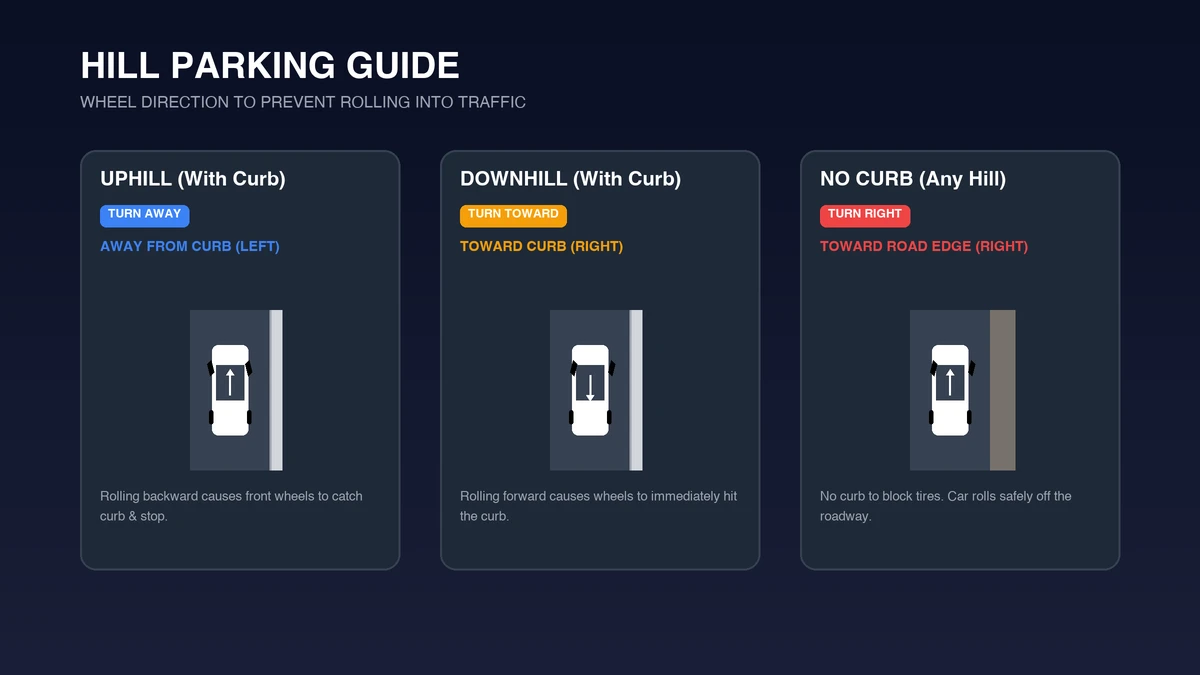
Which Way to Turn Your Wheels When Parking on a Hill (And Why)
Understand the core physics behind hill parking so you never have to memorize confusing tables again.