How to Overcome Driving Anxiety: Step-by-Step Beginner Guide
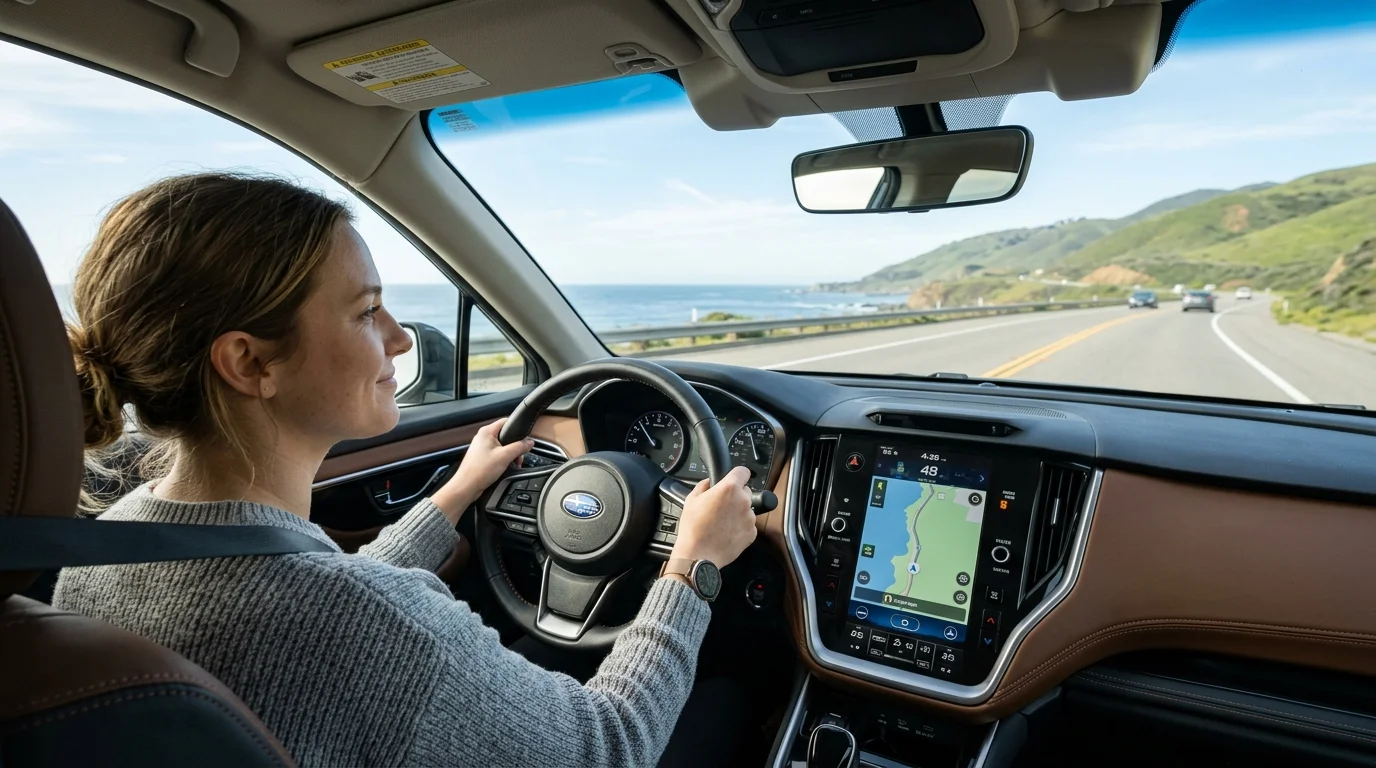
Systematic desensitization and commentary driving help nervous beginners replace panic with calm muscle memory.
Quick Answer & Key Takeaways
Driving anxiety (vehophobia) affects over 66% of new motorists, triggered by sensory overload and fear of collisions. To permanently overcome driving fear: 1) USE SYSTEMATIC DESENSITIZATION: Break driving into a 5-step exposure ladder—starting with sitting in a parked car with the engine off, advancing to empty parking lot drills, quiet residential loops, multi-lane boulevards, and finally 1-exit freeway merges. 2) PRACTICE COMMENTARY DRIVING: Speak all traffic observations out loud ('Green light ahead, car braking on left, checking mirror') to engage the logical prefrontal cortex and silence amygdala panic. 3) BOX BREATHING: Inhale for 4 seconds, hold for 4, exhale for 4 to regulate heart rate at red lights. 4) DRIVE AT OFF-PEAK HOURS: Practice on Sunday mornings between 7:00 AM and 9:00 AM when roads are empty.
- Gradual Exposure Works: Never jump straight onto a freeway; master low-speed parking lots and residential streets first.
- Commentary Driving Silences Panic: Narrating what you see forces your brain into active analytical mode instead of anxiety spirals.
- The 1-Exit Freeway Method: Enter the highway, stay in the right lane for exactly one exit, and exit immediately to build confidence.
- Choose the Right Passenger: Practice with a calm, supportive mentor rather than anxious, critical family members.
Understanding Driving Anxiety (Vehophobia): The Amygdala Trigger
Climbing behind the wheel of a 3,500-pound moving metal machine while processing dozens of visual cues every second is inherently stressful.
When beginner drivers feel their heart racing, palms sweating, or hands gripping the steering wheel in a white-knuckle panic, the brain's amygdala has triggered a fight-or-flight stress response.
Driving anxiety is not a personal failure or lack of intelligence—it is a natural neurological reaction to unfamiliar multi-sensory stimulation that can be systematically re-trained through graded exposure therapy.
Systematic Desensitization & The Exposure Ladder
The most common mistake nervous drivers make is attempting complex traffic situations (such as high-speed interstate mergers or downtown rush hours) before basic car controls are second nature.
Clinical psychologists recommend the 5-Stage Driving Exposure Hierarchy:
- Stage 1 (Stationary Familiarity): Sit in the driveway with the engine off. Adjust your mirrors, practice operating turn signals, hazard lights, wipers, and pedals until you can touch every control with your eyes closed.
- Stage 2 (Empty Parking Lot): Practice low-speed steering, smooth braking, and parking box alignment.
- Stage 3 (Quiet Residential Streets): Navigate 25 MPH neighborhood streets with stop signs and 90-degree turns.
- Stage 4 (Multi-Lane Arterials): Drive on 4-lane city streets with traffic lights and moderate traffic during off-peak hours.
- Stage 5 (Highway & Freeway): Execute controlled on-ramp merges and single-exit hops.
Empty Parking Lot Drills & Spatial Awareness
Spend 3 to 5 hours in an empty school or shopping mall parking lot on weekend mornings:
- Smooth Accelerator-Brake Transitions: Practice stopping smoothly on a painted white parking line without the front nose of the car dipping violently.
- Reversing & Spatial Dimensions: Practice reversing along a curb line to understand exactly where your car's four tires sit on the asphalt.
- Turning Hand-Over-Hand: Practice full-lock U-turns to automate steering wheel return action.
Low-Stress Neighborhood Loops & Right-Lane Confidence
Transition to quiet 25 MPH suburban streets:
- Drive the same 1-mile rectangular neighborhood loop repeatedly until anxiety scores drop from an 8/10 to a 2/10.
- Familiarity eliminates navigation guesswork, allowing your brain to focus 100% on mirror scanning and smooth speed regulation.
- On 4-lane roads, stay in the right-hand lane where you can drive at comfortable speeds without feeling pressured by aggressive tailgaters.
The 1-Exit Freeway Progression Method
Highway merging strikes the greatest fear into beginner drivers. Tackle it with the "1-Exit Method" on a Sunday at 7:30 AM when freeway traffic is sparse:
- Accelerate firmly down the entrance ramp to match the speed of highway traffic under freeway merge rules.
- Merge smoothly into the rightmost lane using the SMOG technique.
- Remain in the right lane for exactly one highway exit (1 to 2 miles).
- Exit the freeway immediately, take surface streets back to the starting ramp, and repeat 3 times.
In-Car Calming Techniques: Box Breathing & Commentary Driving
Two evidence-based behavioral techniques eliminate panic spikes instantly:
- Commentary Driving (Vocalizing Hazard Scans): Speak everything you see out loud: "Pedestrian on right sidewalk... green light ahead... checking rearview mirror... brake lights three cars ahead." Speaking engages the analytical prefrontal cortex, blocking emotional amygdala panic loops.
- Box Breathing at Red Lights: Inhale through your nose for 4 seconds, hold for 4 seconds, exhale through your mouth for 4 seconds, and hold empty for 4 seconds. This physically stimulates the vagus nerve, lowering heart rate within 30 seconds.
Beginner Driving Anxiety Exposure Hierarchy Table
| Progression Stage | Environment / Speed | Target Skill Learned | Advancement Benchmark |
|---|---|---|---|
| Stage 1: Stationary | Driveway / 0 MPH | Muscle memory for pedals, wipers & mirrors | Zero hesitation touching controls blindly |
| Stage 2: Parking Lot | Empty Lot / 5–15 MPH | Smooth braking, reversing & turning | Stopping on lines without jerky motion |
| Stage 3: Neighborhood | Suburban Streets / 25 MPH | Stop signs, crosswalks & right-of-way | Driving loop with anxiety score < 3/10 |
| Stage 4: Arterials | 4-Lane City Roads / 35–45 MPH | Traffic lights, lane changes & turning | Performing SMOG lane changes calmly |
| Stage 5: Freeway | Interstate / 65 MPH | 1-Exit on-ramp merges & speed matching | 3 successful single-exit merges |
Interactive Knowledge Check
Question: What is "Commentary Driving," and why is it one of the most effective psychological techniques for eliminating beginner driving anxiety?
Authoritative Sources & Regulatory References
Content and statutory guidelines in this guide are verified against official state vehicle codes, federal transportation standards, and authoritative regulatory documentation:
- APAClinical Management of Vehophobia and Driving Anxiety via Exposure Therapy(American Psychological Association)
- NHTSANovice Driver Stress Response and Cognitive Load Management (DOT HS 810 845)(National Highway Traffic Safety Administration)
- AAA FoundationCommentary Driving Technique in Novice Driver Training(AAA Foundation for Traffic Safety)
97% of people found this article helpful.
Click a star to add your vote
102 votes • average 4.88 out of 5
Official 2026 DMV Practice Tests by State
Select your state to practice real exam questions based on the latest 2026 driver handbook.
Ready to Pass the DMV Test on Your First Try?
Practice real 2026 DMV questions with instant answer explanations, simulated timers, and pass-guarantee study guides.
Start Free Practice Test