How to Replace Your Windshield Wiper Blades in 5 Minutes (J-Hook & Beam)
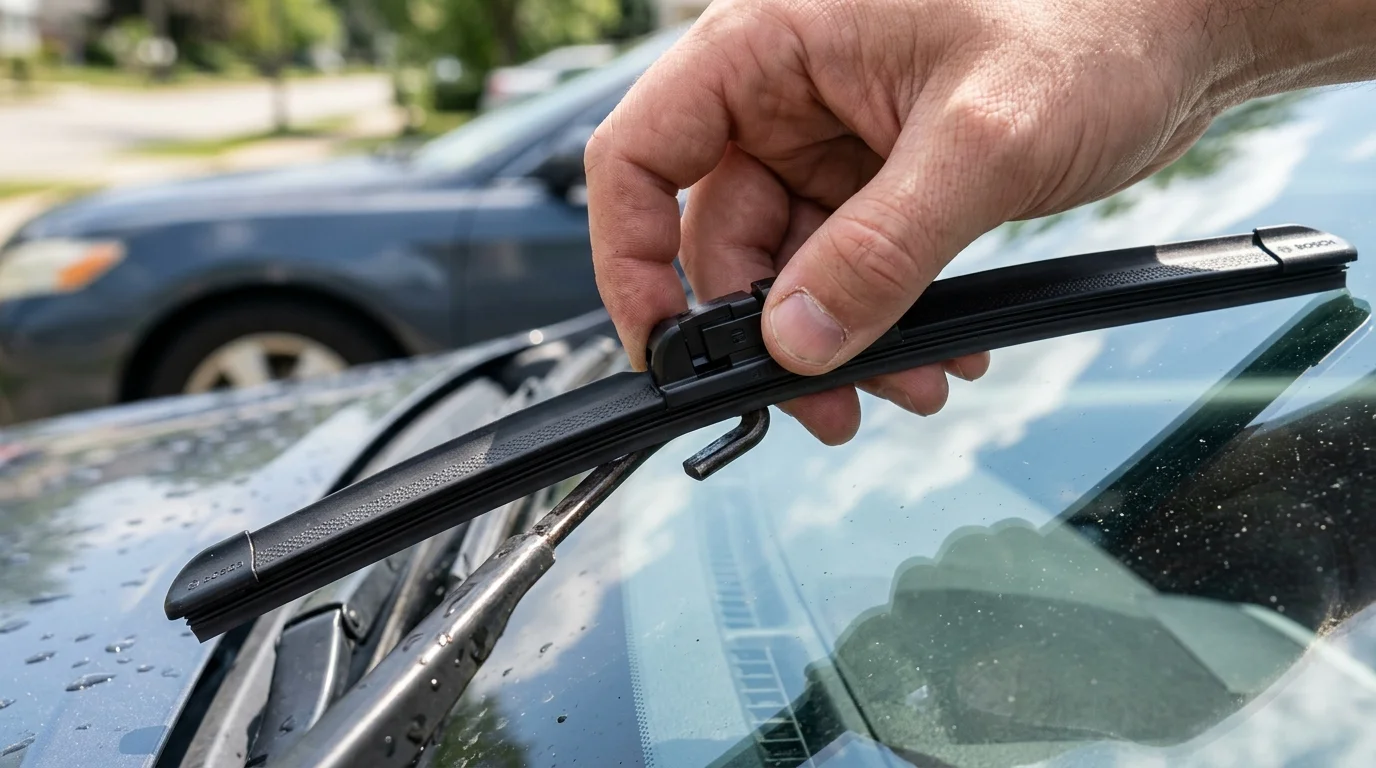
Replacing wiper blades every 6 to 12 months ensures clear wet-weather visibility and prevents scratched windshield glass.
Quick Answer & Key Takeaways
Replacing windshield wiper blades is a simple 5-minute DIY task that saves $30 in dealership labor fees: 1) THE TOWEL ON GLASS RULE: Always fold a thick microfiber towel flat across the windshield beneath the wiper arm before starting; if the spring-loaded bare metal wiper arm snaps down accidentally, it will shatter your $500 windshield glass. 2) J-HOOK REMOVAL: Lift the wiper arm into the upright service position, press the small plastic release tab on the hinge underside, and slide the old blade downward toward the hood to detach the 'J-hook'. 3) INSTALLATION: Slide the new blade into the hook until you hear a solid, audible 'CLICK' locking tab.
- The Towel Safeguard: A bare spring-loaded metal wiper arm snapping down will crack windshield glass instantly.
- Driver vs. Passenger Sizes: Most cars use different blade lengths (e.g. 24" driver, 19" passenger) to maximize wipe coverage.
- Replace Every 6–12 Months: Sun UV radiation and ozone oxidize rubber squeegees, causing chattering, streaking, and squeaking.
- Wipers On, Headlights On: In over 30 states, state law mandates turning headlights ON whenever windshield wipers are in continuous use.
Why Fresh Wiper Blades Are Vital: Preventing Rain & Glare Blindness
Over 90% of all driving decisions rely on visual perception.
When old wiper blades dry out, they leave a cloudy film of road grime and water streaks across your field of view. At night, oncoming headlights hitting a streaked wet windshield scatter light violently, blinding you for seconds under headlight wiper laws.
Under SAE J903 testing standards, wiper rubber squeegees begin degrading from solar UV exposure and ozone within 6 months.
Blade Types: Frame vs. All-Weather Beam vs. Silicone Blades
When buying replacements at an auto parts store:
- Traditional Metal Frame Blades: Feature exposed metal brackets and claw pressure points. Prone to clogging with ice and snow during winter.
- Frameless Beam Blades (Recommended): Solid curved aerodynamic spoiler with embedded steel tension spring. Applies uniform pressure across curved windshields and resists winter ice buildup.
- Silicone Blades: Premium treated rubber that leaves a microscopic water-repelling hydrophobic coating on the windshield glass.
The #1 DIY Trap: Always Place a Towel on the Windshield
Before lifting your wiper arms, lay a folded bath towel or thick microfiber rag directly on the windshield glass!
Wiper arms are powered by high-tension steel springs. When you remove the old blade, the exposed metal arm is a heavy spring-loaded lever. If your elbow accidentally bumps the upright metal arm, it will snap down onto the windshield with hammer-like force, spiderwebbing and cracking your windshield instantly. A towel prevents a $500 glass replacement bill.
Step-by-Step Replacement Guide: The Universal J-Hook Method
Over 80% of passenger vehicles use the standard J-Hook (or Hook-Slot) connector:
- Lift into Service Position: Lift the wiper arm upright until it clicks and locks standing away from the windshield. Place your protective towel beneath it.
- Depress Release Tab: Locate the small plastic locking clip or lever on the underside of the hinge connector. Press the clip inward with your thumb.
- Slide Downward: While holding the tab, slide the wiper blade downward toward the car's hood, releasing it from the curved metal "J" hook.
- Slide New Blade On: Thread the open hook of the arm through the new blade's adapter. Pull the blade firmly upward into the curve of the hook until you hear a distinct, audible "CLICK".
- Test Gently: Gently lower the arm back down onto the towel. Repeat on the passenger side.
Sizing Guide: Why Driver & Passenger Blades Are Different Lengths
Never assume both front wipers are identical in length.
Modern automotive aerodynamics require asymmetrical blades (e.g. a 26-inch driver blade paired with an 18-inch passenger blade and a 12-inch rear hatch blade). Check your vehicle owner's manual or use the electronic lookup kiosk in the auto parts aisle to get the exact inch measurements.
Wiper Problem Diagnosis & Replacement Interval Chart
| Symptom | Root Cause | Immediate Solution |
|---|---|---|
| Streaking / Film Bands | Dry, cracked rubber edge or road sap | Clean with rubbing alcohol; replace if torn |
| Chattering / Skipping Noise | Hardened oxidized rubber or bent wiper arm | Install fresh frameless beam blades |
| Large Missed Center Spot | Lost spring tension in frame brackets | Replace traditional frame with curved beam blade |
| Metal Scraping Noise | Rubber torn completely off arm | Stop wipers immediately to avoid glass etching |
Interactive Knowledge Check
Question: Why is it critical to place a folded towel on the windshield glass before removing the old wiper blade during a DIY replacement?
Authoritative Sources & Regulatory References
Content and statutory guidelines in this guide are verified against official state vehicle codes, federal transportation standards, and authoritative regulatory documentation:
- SAE InternationalPassenger Car Windshield Wiper Systems and Rubber Degradation (SAE J903)(Society of Automotive Engineers)
- NHTSAWiper Blade Lifespan, UV Ozone Damage, and Road Vision(National Highway Traffic Safety Administration)
- Consumer ReportsWindshield Wiper Blade Performance and Ratings(Consumer Reports Automotive Testing)
93% of people found this article helpful.
Click a star to add your vote
109 votes • average 4.68 out of 5
Official 2026 DMV Practice Tests by State
Select your state to practice real exam questions based on the latest 2026 driver handbook.
Ready to Pass the DMV Test on Your First Try?
Practice real 2026 DMV questions with instant answer explanations, simulated timers, and pass-guarantee study guides.
Start Free Practice TestRecommended Driver Guides

Headlight Laws: When to Use Headlights in Rain, Fog, and Wiper-Activation Rules
How to Check and Top Off Engine Oil Step-by-Step: Reading the Dipstick