Implied Consent Laws: What Happens If You Refuse a Breathalyzer or Chemical Test?
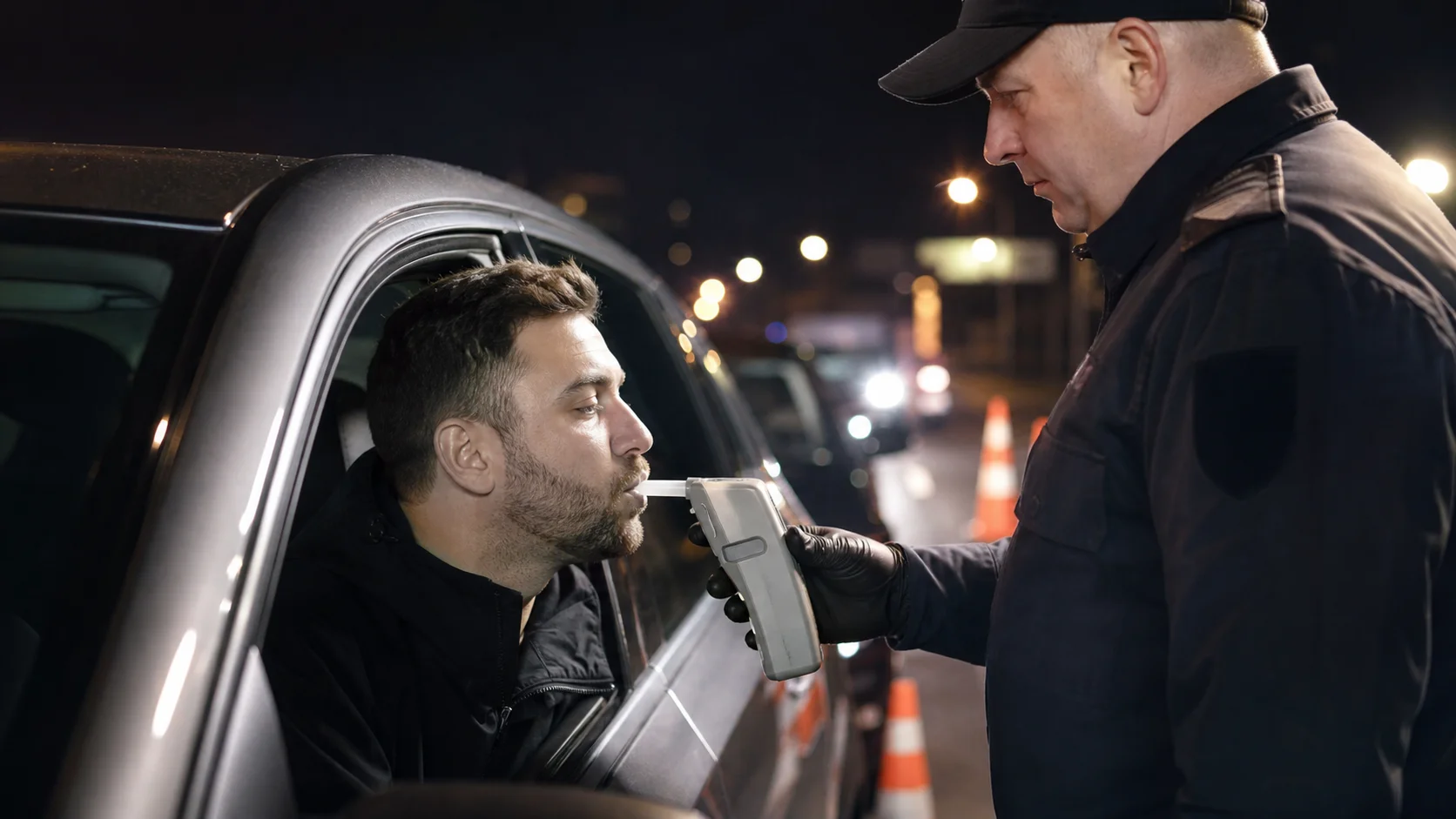
By driving on public roads, you automatically give implied consent to chemical BAC testing if lawfully arrested for DUI.
Quick Answer & Key Takeaways
Under 'Implied Consent' laws in all 50 states, by applying for a driver's license and driving on public roads, you legally agree to submit to a chemical test (breath, blood, or urine) to determine your Blood Alcohol Concentration (BAC) if lawfully arrested for DUI. If you refuse an evidentiary chemical test after arrest: 1) The DMV automatically suspends your driver's license for 1 full year on a 1st offense (2 years on 2nd offense) with NO restricted work permit options. 2) Police can obtain an expedited electronic search warrant to conduct a forced blood draw. 3) Your refusal can be used as evidence of guilt in criminal court.
- Implied Consent Definition: Driving on public highways is a privilege conditioned on consenting to chemical testing upon lawful arrest.
- Roadside PAS vs. Evidentiary Test: Field PAS breath tests pre-arrest are generally optional for adults (unless on DUI probation or under 21), but post-arrest station chemical tests are MANDATORY.
- 1-Year Mandatory Revocation: Refusing a post-arrest test results in a mandatory 1-year hard license suspension regardless of whether you are convicted in criminal court.
- Forced Blood Draws: Officers can secure a telephonic warrant from a judge within 15 minutes to forcibly draw blood at a hospital.
What Is the "Implied Consent" Law? The Driving Privilege Agreement
In American jurisprudence, driving a motor vehicle is classified as a conditional state privilege, not an absolute constitutional right.
Under California Vehicle Code § 23612 and implied consent statutes in all 50 states, by driving a motor vehicle upon a public highway, you are deemed to have given your consent to chemical testing of your blood or breath to determine drug or alcohol content if lawfully arrested for driving under the influence under statutory BAC limits.
Roadside PAS Breath Tests vs. Post-Arrest Evidentiary Chemical Tests
Drivers frequently confuse the two distinct stages of alcohol testing during a police traffic stop:
- Preliminary Alcohol Screening (PAS) Test (Pre-Arrest Roadside): A handheld roadside breath testing device used by officers to establish probable cause. For drivers aged 21 and older who are not on DUI probation, taking a roadside PAS test or field sobriety tests is optional. (For drivers under 21, refusing a PAS test violates the Zero Tolerance law).
- Evidentiary Chemical Test (Post-Arrest Station / Hospital): Once an officer places you under formal arrest for DUI, implied consent takes full effect. You are legally required to choose between a certified breath test (on a desktop machine at the police station) or a blood draw at a hospital.
What Happens If You Refuse: Mandatory 1-Year License Revocation
Many drivers mistakenly believe that refusing a chemical test denies the prosecution evidence and beats a DUI. In reality, refusing triggers devastating administrative and criminal penalties:
- 1-Year "Hard" Suspension (1st Offense): The DMV automatically suspends your license for 1 full year with zero eligibility for a restricted work/school permit (unlike a standard DUI which permits restricted driving with an Ignition Interlock Device).
- 2-Year Revocation (2nd Offense within 10 Years): Refusal on a second DUI offense triggers a mandatory 2-year license revocation.
- "Consciousness of Guilt" in Court: Under state evidence codes, prosecutors are legally permitted to tell the jury: "The defendant refused the breath test because they knew they were intoxicated."
Can Police Force a Blood Draw? (Search Warrants & Forced Tests)
Refusing to blow into a machine does not stop police from measuring your BAC.
Under US Supreme Court precedent in Birchfield v. North Dakota (2016), while warrantless blood draws are unconstitutional, police officers can transmit an electronic affidavit to an on-call judge and receive an e-Warrant within 10 to 15 minutes.
Once a search warrant is issued, medical personnel at a hospital or county jail will perform a non-consensual, forced blood draw. You will face the refusal suspension penalties PLUS the criminal blood test evidence.
Administrative DMV Suspensions vs. Criminal Court Sanctions
A DUI arrest triggers two completely separate proceedings:
- Administrative Per Se (APS) Hearing: Handled by the DMV within 10 days of arrest. The DMV hearing officer only determines: (1) Did the officer have reasonable cause? (2) Were you lawfully arrested? (3) Were you told your license would be suspended if you refused? (4) Did you refuse? If yes, your license is suspended for 1 year even if a criminal judge later dismisses the DUI!
- Criminal Court Trial: The district attorney prosecutes you for misdemeanor DUI under CVC § 23152 with mandatory jail time enhancements for refusal.
How to Protect Your Legal Rights During a DUI Traffic Stop
If pulled over under suspicion of DUI:
- Remain Calm and Polite: Hand over your license, registration, and proof of insurance promptly.
- Exercise Your Right to Remain Silent: You are not required to answer incriminating questions such as "How many beers have you had tonight?" or "Where are you coming from?" Politely state: "Officer, I am choosing to exercise my right to remain silent."
- Submit to the Post-Arrest Chemical Test: If arrested, always submit to the official chemical test (breath or blood) to avoid the mandatory 1-year non-restricted license forfeiture.
Interactive Knowledge Check
Question: Under state Implied Consent laws, what is the mandatory administrative DMV penalty for a first-time refusal to submit to a chemical BAC test after a lawful DUI arrest?
Authoritative Sources & Regulatory References
Content and statutory guidelines in this guide are verified against official state vehicle codes, federal transportation standards, and authoritative regulatory documentation:
- California LegislatureCalifornia Vehicle Code § 23612: Implied Consent for Chemical Testing(State of California Vehicle Code)
- NHTSAImplied Consent and State BAC Chemical Testing Standards(National Highway Traffic Safety Administration)
- US Supreme CourtFourth Amendment Search Warrants and Nonconsensual Blood Draws (Birchfield v. North Dakota)(Supreme Court of the United States)
87% of people found this article helpful.
Click a star to add your vote
277 votes • average 4.39 out of 5
Official 2026 DMV Practice Tests by State
Select your state to practice real exam questions based on the latest 2026 driver handbook.
Ready to Pass the DMV Test on Your First Try?
Practice real 2026 DMV questions with instant answer explanations, simulated timers, and pass-guarantee study guides.
Start Free Practice TestRecommended Driver Guides

Blood Alcohol Concentration (BAC) Limits: 0.08%, 0.04%, and 0.01% Explained
What to Do When Being Pulled Over by Police: Step-by-Step Safety & Legal Protocol
