Blood Alcohol Concentration (BAC) Limits: 0.08%, 0.04%, and 0.01% Explained
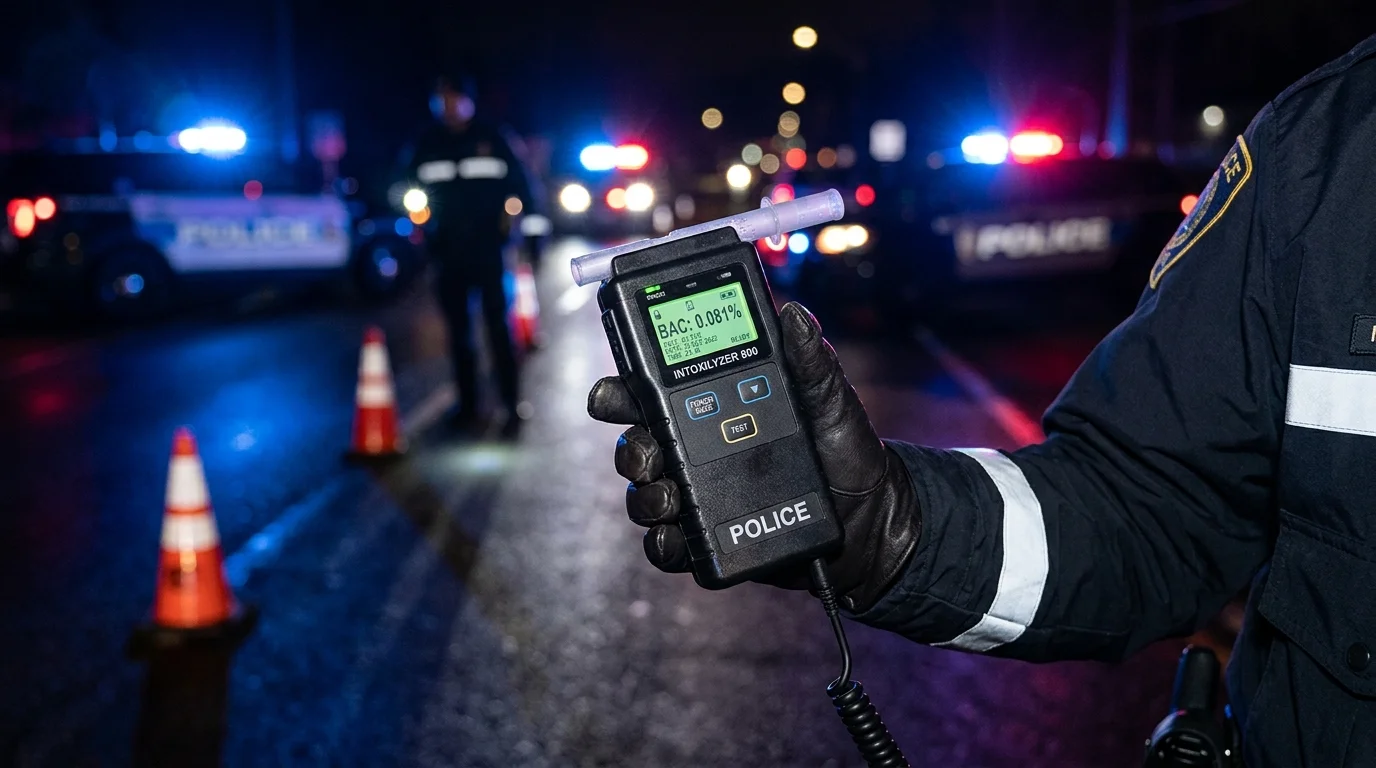
State DUI laws enforce distinct statutory BAC ceilings: 0.08% for adults, 0.04% for commercial drivers, and 0.01% for minors under 21.
Quick Answer & Key Takeaways
Blood Alcohol Concentration (BAC) measures the percentage of alcohol in a driver's bloodstream. In the United States, three statutory limits govern drivers: 1) 0.08% BAC: The per se legal limit for civilian drivers age 21 and older. 2) 0.04% BAC: The strict limit for commercial CDL drivers operating trucks, buses, or passenger rideshare vehicles. 3) 0.01% BAC: The 'Zero Tolerance' law for drivers UNDER age 21 (even a sip of alcohol or cough medicine will trigger an immediate 1-year license suspension).
- 0.08% Per Se Law: Driving at or above 0.08% is an automatic DUI offense regardless of whether you feel 'fine'.
- 0.01% Zero Tolerance for Minors: Drivers under 21 lose their license for 1 full year if any measurable alcohol (0.01%+) is detected.
- Only Time Sober Up: Coffee, cold showers, exercise, and energy drinks do NOT lower BAC; only time allows the liver to metabolize alcohol (~0.015% per hour).
- Financial Toll: A first-time DUI conviction costs between $10,000 and $15,000 in court fines, lawyer fees, and mandatory SR-22 high-risk insurance.
What Is Blood Alcohol Concentration (BAC)?
Blood Alcohol Concentration (BAC) represents the grams of alcohol per 100 milliliters of blood in a person’s body (or grams per 210 liters of breath).
Alcohol is a central nervous system depressant that rapidly impairs sensory cognitive functions: depth perception, reaction time, peripheral vision, tracking ability, and risk assessment.
According to the National Highway Traffic Safety Administration (NHTSA), alcohol-impaired crashes claim over 13,000 lives every year in the US (one death every 39 minutes).
The 3 Statutory BAC Thresholds in the United States
State vehicle codes enforce three distinct legal limits depending on driver age and vehicle classification:
The 0.08% Limit: Adult Civilian Drivers (Age 21+)
Under California Vehicle Code § 23152(b), it is unlawful for any person who has 0.08% or more by weight of alcohol in their blood to drive a vehicle.
This is known as a "Per Se" DUI: the prosecutor does not need to prove you were swerving or driving poorly; the scientific measurement of 0.08% BAC alone constitutes proof of guilt. (In Utah, the per se limit is even lower at 0.05% BAC).
The 0.01% Limit: Under-21 "Zero Tolerance" Law
Under California Vehicle Code § 23136 and youth impaired driving statutes across all 50 states:
Under the Zero Tolerance Law, it is strictly illegal for any driver under 21 to have ANY measurable alcohol in their system (0.01% BAC or higher).
If a preliminary alcohol screening (PAS) device or breathalyzer detects a 0.01% BAC, the officer will immediately confiscate the minor’s provisional permit or license and the DMV will issue an automatic 1-year administrative license suspension.
How Alcohol Metabolizes: The "One Drink Per Hour" Reality
One standard drink is defined as:
- 12 ounces of 5% beer
- 5 ounces of 12% wine
- 5 ounces of 80-proof (40%) distilled liquor
Each standard drink raises an average adult's BAC by approximately 0.02%.
The human liver can only metabolize alcohol at a fixed rate of approximately 0.015% BAC per hour (roughly one drink per hour).Nothing speeds up liver metabolism: drinking black coffee, taking cold showers, exercising, or splashing cold water on your face will NOT lower your BAC. Only time allows your blood alcohol level to drop.
DUI Penalties: $10,000+ Total Costs, License Suspension & SR-22
A first-time misdemeanor DUI conviction carries devastating consequences:
- Administrative License Suspension (APS): Minimum 6 months to 1 year suspension.
- Ignition Interlock Device (IID): Mandatory breath alcohol interlock installed on your vehicle dashboard at your own expense.
- Mandatory DUI School: 3 to 9 months of weekly state-licensed alcohol education classes ($800+ tuition).
- Insurance Catastrophe (SR-22): You must file an SR-22 certificate of financial responsibility, tripling your auto insurance premiums for 3 to 5 years. Total out-of-pocket costs average over $15,000.
Interactive Knowledge Check
Question: Under California's "Zero Tolerance" law, what is the statutory Blood Alcohol Concentration (BAC) limit for drivers UNDER 21 years of age?
Authoritative Sources & Regulatory References
Content and statutory guidelines in this guide are verified against official state vehicle codes, federal transportation standards, and authoritative regulatory documentation:
- California LegislatureCalifornia Vehicle Code § 23152 & § 23136: Driving Under the Influence(State of California Vehicle Code)
- NHTSANHTSA Impaired Driving: Blood Alcohol Concentration and Fatalities(National Highway Traffic Safety Administration)
- CDCZero Tolerance Laws for Youth and Alcohol Crash Reductions(Centers for Disease Control and Prevention)
88% of people found this article helpful.
Click a star to add your vote
32 votes • average 4.38 out of 5
Official 2026 DMV Practice Tests by State
Select your state to practice real exam questions based on the latest 2026 driver handbook.
Ready to Pass the DMV Test on Your First Try?
Practice real 2026 DMV questions with instant answer explanations, simulated timers, and pass-guarantee study guides.
Start Free Practice TestRecommended Driver Guides

The 3 Stages of Graduated Driver Licensing (GDL) Explained
What to Do When Being Pulled Over by Police: Step-by-Step Safety & Legal Protocol