Move Over Laws Explained: How to Safely Pass Emergency & Utility Vehicles
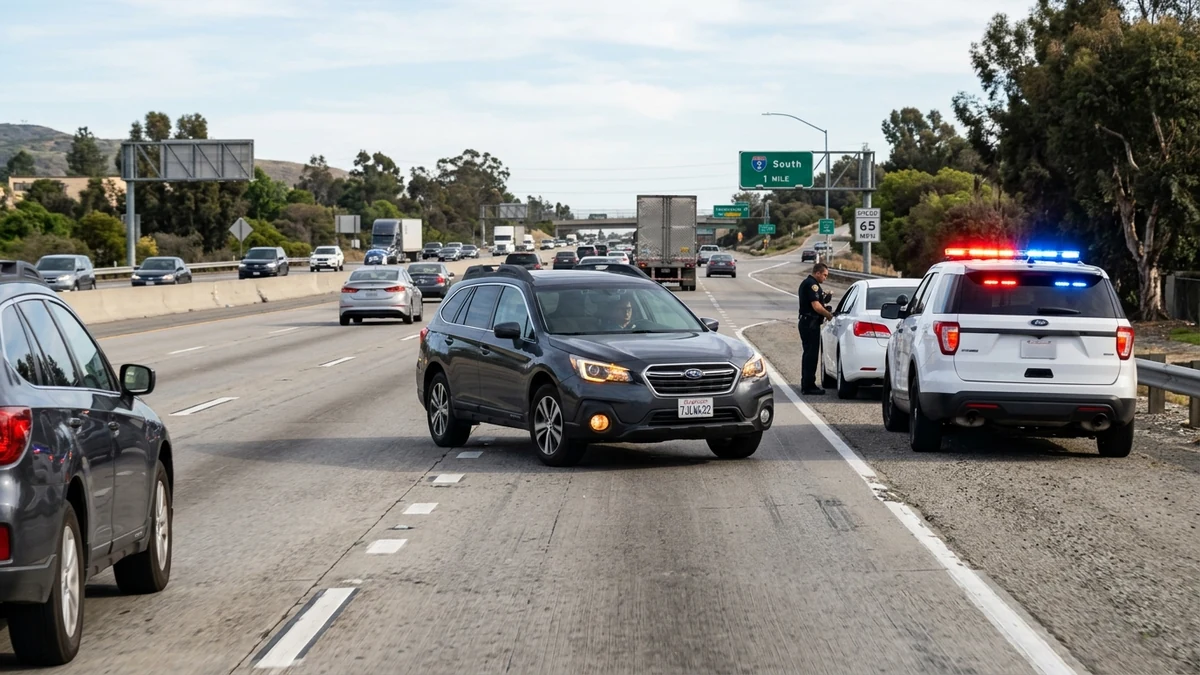
Move Over laws require motorists to either shift over one full lane or significantly reduce speed when approaching any stationary emergency or service vehicle.
Quick Answer & Key Takeaways
Move Over laws exist in all 50 US states. When approaching ANY stationary emergency vehicle, tow truck, highway maintenance vehicle, or stranded motorist displaying flashing lights or hazard indicators on the shoulder: 1) Safely change lanes away from the stationary vehicle to provide an empty buffer lane (using the S.M.O.G. method). 2) If heavy traffic or road conditions prevent changing lanes safely, you MUST slow down to a safe speed—typically 20 mph below the posted speed limit.
- All 50 states mandate it: Move Over laws are universal across the United States.
- Move Over or Slow Down: If changing lanes is impossible, you must decelerate to 20 mph below the posted limit (or 25 mph if posted limit is 25 mph or less).
- Applies to more than police: Covers police cruisers, fire trucks, ambulances, tow trucks, Caltrans/DOT highway maintenance trucks, and disabled vehicles.
- High fines: Violations carry fines ranging from $200 to $1,000, points on your driving record, and potential reckless driving citations.
Why Move Over Laws Exist: Protecting First Responders
Every year in the United States, dozens of police officers, paramedics, firefighters, tow truck operators, and highway maintenance workers are struck and killed while working along highway shoulders.
According to alarming data published by the National Safety Council (NSC), roadside struck-by collisions occur every 4.3 minutes, resulting in an emergency responder fatality nearly every single week.
To establish a mandatory safety buffer, all 50 states enacted "Move Over, Slow Down" statutes. Knowing how to react when you spot flashing red, blue, amber, or yellow lights on the shoulder is both a legal duty and a heavily tested subject on DMV written and behind-the-wheel exams.
The Two-Tier Legal Mandate: Move Over or Slow Down
Under California Vehicle Code § 21809 and standard state laws, the statute establishes a two-tiered decision hierarchy based on traffic conditions:
Tier 1: Vacate the Adjacent Lane When Safe
On any highway with two or more lanes traveling in the same direction, your primary legal obligation is to vacate the lane closest to the stopped emergency vehicle.
As soon as you spot flashing lights ahead on the right shoulder:
- Execute S.M.O.G.: Signal your intention, check your rearview and driver-side mirrors, perform a swift over-the-shoulder blind spot check, and move over one lane to your left.
- Create a Buffer Zone: Leaving an entire empty travel lane between your car and the emergency vehicle protects officers stepping in and out of cruisers or tow operators hooking up cables under police stop protocol.
Tier 2: The 20 MPH Speed Reduction Rule
What happens if dense rush-hour traffic, heavy rain, or a semi-truck traveling alongside you prevents you from changing lanes safely?
If moving over is impossible or unsafe, Tier 2 takes effect immediately:
- The 20 MPH Drop: You must slow down to a reasonable and prudent speed, specifically defined in states like Florida, Texas, and Washington as at least 20 mph below the posted speed limit.
- Low-Speed Zones: If the posted speed limit is 20 mph or less, you must slow down to 5 mph.
- Maintain Lane Centering: Hug the left side of your lane while passing to maximize physical distance from workers on the shoulder.
Which Vehicles Are Protected Under Expanded 2026 Laws?
Originally, Move Over laws applied solely to law enforcement cruisers with flashing blue or red lights. In recent years, states have dramatically expanded the statute's umbrella to protect all roadside personnel:
- Emergency Responders: Police cruisers, state highway patrol, sheriff department vehicles, fire engines, and ambulances.
- Tow Trucks & Roadside Service: AAA trucks, flatbed haulers, and roadside battery/tire service vans displaying flashing amber lights.
- Highway Maintenance & Utility Vehicles: State DOT snowplows, Caltrans maintenance trucks, power utility bucket trucks, and street sweepers.
- Disabled Civilian Vehicles: In states like California (AB 2285), Washington, and Texas, the law now officially extends to any civilian vehicle parked on the shoulder displaying active hazard flashers or emergency road flares.
Fines, Points, and Criminal Penalties for Violations
Highway patrol agencies conduct dedicated enforcement operations to penalize drivers who fail to move over:
- Fines: Base fines range from $200 to $1,000 depending on the state, with court penalty assessments pushing total costs over $600.
- DMV Moving Violation Points: Adds 1 to 3 points to your driving record, triggering higher insurance premiums as detailed in our guide on auto insurance factors.
- Criminal Charges: If failing to move over results in property damage or physical injury to an emergency responder, the charge is automatically elevated to a Class A misdemeanor or felony carrying mandatory jail sentences and license revocation.
Interactive Knowledge Check
Question: You are driving on a multi-lane highway at 65 mph and see a tow truck with flashing amber lights on the right shoulder. Heavy traffic prevents you from changing lanes to the left. What must you do?
Authoritative Sources & Regulatory References
Content and statutory guidelines in this guide are verified against official state vehicle codes, federal transportation standards, and authoritative regulatory documentation:
- NHTSAMove Over Campaign & Law Enforcement Safety Standards(National Highway Traffic Safety Administration)
- California LegislatureCalifornia Vehicle Code § 21809: Stationary Emergency Vehicles(State of California Vehicle Code)
- NSCFirst Responder and Roadside Worker Struck-By Fatalities Data(National Safety Council)
92% of people found this article helpful.
Click a star to add your vote
143 votes • average 4.64 out of 5
Official 2026 DMV Practice Tests by State
Select your state to practice real exam questions based on the latest 2026 driver handbook.
Ready to Pass the DMV Test on Your First Try?
Practice real 2026 DMV questions with instant answer explanations, simulated timers, and pass-guarantee study guides.
Start Free Practice TestRecommended Driver Guides
What to Do When Being Pulled Over by Police: Step-by-Step Safety & Legal Protocol

S.M.O.G. Driving Technique: Signal, Mirror, Over-Shoulder, Go Explained
