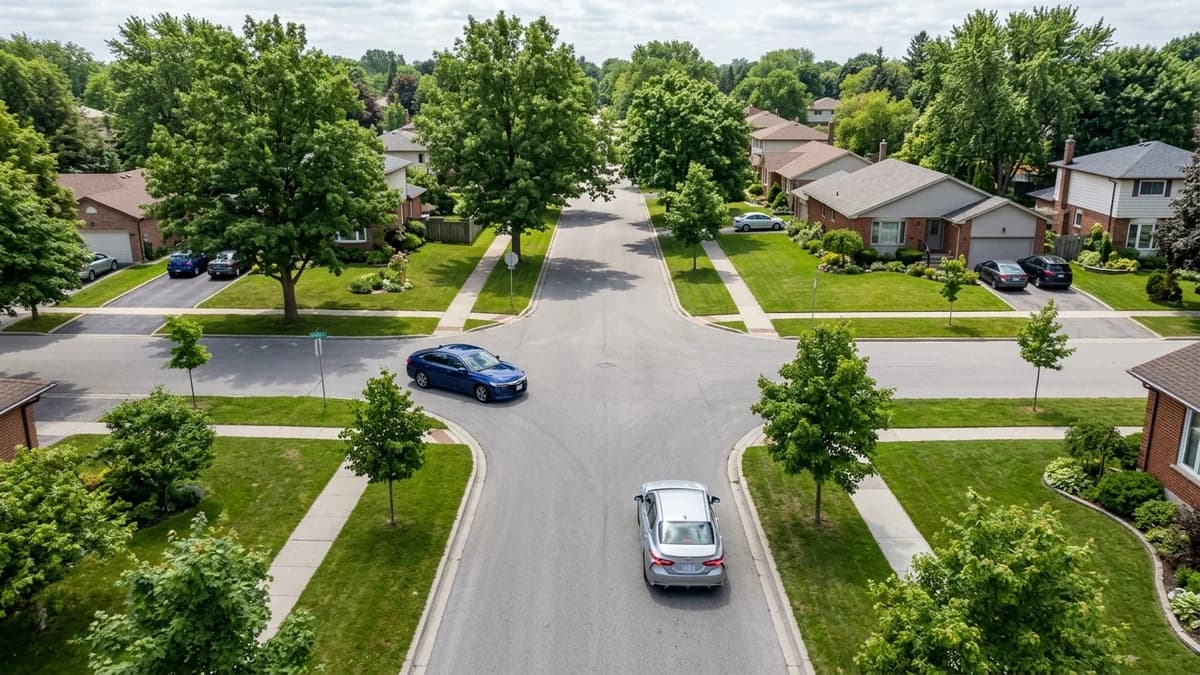
What Is a Complete Stop? How Long to Stop at a Stop Sign
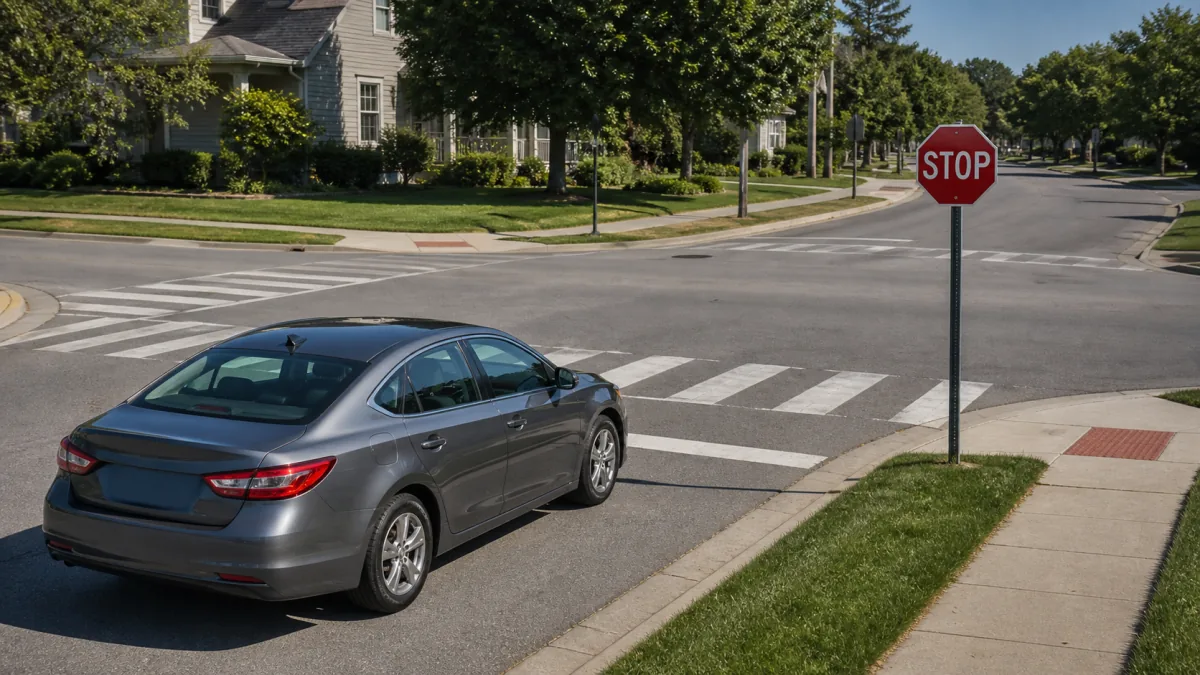
A complete legal stop requires 100% cessation of forward wheel movement and a distinct rearward rebound.
Quick Answer & Key Takeaways
Under state vehicle codes (e.g., California CVC § 22450, Texas Trans. Code § 545.151, NY VTL § 1172), a 'complete stop' is legally defined as the complete cessation of all forward vehicle movement (0.0 MPH)—evidenced by the vehicle body settling back on its suspension (the 'rebound'). 1) HOW LONG MUST YOU STOP: There is NO statutory 3-second rule in the vehicle code; legally, you must stop long enough to achieve 0 MPH, look Left-Right-Left, and verify right-of-way is clear (which naturally takes 2 to 3 seconds). 2) WHERE TO STOP: 1st priority: Behind the painted white limit line. 2nd priority: Behind the marked crosswalk. 3rd priority: At the corner curb line before entering the intersection. 3) ROLLING STOP: Rolling through at 1 MPH is an instant automatic fail on the DMV driving test and a $250+ traffic citation.
- Complete Cessation of Motion: Speedometer must read exactly 0.0 MPH with zero tire rotation.
- Feel the Rebound: The vehicle's front suspension must settle back to level before proceeding.
- Stop Behind the Limit Line: Never stop past the painted white line into the crosswalk or intersection.
- The Double-Stop Technique: If buildings or bushes block your view, make a full stop at the line, then creep forward to scan and stop a second time.
The Legal Definition of a Stop: Complete Cessation of Movement
Under the Uniform Vehicle Code and statutory state law (e.g., California Vehicle Code § 22450), the definition of "stop" is explicit:
"The driver of any vehicle approaching a stop sign at the entrance to, or within, an intersection shall stop at a limit line, if marked, otherwise before entering the crosswalk on the near side of the intersection."
In physical terms, a complete stop means absolute zero forward velocity (0.0 MPH) and complete cessation of tire rotation.
The Myth of the "3-Second Rule": What Statutes Actually Mandate
Almost every driver has heard that you must count "One-Mississippi, Two-Mississippi, Three-Mississippi" at a stop sign.
In reality, no state vehicle code specifies a minimum duration in seconds. However, driving instructors and DMV examiners enforce a 2-to-3-second pause because completing a thorough safety scan (looking Left, Center, Right, and Left again) physically requires at least 2 full seconds.
The physical indicator examiners look for is the "chassis rebound": when a car comes to a true stop, the front nose rises back up and the vehicle rests completely flat on its springs.
Stopping Landmarks: White Limit Line vs. Crosswalk vs. Curb Line
Where you stop is just as legally critical as stopping completely. Follow this 3-tier hierarchy:
- Tier 1: Painted White Limit Line: Stop your front bumper 1 to 3 feet behind the wide solid white line painted on the pavement. Allowing your front tires to cross over the line is an illegal stop.
- Tier 2: Marked Crosswalk (If No Limit Line): Stop before entering the parallel white crosswalk boundary lines.
- Tier 3: Corner Curb Line (If No Markings): Stop before entering the intersection curve where you would block entering cross-traffic or pedestrians.
The "Rolling Stop" Trap: Why 0.5 MPH Is an Instant Road Test Fail
The "California Roll" (or rolling stop) occurs when a driver slows down to 1 or 2 MPH, scans the intersection, and rolls through without ever reaching 0.0 MPH.
On a DMV road test, a rolling stop is classified under Critical Driving Errors as "Disobeys Traffic Control Devices"—resulting in an IMMEDIATE TEST FAILURE.
On public roads, a rolling stop ticket carries a base fine of $35 to $100, which reaches $240 to $380 after court penalty assessments and adds 1 point to your DMV driving record.
The "Double Stop" Method: Stopping Behind the Line, Then Inching Out
At many blind intersections, parked trucks, fences, or overgrown hedges block your view of cross-traffic when stopped behind the painted limit line. Execute the professional Double Stop:
- Stop #1 (The Legal Stop): Bring the car to a 100% complete stop behind the white limit line or crosswalk.
- Crawl & Inche Out: Slowly release the brake and creep forward 3 to 6 feet into the sight triangle.
- Stop #2 (The View Stop): Come to a brief second stop to scan cross-traffic before safely proceeding under right-of-way rules.
Stop Sign Compliance, Road Test Grading & Penalties Table
| Stopping Behavior | Speedometer Status | DMV Road Test Evaluation | Police Enforcement Risk |
|---|---|---|---|
| Complete Legal Stop | 0.0 MPH (Chassis settles) | PASS (Full credit) | 100% Legal |
| Rolling Stop ("California Roll") | 0.5 to 3.0 MPH | AUTOMATIC TEST FAILURE | $250+ Fine + 1 DMV Point |
| Stopping Over the Limit Line | 0.0 MPH (Front tires over line) | 1-Point Minor Deduction (Improper line stop) | Traffic infraction if blocking crosswalk |
| Double Stop (Blind Corner) | 0.0 MPH at line, then creep & 0.0 MPH | Full Examiner Commendation | Recommended Safety Practice |
Interactive Knowledge Check
Question: You arrive at an intersection controlled by a stop sign with a wide white painted limit line across your lane. A high fence on the corner blocks your view of cross-traffic. What is the correct legal driving procedure?
Authoritative Sources & Regulatory References
Content and statutory guidelines in this guide are verified against official state vehicle codes, federal transportation standards, and authoritative regulatory documentation:
- California LegislatureCalifornia Vehicle Code § 22450: Stop Requirements at Limit Lines and Crosswalks(California Vehicle Code)
- FHWAUniform Vehicle Code § 11-701: Required Position for Stopping at Stop Signs(Federal Highway Administration)
- NHTSANHTSA Intersection Safety and Stop Sign Rolling Violation Countermeasures (DOT HS 811 143)(National Highway Traffic Safety Administration)
97% of people found this article helpful.
Click a star to add your vote
265 votes • average 4.88 out of 5
Official 2026 DMV Practice Tests by State
Select your state to practice real exam questions based on the latest 2026 driver handbook.
Ready to Pass the DMV Test on Your First Try?
Practice real 2026 DMV questions with instant answer explanations, simulated timers, and pass-guarantee study guides.
Start Free Practice Test