What to Do If Your Car Stalls on Railroad Tracks: 45-Degree Rule
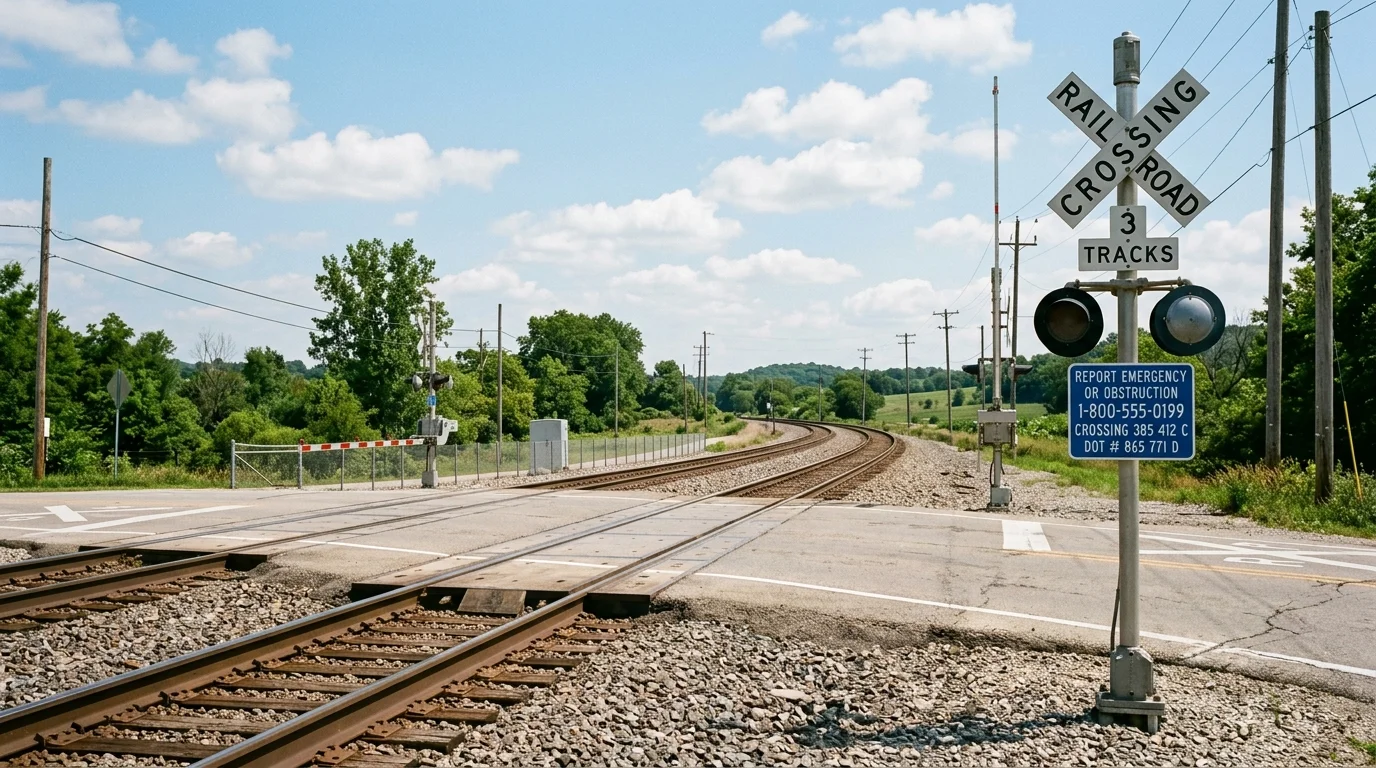
If your vehicle becomes stuck or high-centered on railroad tracks, evacuate immediately and run at a 45-degree angle toward the oncoming train.
Quick Answer & Key Takeaways
If your vehicle stalls, gets stuck, or becomes high-centered on railroad tracks, your immediate actions depend on whether a train is approaching: 1) IF A TRAIN IS APPROACHING OR LIGHTS ARE FLASHING: EVACUATE IMMEDIATELY. Unbuckle all passengers and run AWAY from the tracks AT A 45-DEGREE ANGLE TOWARD THE ONCOMING TRAIN. (Running in the direction the train is traveling will shower you in supersonic flying metal debris and shattered engine blocks upon impact). 2) IF NO TRAIN IS VISIBLE: Get everyone out of the car, stand far off the tracks, locate the BLUE Emergency Notification System (ENS) sign on the silver crossbuck signal mast, call the 1-800 railroad dispatch number, and provide the 6-digit USDOT Crossing ID number to halt all oncoming train traffic.
- The 45-Degree Escape Angle: Always run toward the direction the train is coming from, but angled safely away from the tracks.
- Debris Cone Physics: Train impacts launch shrapnel, wheels, and metal glass forward in the train's direction of travel.
- Locate the Blue ENS Sign: The metal blue sign contains the direct railroad emergency phone number and unique 6-digit Crossing ID.
- Never Stay Inside to Restart: A 12-million-pound freight train traveling at 55 MPH takes over 1 mile (18 football fields) to stop.
The Physics of a Train Impact: 1 Mile Stopping Distances
A standard freight train weighs approximately 12 million pounds (6,000 tons).
The weight ratio of a freight train to an average passenger car is 4,000 to 1—the exact same physical ratio as a car crushing an aluminum soda can.
According to Operation Lifesaver, a freight train traveling at 55 MPH requires over 1 full mile (5,280 feet / 18 football fields) to come to a complete stop even after the locomotive engineer applies emergency dynamic brakes.
Scenario A: A Train Is Approaching (The 45-Degree Escape Rule)
If crossing gate arms begin descending, red lights flash, or a train horn sounds:
- ABANDON THE VEHICLE INSTANTLY: Do not attempt to turn the key, pump the gas pedal, or grab laptops, purses, or luggage.
- EVACUATE ALL PASSENGERS: Unbuckle children and elderly occupants and exit the vehicle immediately.
- SPRINT AT A 45-DEGREE ANGLE: Run off the tracks diagonally toward the oncoming train.
The 45-Degree Rule: Why Running TOWARD the Train Saves Your Life
Why does every state DMV handbook instruct drivers to run toward the train?
Impact Kinematics and the Forward Debris Cone:
When a 6,000-ton locomotive obliterates a stationary 4,000-pound automobile at 50 MPH:
- The collision acts like an explosive blast, launching the car's steel frame, engine block, shattered glass, and battery forward and outward in the direction the train is traveling.
- If you run down the road or alongside the tracks away from the train, you are running directly inside the supersonic trajectory of flying deadly metal shrapnel.
- By running at a 45-degree angle toward the train (away from the tracks), the flying debris is hurled safely behind you!
Scenario B: No Train Visible (The ENS Blue Sign 1-800 Protocol)
If your car becomes high-centered or stuck on the rails and no train is anywhere in sight:
- Evacuate Everyone Immediately: Move all passengers at least 100 feet away from the tracks.
- Locate the Blue ENS Sign: Look at the metal signal crossbuck mast or electrical relay bungalow nearby.
- Call the Emergency Railroad Dispatcher: Dial the toll-free 1-800 number listed on the blue sign (NOT just 911).
- Read the 6-Digit USDOT Crossing ID: The railroad dispatcher can instantly transmit emergency radio red-light signals to halt all trains heading toward that specific crossing.
Locating the Blue ENS Sign: USDOT Crossing ID Numbers
Under Federal Railroad Administration (FRA) 49 CFR Part 234, every public highway-rail crossing in the United States features a standardized, blue, high-visibility Emergency Notification System (ENS) Sign:
- Toll-Free Emergency Number: Connects directly to Union Pacific, BNSF, CSX, Norfolk Southern, or Amtrak dispatchers.
- USDOT Crossing Number: A 6-digit number followed by an alphabetical letter (e.g.
123 456 A) that pinpoints your exact GPS rail coordinates.
Railroad Track Emergency Protocol Summary Table
| Emergency Situation | Immediate First Action | Escape Direction / Contact | Fatal Mistake to Avoid |
|---|---|---|---|
| Train Approaching / Gates Down | Evacuate car immediately (Zero delay) | Run at 45° angle TOWARD the train | Running away in direction of train travel |
| Stuck on Tracks / No Train | Evacuate occupants to safe distance | Call 1-800 on Blue ENS sign + Crossing ID | Staying in the car trying to push or restart |
| Trapped Between Gates | DRIVE THROUGH GATE ARM | Gate arms are designed to break away | Stopping inside the tracks fearing car scratches |
Interactive Knowledge Check
Question: If your car stalls on railroad tracks and a train is visibly approaching with lights flashing, in what direction should you run after evacuating the vehicle?
Authoritative Sources & Regulatory References
Content and statutory guidelines in this guide are verified against official state vehicle codes, federal transportation standards, and authoritative regulatory documentation:
- FRAEmergency Notification System (ENS) for Railroad Grade Crossings(Federal Railroad Administration)
- Operation LifesaverRail Safety Education: Stalled Vehicle Procedures and Crossing Safety(Operation Lifesaver Rail Safety)
- NTSBHighway-Rail Grade Crossing Collision Physics and Debris Trajectory(National Transportation Safety Board)
88% of people found this article helpful.
Click a star to add your vote
155 votes • average 4.46 out of 5
Official 2026 DMV Practice Tests by State
Select your state to practice real exam questions based on the latest 2026 driver handbook.
Ready to Pass the DMV Test on Your First Try?
Practice real 2026 DMV questions with instant answer explanations, simulated timers, and pass-guarantee study guides.
Start Free Practice TestRecommended Driver Guides

What to Do If Your Brakes Fail at High Speed: Emergency Stopping Guide
What to Do Immediately After a Car Accident: The 10-Step Crash Scene Checklist