Angle Parking Guide: How to Park & Back Out of Diagonal Stalls
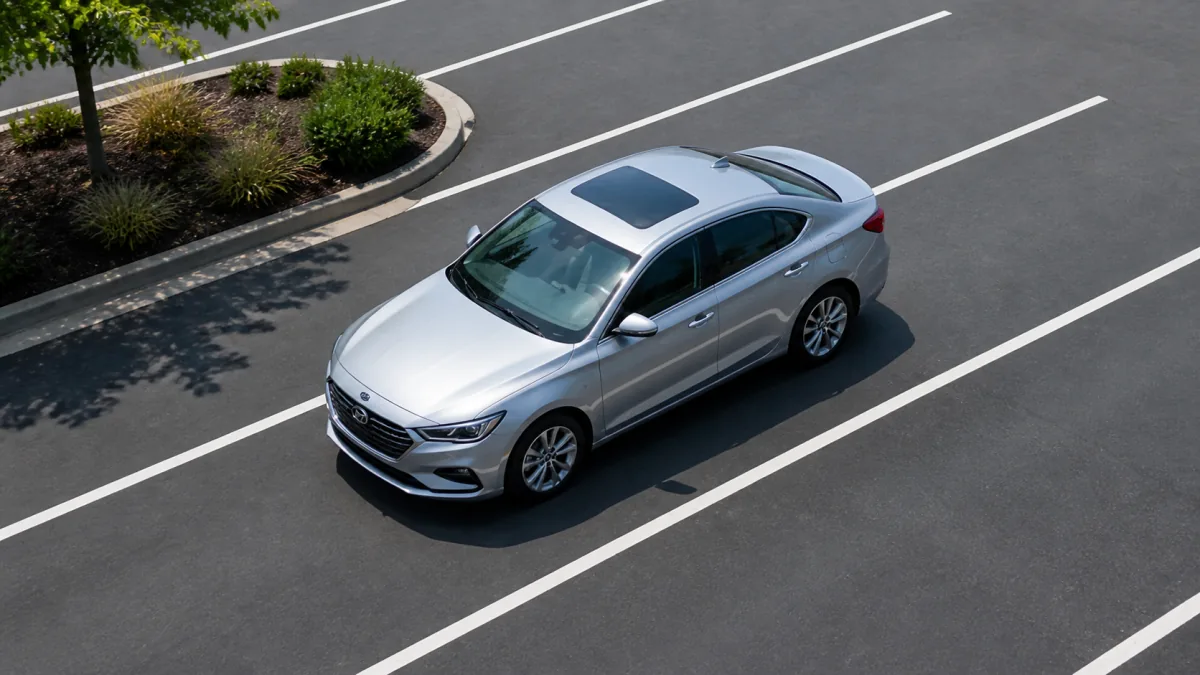
Angle parking requires establishing a lateral buffer and inching back slowly to overcome aisle blind spots.
Quick Answer & Key Takeaways
Angle parking (diagonal stalls angled at 45° or 60° to traffic flow) is designed for effortless forward entry on one-way streets and commercial parking lots: 1) ENTERING: Position your car 5 to 6 feet away from parked vehicles, activate your turn signal 100 feet in advance, and when your front side mirror clears the rear bumper of the car on your near side, steer smoothly into the center of the stall at 2–3 MPH. 2) EXITING: Backing out is hazardous due to large blind spots created by adjacent vehicles. Shift into Reverse, back straight out 2 to 3 feet until your back wheels enter the lane and your white backup lights are visible, pause to scan for cyclists and cross-traffic, and do NOT turn the wheel until your front bumper clears the rear corner of the adjacent car.
- 5-to-6 Foot Aisle Buffer: Approach with sufficient lateral spacing to glide in without clipping adjacent fenders.
- Protect Front Spoilers: Stop before your front tires hit the concrete wheel stop to avoid tearing low plastic bumper lips.
- The 2-Foot Backup Pause: Creep out 2 feet in Reverse so oncoming traffic can see your vehicle's tail.
- Back-In Angle Parking: Emerging urban standard where vehicles reverse into 45° spots, providing 100% forward vision upon departure.
The Geometry of Angle Parking: 30°, 45° & 60° Diagonal Stalls
Angle parking is frequently utilized on downtown main streets and shopping plaza aisles because it accommodates more vehicles per linear block than parallel parking and requires less steering articulation than 90-degree perpendicular parking.
Because the stalls are aligned with the one-way direction of traffic flow, pulling into an angle space is simple. However, backing out of an angle space carries the highest crash rate of any standard parking maneuver due to severe blind spots.
Entering an Angle Space: The 5-to-6-Foot Buffer & Smooth Glides
To park cleanly in the center of a diagonal stall on the first attempt:
- Signal Your Intent: Activate your turn indicator at least 100 feet in advance.
- Maintain Lateral Spacing: Drive down the aisle positioned approximately 5 to 6 feet away from the rear bumpers of the parked vehicles.
- The Turn Trigger: Slow down to a walking speed (2–3 MPH). When your front side mirror passes the rear bumper of the vehicle parked just before the empty stall, turn the steering wheel smoothly into the angle of the lines.
- Center & Straighten: Ease forward until your vehicle is centered equally between the painted yellow or white diagonal lines.
Curb Approach: Protecting Front Bumpers, Spoilers & Wheel Stops
Many angle stalls feature raised concrete curbs or concrete wheel stops:
- Modern passenger vehicles have low front aerodynamic air dams and plastic radiator splash shields.
- Never drive forward until your tires slam into the concrete stop.
- Stop when your front bumper is approximately 1 foot away from the curb. Place the vehicle in Park and engage the emergency brake.
Reversing Out Safely: Managing the Severe Blind Spot Trap
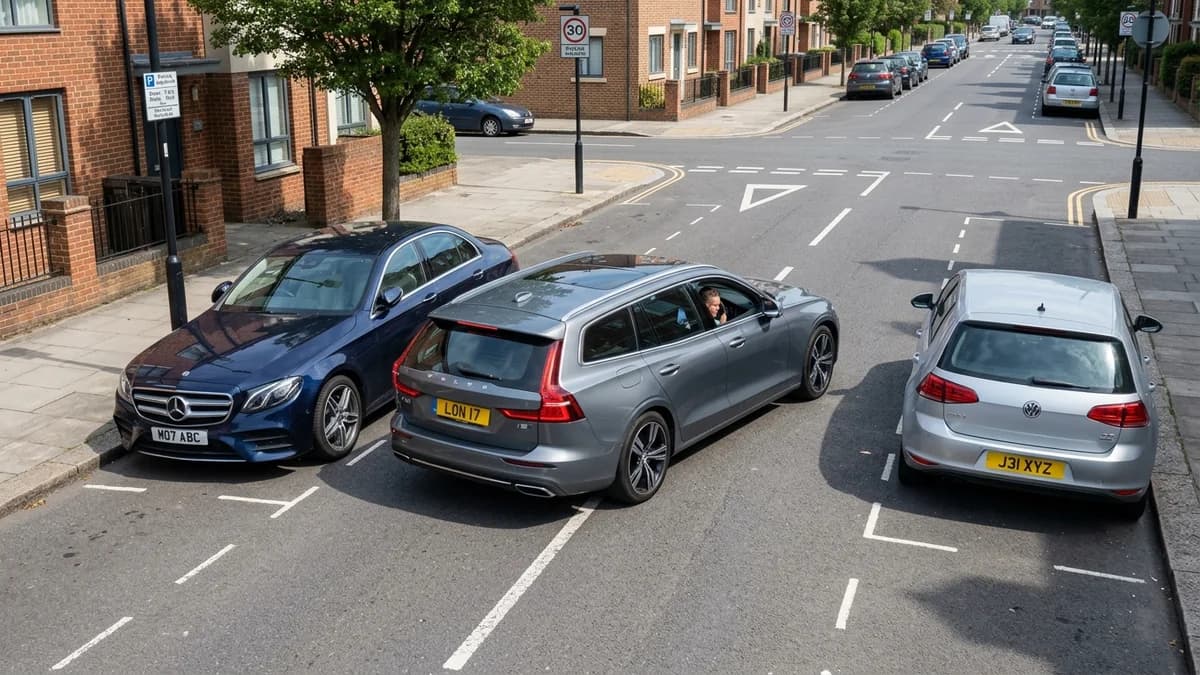
When parked between two large SUVs or pickup trucks in an angled space, your rear side windows are completely blocked. Follow the 3-Stage Departure Method:
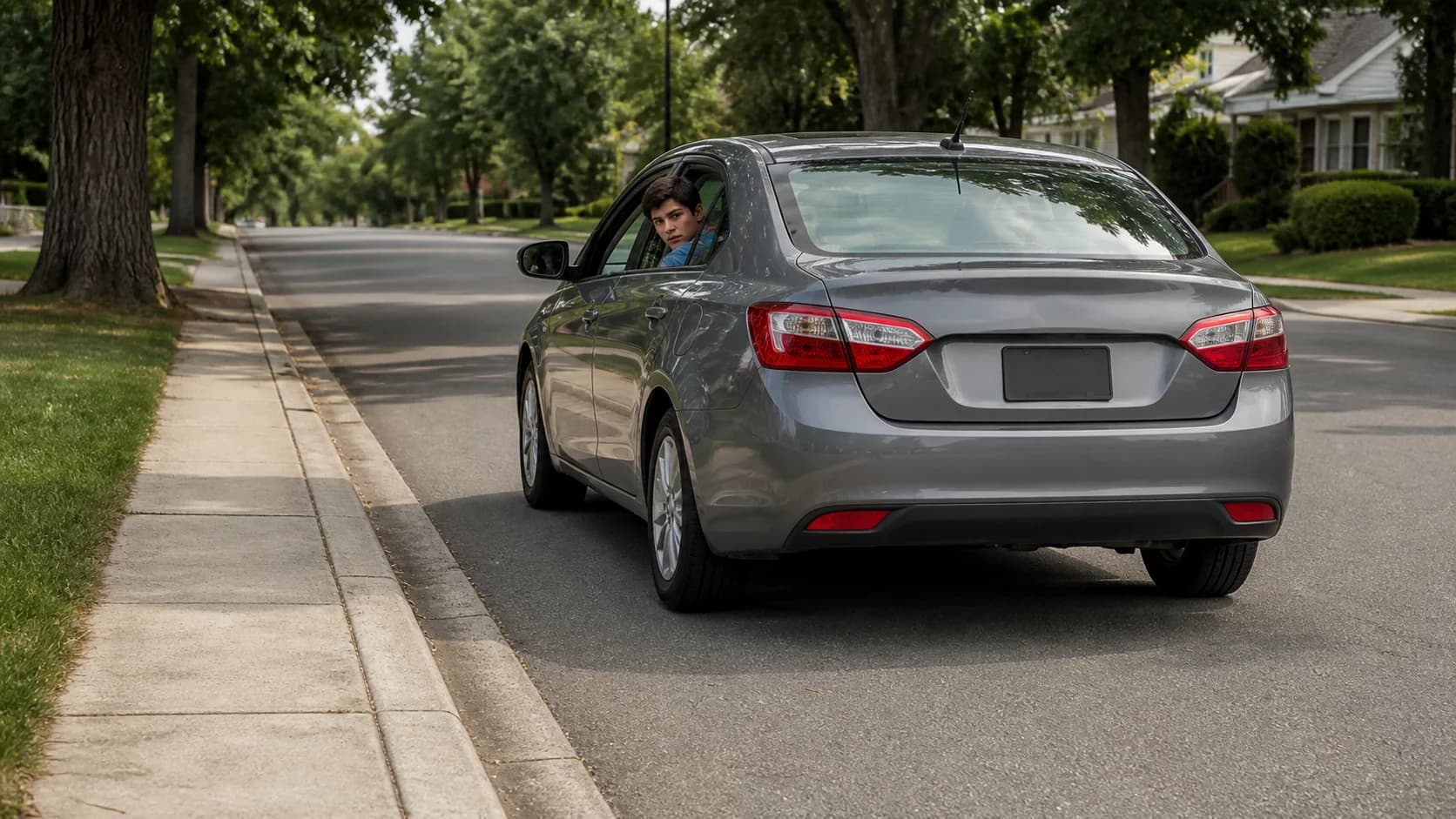
- Shift into Reverse & Crawl 2 Feet: Release the foot brake to creep backward 2 feet in a straight line. This activates your white reverse backup lights to alert oncoming motorists and pedestrians in the aisle.
- The Sightline Pause: Look over both shoulders, check mirrors, and check your backup camera for cross-traffic.
- Turn When Front Bumper Clears: Continue straight in reverse until your front bumper is even with the rear bumper of the vehicle beside you. Only then should you turn the steering wheel to swing into the travel lane. Turning earlier will scrape your front fender against the parked vehicle!
Back-In Angle Parking: Why Modern Urban Planners Prefer It
Many forward-thinking cities (such as Seattle, Austin, and San Francisco) have replaced standard angle parking with "Back-In Angle Parking":
- Drivers signal, pull past the stall, and reverse diagonally into the space.
- When departing, the driver has a clear, unobstructed 180-degree field of view directly into the traffic lane and adjacent bicycle lanes.
- Loading trunk cargo occurs safely on the sidewalk rather than standing exposed in traffic lanes.
Angle Parking vs. 90° Perpendicular Parking Comparison Table
| Parking Configuration | Turn Angle Required | Aisle Width Needed | Departure Hazard |
|---|---|---|---|
| 45° Angle Parking | 45° (Gentle curve) | 12–13 Feet (One-Way) | High (Acute blind angle when reversing) |
| 60° Angle Parking | 60° | 16–18 Feet | Moderate blind angle |
| 90° Perpendicular Parking | 90° (Full lock turn) | 24–26 Feet (Two-Way) | Moderate (Reversing straight out) |
Interactive Knowledge Check
Question: When backing out of a forward angle parking space, when is it legally and mechanically safe to begin turning your steering wheel to enter the travel lane?
Authoritative Sources & Regulatory References
Content and statutory guidelines in this guide are verified against official state vehicle codes, federal transportation standards, and authoritative regulatory documentation:
- FHWAFHWA Manual on Uniform Traffic Control Devices (MUTCD Section 3B.19: Pavement Markings for Parking Spaces)(Federal Highway Administration)
- ITEInstitute of Transportation Engineers: On-Street Parking Geometric Design and Safety Standards(Institute of Transportation Engineers)
- California DMVCalifornia DMV Driving Performance Evaluation: Angle Parking Testing Protocol(California Department of Motor Vehicles)
92% of people found this article helpful.
Click a star to add your vote
63 votes • average 4.66 out of 5
Official 2026 DMV Practice Tests by State
Select your state to practice real exam questions based on the latest 2026 driver handbook.
Ready to Pass the DMV Test on Your First Try?
Practice real 2026 DMV questions with instant answer explanations, simulated timers, and pass-guarantee study guides.
Start Free Practice Test